

Google Taps AMD for Hybrid TPU: Inside the 2026 Data Center Revolution
In a major shift for AI infrastructure, Google is reportedly partnering with AMD to design a hybrid TPU to tackle the compute demands of reinforcement learning.
The artificial intelligence landscape in late 2026 is no longer defined merely by the size of language models, but by the physical realities of powering and cooling the silicon that runs them. As the industry pivots from simple generative text to complex, agentic AI capable of autonomous reasoning, traditional hardware architectures are hitting a brick wall. In a groundbreaking development this week, the battle for the future of AI compute has taken an unexpected turn, signaling a massive shift in how hyperscalers approach their data center stacks.
The Google-AMD Alliance: Redesigning the AI ASIC
For years, Nvidia has maintained an iron grip on the AI accelerator market with its monolithic GPUs. However, hyperscalers have been quietly designing custom silicon to escape this dependency. Now, those efforts are accelerating into uncharted territory. According to industry reports released in the past few days, Google has reportedly partnered with AMD to co-design its next-generation TPU.
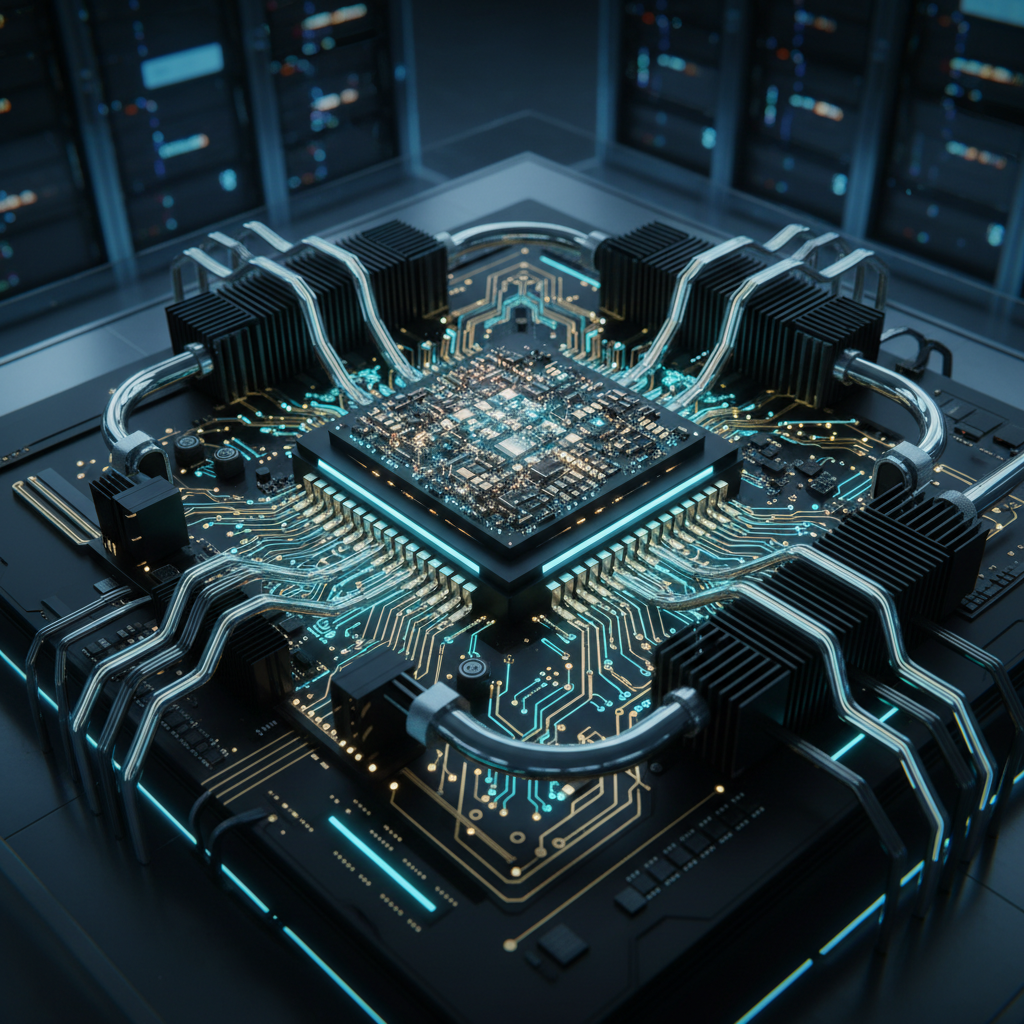
This is not simply a routine manufacturing contract. The leaked specifications suggest a radical architectural departure: a hybrid AI Application-Specific Integrated Circuit (ASIC) that directly integrates custom CPU cores on the same package as the tensor processing units. By fusing AMD's renowned expertise in high-performance computing chiplets with Google's proprietary AI accelerator designs, the two giants are looking to solve one of the most stubborn bottlenecks in modern artificial intelligence: the latency inherent in reinforcement learning workloads.
Why Reinforcement Learning Demands New Silicon
To understand why this hybrid architecture is so critical, we have to look at how AI models have evolved over the last two years. Traditional pre-training of Large Language Models (LLMs) relies heavily on massive, predictable matrix multiplications. Standard GPUs excel at this—they are essentially parallel-processing powerhouses designed to crunch vast arrays of numbers simultaneously.
However, the AI of 2026 is heavily reliant on Reinforcement Learning from Human Feedback (RLHF) and Reinforcement Learning from AI Feedback (RLAIF). When models "think" before they speak, simulating multiple paths to a solution, the compute workload fundamentally changes. Reinforcement learning requires constant, unpredictable branching. It demands rapid context switching between the environment simulation (governed by logical rules) and the neural network's policy evaluation.
- The Bottleneck: In a traditional setup, the CPU handles the simulation logic while the GPU handles the neural network math. Shuttling data back and forth across the PCIe bus creates severe latency, leaving the expensive GPU idle while it waits for the CPU to catch up.
- The Solution: By integrating custom AMD CPU cores directly onto the TPU package, Google drastically reduces this physical distance. High-speed, on-package interconnects allow the CPU and TPU components to share memory natively, virtually eliminating latency and creating an engine purpose-built for agentic AI.
Ripples Across the Global Supply Chain
This development is sending shockwaves through the semiconductor market. AMD has steadily proven its capability in the custom silicon space—having powered major gaming consoles for over a decade—but a co-design megadeal with Google cements its status as an elite architect for AI infrastructure. For Nvidia, this represents a formidable challenge. While Nvidia's Grace Hopper superchips attempt to solve similar CPU-GPU bottlenecks, Google's bespoke approach allows it to tune the silicon precisely to the algorithmic quirks of models like Gemini and Astra.
Furthermore, this alliance reflects a broader macroeconomic trend. As geopolitical tensions over semiconductor manufacturing escalate, major technology coalitions are aggressively seeking alternative supply chains to safeguard their compute capacity. Relying on a single vendor for critical AI hardware is no longer considered an acceptable risk by corporate boards or sovereign governments. The push for custom silicon is as much about supply chain sovereignty as it is about teraflops.
Beyond the Chip: The Power and Cooling Reality
A revolutionary chip, however, is useless without the infrastructure capable of sustaining it. The physical realities of powering the 2026 AI boom are stark. AI data centers are no longer just server farms; they are industrial-scale energy processing plants. The new generation of hybrid accelerators is expected to push Thermal Design Power (TDP) to extreme limits, fundamentally breaking traditional data center designs.
"We are transitioning from a compute-constrained era to a power-and-cooling constrained era. The chip is only 20% of the battle; the other 80% is figuring out how to stop it from melting."
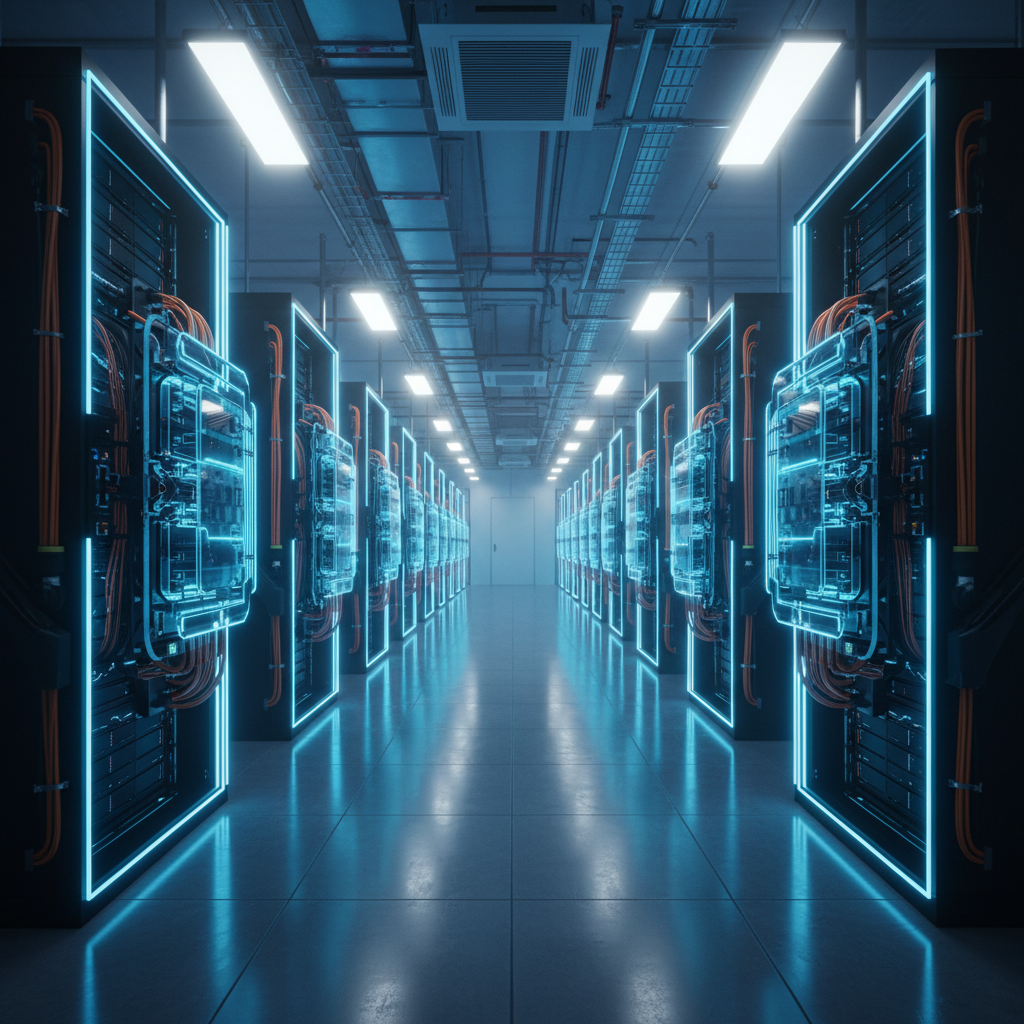
Air cooling is officially obsolete for top-tier AI racks. Analysts predict that direct-to-chip liquid cooling and advanced immersion cooling will dominate over 50% of all AI infrastructure by the end of the year. Integrating CPUs and TPUs onto a single high-density package concentrates immense heat into a very small physical area. To cope, Google is reportedly redesigning its entire data center stack, from high-voltage power conversion systems to proprietary liquid-cooling manifolds.
This infrastructure crisis extends far beyond Silicon Valley. As businesses across every sector race to deploy AI agents, they are discovering that legacy server rooms simply cannot handle the power density required. Major retailers and logistics firms deploying autonomous inventory and supply chain systems have encountered a critical hardware gap, forcing them to rapidly retrofit their edge computing facilities with liquid cooling and specialized power delivery networks.
The Custom Data Center Era
The reported partnership between Google and AMD marks the beginning of the Custom Data Center Era. It proves that the "one-size-fits-all" hardware model is fracturing. As AI models become highly specialized, the physical infrastructure that runs them must follow suit. By tightly integrating the model architecture, the silicon design, and the physical cooling infrastructure into a single, cohesive system, Google is building a formidable competitive moat.
For the rest of the industry, the message is clear: the future of AI dominance will not be won simply by writing better code. It will be won by mastering the brutal physics of electricity, thermodynamics, and highly specialized silicon. As these hybrid TPUs begin rolling off the fabrication lines, the true hardware revolution of 2026 is finally underway.
Frequently asked questions
What is a hybrid TPU?
A hybrid Tensor Processing Unit (TPU) is an AI accelerator chip that integrates traditional AI matrix math processors with general-purpose CPU cores on the same physical package. This reduces data transfer latency between the CPU and TPU.
Why is Google partnering with AMD for AI chips?
Google is reportedly tapping AMD for its expertise in custom silicon and high-performance chiplet architecture to help design its next-generation TPU. This partnership aims to solve hardware bottlenecks specifically related to reinforcement learning workloads.
How does reinforcement learning affect AI hardware?
Reinforcement learning requires rapid, unpredictable branching and constant communication between the logic simulation and the neural network. This strains traditional GPU architectures, necessitating hybrid chips that place CPU and AI logic closer together.
Why is liquid cooling becoming mandatory in AI data centers?
Next-generation AI chips, like hybrid TPUs, consume massive amounts of power and generate intense heat in a concentrated area. Traditional air cooling cannot dissipate this heat fast enough, making direct-to-chip liquid cooling a necessity for modern high-density server racks.
Join 45,000+ AI builders.
Three tools, two insights, one strategy — every Sunday. The signal cuts through the noise.
Free forever · unsubscribe anytime · no account required
Related reads

Elon Musk's xAI Targets 10 Gigawatts in Massive Data Center Push
Elon Musk has unveiled a staggering infrastructure roadmap for xAI, aiming to multiply data center capacity seven-fold to hit 10 gigawatts of compute by 2027.
Google Opens Ironwood TPUs to Rival Clouds in Major AI Shift
Google is ending its walled-garden hardware approach by offering its high-memory Ironwood TPUs to third-party cloud platforms.

Google and Idris Elba's $1M African AI Fund Excludes 49 Nations
A new $1M partnership between Google and Idris Elba will provide Gemini access to 100,000 African creators, but the exclusion of 49 countries is sparking a fierce ecosystem debate.