

Google and Idris Elba's $1M African AI Fund Excludes 49 Nations
A new $1M partnership between Google and Idris Elba will provide Gemini access to 100,000 African creators, but the exclusion of 49 countries is sparking a fierce ecosystem debate.
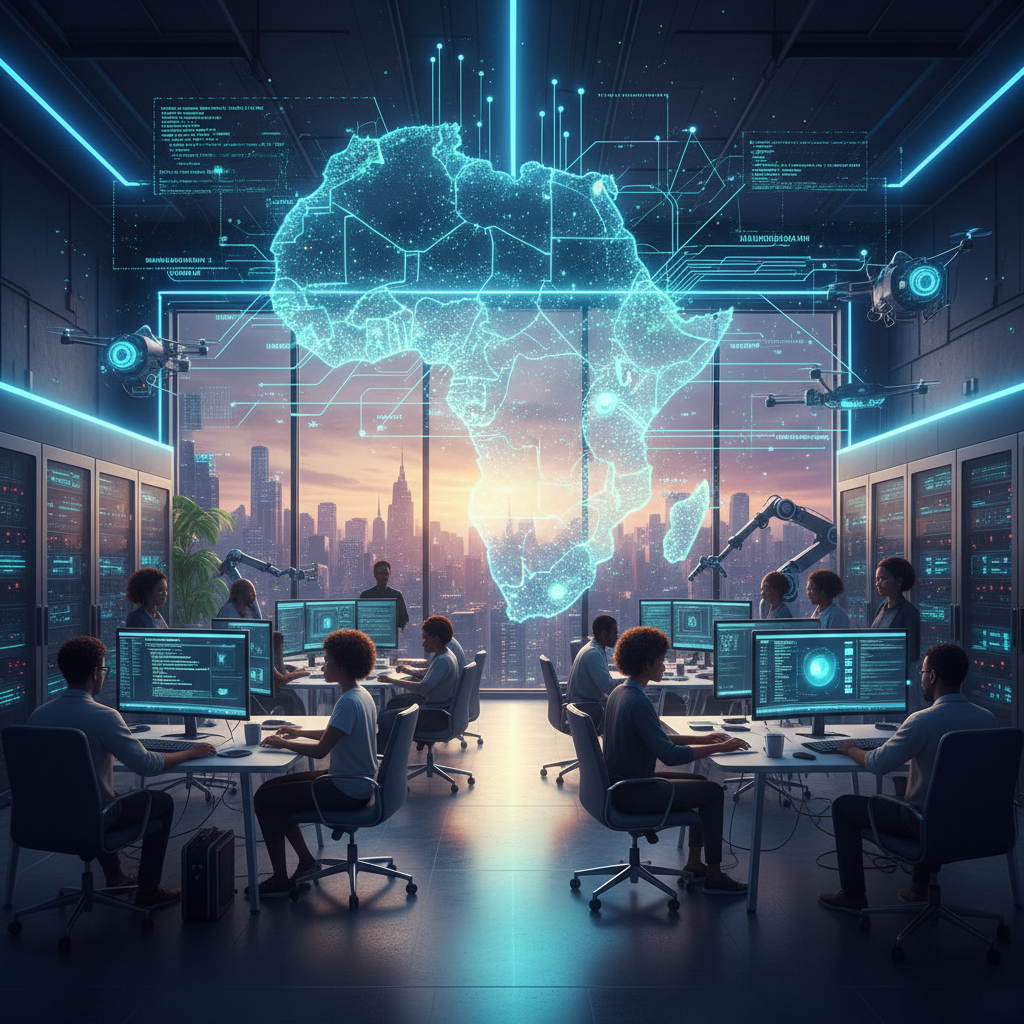
In mid-July 2026, the intersection of Big Tech investment and the global creative economy took center stage with a landmark announcement targeting the African continent. This week, Google and renowned actor Idris Elba officially launched a highly anticipated $1 million artificial intelligence program aimed at bolstering Africa’s burgeoning digital and creative ecosystems. The ambitious initiative promises to grant 100,000 African creators free access to Gemini and an array of premium generative AI tools. While the announcement was initially met with widespread celebration across the tech community, the excitement quickly collided with a harsh geographical reality: forty-nine African countries did not make the eligibility list.
The program, intended to democratize access to advanced AI for filmmakers, musicians, designers, and digital storytellers, has inadvertently spotlighted the uneven distribution of technology infrastructure across the continent. By limiting access to just five nations, the rollout has reignited debates regarding digital redlining and the systemic barriers that prevent a truly Pan-African technological renaissance.
The $1 Million Vision for African Creatives
Africa's creative industry is globally recognized for its explosive growth and cultural influence. From the cinematic output of Nollywood to the global dominance of Afrobeats, the continent is a proven powerhouse of cultural export. The Google and Idris Elba initiative was designed with this exact demographic in mind. By providing top-tier subscriptions to Gemini Advanced and enterprise-grade generative platforms, the fund aims to remove the financial barrier to entry that often keeps grassroots creators from leveraging frontier models.
Under this initiative, selected creators will be able to utilize sophisticated multimodal AI to script films, design concept art, automate audio post-production, and streamline their overarching creative workflows. For a continent where the median age is roughly 19, the integration of AI tools is seen less as a luxury and more as a foundational skill required to compete in the 2026 global gig economy. Early pilot participants have already reported dramatic efficiencies, highlighting how text-to-video and advanced prompting can help underfunded studios bypass traditional production bottlenecks.
The Geographic Divide: Why 49 Countries Were Excluded
Despite the program's massive potential, the exclusion of forty-nine African nations from the rollout has dominated industry headlines over the past three days. Out of fifty-four sovereign nations on the continent (and several recognized territories), only five have been greenlit for the program. Although Google has not yet published an exhaustive breakdown of the selection criteria, ecosystem analysts point to a familiar pattern that has plagued tech rollouts in the Global South.
The selected nations invariably match the continent's "Big Four" tech hubs—typically consisting of Nigeria, Kenya, South Africa, and Egypt—along with key strategic markets like Rwanda. These countries feature high smartphone penetration, more robust digital banking frameworks necessary for subscription verification architectures (even when the service is temporarily subsidized), and existing localized data nodes. Conversely, countries omitted from the list often lack the requisite cloud availability zones and face volatile regulatory environments.
The resulting disparity mirrors domestic infrastructure challenges seen globally. Much like how rural municipalities in Western nations often find themselves battling outdated infrastructure while federal agencies deploy cutting-edge enterprise AI, the African continent is witnessing an entrenched hyper-centralization of digital resources. The nations that already possess adequate venture capital and tech-forward policies continue to receive the lion's share of international enterprise AI pilot programs, while neighboring states fall further behind.

Ripple Effects on Startups and Regional Policy
The exclusion is prompting fierce pushback from startup founders and tech ministers in the omitted countries, who argue that artificial intelligence development cannot be effectively localized if ninety percent of the continent is blocked from accessing baseline premium tools. There is a growing consensus that large technology companies are unintentionally establishing a two-tiered digital economy in Africa.
In response to these ecosystem bottlenecks, regional coalitions are actively trying to build sovereign AI infrastructure to reduce reliance on Silicon Valley. In the past week, discussions have accelerated at the African Union regarding pan-continental AI data sharing and localized model training. By cultivating models trained on indigenous datasets and local languages—many of which remain poorly supported by major LLMs—African developers hope to bypass the gatekeeping inherent in exclusive Big Tech rollouts.
Policymakers are also closely monitoring international regulatory precedents to force a more equitable distribution of technology. As the European Union spends 2026 enforcing its comprehensive AI law to harmonize consumer rights and corporate responsibilities across all its member states, African regulatory bodies are taking meticulous notes. There is increasing momentum for unified Pan-African digital frameworks that would mandate companies operating within the continent's free trade zones to ensure a broader, more inclusive deployment of essential AI services.
Looking Ahead: Closing the Access Gap
Economic projections consistently suggest that artificial intelligence could add trillions to the African economy over the next decade, provided adoption scales effectively. Generative AI alone presents a historic opportunity to leapfrog legacy educational and creative barriers. However, the revelation that structural barriers still prevent forty-nine nations from participating in a well-funded, celebrity-backed Big Tech initiative highlights how much foundational work remains.
For the 100,000 creators who successfully onboard into the Google and Idris Elba program over the coming weeks, the initiative will undoubtedly serve as a massive catalyst for innovation. Yet, for the tech ecosystem as a whole, this week's announcement is a sobering reminder. Unless international tech conglomerates alongside local governments actively work to untangle the infrastructure and regulatory red tape that silos AI access, the continent's artificial intelligence revolution risks leaving millions of its most creative minds in the dark.
Frequently asked questions
What is the Google and Idris Elba AI initiative?
It is a $1 million artificial intelligence program launched in July 2026 designed to give 100,000 African creators free access to premium generative AI tools, including Google's Gemini Advanced, to boost the continent's creative economy.
Why are 49 African countries excluded from the new AI program?
While exact criteria have not been fully published, experts attribute the exclusion to a lack of localized cloud infrastructures, digital banking verification hurdles, and differing regulatory environments that favor established 'tech hubs' like Nigeria, Kenya, and South Africa.
How is the African Union responding to unequal AI access?
The African Union is accelerating its continental AI strategy, focusing on building sovereign tech infrastructure, training native models on local languages, and developing cohesive regulations to ensure equitable AI rollouts across all member states.
How will Gemini help African creators?
African creators, including filmmakers, musicians, and digital designers, can use Gemini's advanced multimodal capabilities to automate post-production, draft scripts, generate concept art, and dramatically reduce their production costs.
Join 45,000+ AI builders.
Three tools, two insights, one strategy — every Sunday. The signal cuts through the noise.
Free forever · unsubscribe anytime · no account required
Related reads

Nvidia's $13B Hugging Face Bid Could Redefine Open-Source AI
Explosive reports this week suggest Nvidia is looking to acquire Hugging Face for $13 billion, a deal that would merge hardware dominance with open-source software.

Nvidia Unveils DSX MaxLPS at Hot Chips 2026 to Solve the AI Power Crisis
Unveiled this week at Hot Chips 2026, Nvidia's new DSX MaxLPS architecture tackles the AI power crisis by maximizing compute within fixed data center budgets.

Google Alters Android App Rules Amid AI-Driven Memory Crunch
As the AI data center boom devours the global supply of memory chips, Google is stepping in to change Android app requirements, forcing developers to adapt.