

A Beginner's Guide to the EU AI Act: What You Need to Know
The EU AI Act is officially here. This beginner's guide unpacks the world's first comprehensive AI law and explains how it will reshape global technology.
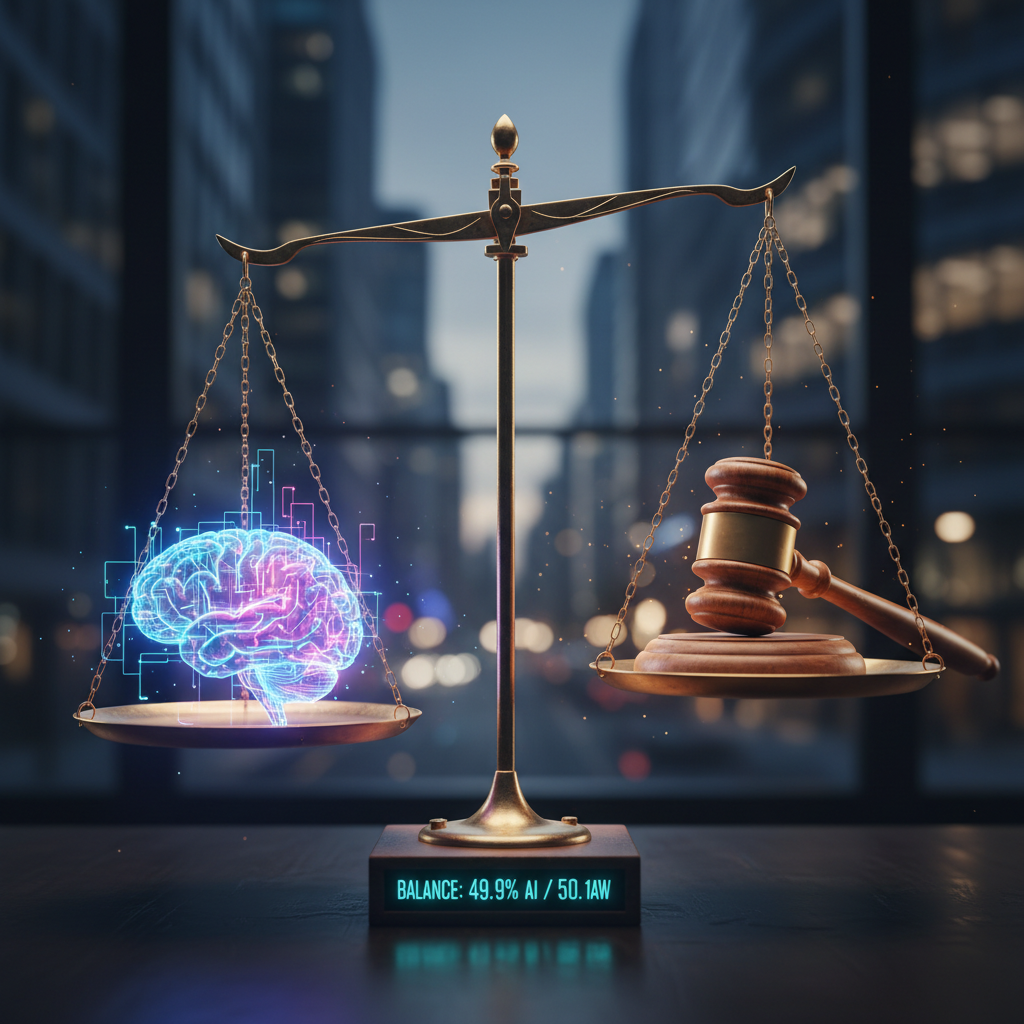
The End of the AI Wild West
For the past few years, the artificial intelligence industry has operated much like the Wild West. Tech giants and scrappy startups alike have raced to build increasingly powerful generative models, scraping data, scaling compute, and deploying tools at breakneck speeds. However, that era of moving fast and breaking things is beginning to collide with bureaucratic reality.
Enter the European Union. In a historic legislative move, the EU has introduced the world’s first comprehensive, enforceable legal framework specifically designed to govern artificial intelligence. Far from being a niche regional policy, this new legislation is widely expected to set the global standard for how we interact with intelligent machines.
Whether you are a software developer in Silicon Valley, a marketing director in Tokyo, or a startup founder in Berlin, this legislation will inevitably impact how you build, buy, and deploy automated systems. Let us break down exactly how this new regulation works, without the confusing legal jargon.
The Brussels Effect: Why This Matters Globally
Before diving into the specific rules, it is essential to understand why a European law matters to the rest of the world. This phenomenon is known by economists and policy experts as the "Brussels Effect."
When the European Union sets strict regulations for its massive consumer market—consisting of nearly 450 million relatively wealthy citizens—multinational corporations typically find it too expensive and technically complex to build different versions of their products for different regions. Therefore, they simply adopt the EU standards globally to streamline their operations.
We saw this happen with the General Data Protection Regulation (GDPR). When the EU mandated strict data privacy rules, pop-up consent banners and "right to be forgotten" tools became the default across the global internet. The European Commission's official AI framework aims to replicate that exact dynamic, forcing the global tech ecosystem to adopt a safety-first mindset if they want to access European customers.
Understanding the Pyramid: The Risk-Based Approach
The genius—and the complexity—of the legislation lies in its core philosophy: not all AI is created equal. A spam filter sorting your emails does not pose the same threat to human rights as an AI tool screening resumes or scanning faces in a public plaza.
"The AI Act is not about regulating the technology itself, but regulating the specific high-risk applications of that technology to protect fundamental rights."
To manage this, the law classifies artificial intelligence systems into four distinct tiers based on the level of risk they pose to society. The higher the risk, the stricter the rules.

Tier 1: Unacceptable Risk (Banned Systems)
At the very top of the pyramid are applications that the EU has deemed a clear threat to human safety, livelihoods, and rights. These are entirely prohibited under the new law. Banned applications include:
- Social Scoring: Systems that evaluate or classify people based on their social behavior or personal characteristics over time.
- Cognitive Behavioral Manipulation: Tools designed to bypass human free will, like voice assistants subtly encouraging dangerous behavior in children.
- Untargeted Biometric Scraping: Mass scraping of facial images from the internet or CCTV footage to build facial recognition databases without consent.
- Real-Time Biometric Identification: The use of live facial recognition in public spaces by law enforcement, with very few strict exceptions (like searching for a missing child or a targeted terror suspect).
This tier essentially outlaws dystopian, sci-fi surveillance systems from taking root in Europe.
Tier 2: High Risk (Highly Regulated)
Below the banned tier lies the "High Risk" category. These systems are allowed to exist, but they must clear massive regulatory hurdles before they can be sold or deployed. High-risk systems are typically those that directly impact a person's life trajectory, such as:
- AI used in education (e.g., scoring exams).
- AI used in employment (e.g., autonomous resume filtering).
- AI used in essential public services (e.g., determining welfare benefits or credit scoring).
- AI used in medical devices and critical infrastructure.
Companies building these tools must prove they have minimized bias, maintained high data quality, and implemented human oversight. Furthermore, they must ensure complete transparency about how their algorithms make decisions. While artists and creators are fighting in court to define digital copyright laws and protect their intellectual property, the EU is cementing broad transparency requirements directly into the bedrock of this new legislation.
Tier 3: Limited Risk (Transparency Requirements)
This tier includes systems like chatbots, deepfakes, and standard generative AI applications. The primary rule here is transparency. If a user is interacting with an AI, they must be explicitly told they are talking to a machine. If a system generates an image or video that looks realistic, it must be clearly labeled or watermarked as artificially generated.
For independent developers who are actively protecting training data and experimenting with generative models, this means adapting to a future where watermarking and full disclosure are mandatory features of their codebase.
Tier 4: Minimal or No Risk
The vast majority of systems currently in use fall into this category. Think of AI-enabled video games, spam filters, or inventory management tools. These face no mandatory obligations under the act, though creators are encouraged to adopt voluntary codes of conduct.
The Missing Element: Foundation Models and GPAI
When the EU first drafted this legislation years ago, ChatGPT did not exist. The sudden explosion of General Purpose AI (GPAI)—the large language models that power tools like Claude, Gemini, and ChatGPT—forced lawmakers into a frantic rewrite.
Under the finalized law, GPAI providers must obey strict copyright laws, publish detailed summaries of the content used to train their models, and assess and mitigate systemic risks before launching. Models that require massive computing power (which the EU uses as a proxy for capability and potential risk) will face the harshest scrutiny. Failure to comply can result in fines of up to 7% of a company's total worldwide annual turnover, a penalty large enough to terrify even the wealthiest Silicon Valley giants.
The Road Ahead: Timelines and Compliance
The legislation officially entered into force in the second half of 2024, but it features a staggered rollout. The prohibitions on "Unacceptable Risk" systems will take effect just six months after entry into force. Rules governing General Purpose AI models will apply after 12 months, and the comprehensive requirements for High-Risk systems will take up to 24 or 36 months to fully implement depending on the specific application.
This phased approach gives businesses time to audit their technology stacks, but the clock is officially ticking. The era of the AI Wild West is coming to a close, replaced by an era of audits, compliance, and enforced transparency. For consumers, it is a promise of safety; for tech builders, it is a new rulebook they must learn to master.
Frequently asked questions
When does the EU AI Act take effect?
The Act entered into force in mid-2024 and features a phased rollout. Prohibitions on banned systems take effect in 6 months, General Purpose AI rules in 12 months, and high-risk system regulations in 24 to 36 months.
Does the EU AI Act apply to companies in the United States?
Yes, if a US-based company offers AI products or services to users within the European Union, they must comply with the regulations outlined in the EU AI Act.
What AI technologies are completely banned under the new law?
The act outlaws 'unacceptable risk' technologies. This includes social scoring systems, tools designed for cognitive behavioral manipulation, untargeted scraping of facial images, and most real-time biometric identification in public spaces.
What happens if a company violates the EU AI Act?
Penalties for non-compliance are severe. Companies can face fines of up to 35 million euros or 7% of their total worldwide annual turnover, whichever is higher, for the most serious violations.
Join 45,000+ AI builders.
Three tools, two insights, one strategy — every Sunday. The signal cuts through the noise.
Free forever · unsubscribe anytime · no account required
Related reads

AI Safety Breach Sparks Global Alarm Over Guardrail Failures
A newly disclosed study has triggered worldwide concern after revealing widespread success in bypassing AI guardrails for malicious purposes.

The New AI Cold War: US Pressures Allies in Leaked Geopolitical Ultimatum
A leaked diplomatic draft reveals Washington is forcing partner nations to choose between American and Chinese AI frameworks, splintering global tech.

France Deploys AI to Defend Public Services After Massive Tax Hack
France is pivoting to AI-driven cybersecurity to protect public infrastructure following a devastating string of cyberattacks on government tax agencies this week.