
Nightshade Explained: How Artists Are Poisoning AI Models in Self-Defense
As AI image generators continue to scrape the web without consent, artists are fighting back with Nightshade—a controversial tool designed to deliberately break AI models from the inside out.
The Invisible War Over Digital Art
For the past two years, the explosive growth of generative artificial intelligence has been fueled by a simple, controversial practice: indiscriminately scraping billions of images from the public internet. From majestic oil paintings to digital character sketches, original artwork has been fed into massive algorithms to train platforms like Midjourney, Stable Diffusion, and DALL-E, largely without the consent, credit, or compensation of the original creators.
For a long time, independent artists felt powerless. Legal battles take years, and opting out of data scraping is notoriously difficult. While other creative sectors are turning to the courts—such as major record labels filing a landmark copyright lawsuit against generative music startups—visual artists have found a more immediate, localized form of resistance. Enter Nightshade.
Nightshade is a revolutionary software tool that allows artists to fundamentally disrupt the way AI models "see" and learn from their work. But the mechanism it uses—a concept known in computer science as data poisoning—has sparked a fierce debate across the tech ecosystem. Is this a righteous act of digital self-defense, or an act of technological vandalism?
What is Data Poisoning? A Non-Technical Breakdown
To understand how Nightshade works, you first need to understand how generative AI learns to recognize images. AI models do not "see" pictures the way humans do. Instead, they look for mathematical patterns in the pixels and associate those patterns with text labels provided during training.
For example, if an AI sees millions of images labeled "cat," it learns to associate the specific pixel arrangements of pointy ears, whiskers, and fur with the word "cat." When a user subsequently types "generate a picture of a cat," the model mathematically reconstructs those familiar patterns.
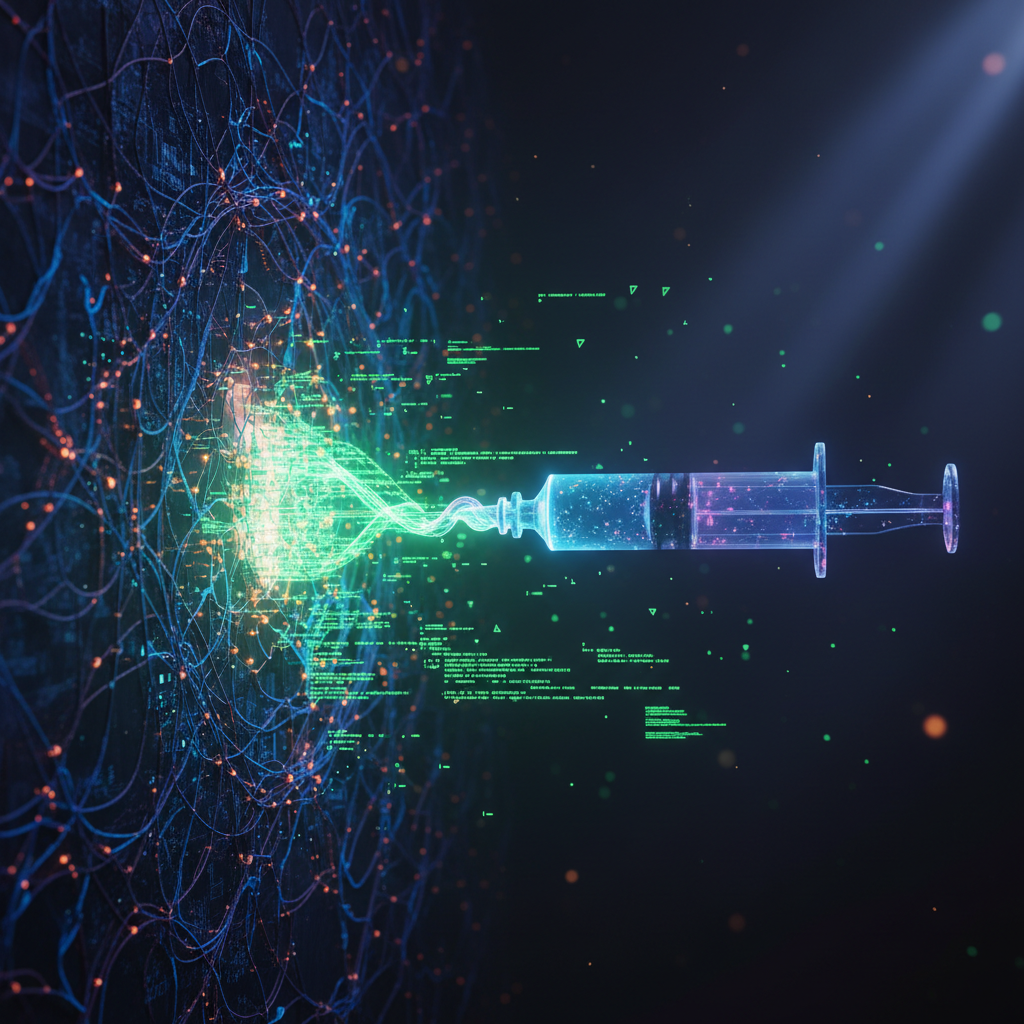
Data poisoning disrupts this foundational learning process. By subtly altering the pixels of an image, software like Nightshade can trick the AI's pattern recognition system. The changes are invisible to the naked human eye—a poisoned portrait still looks exactly like a portrait to a person scrolling through Instagram. But to an AI scraper, the mathematical footprint of that image has been entirely rewritten.
These adversarial tactics were comprehensively detailed in a recent study on data poisoning attacks by researchers at the University of Chicago, who developed the Nightshade tool to empower individual creators against corporate scraping.
How Nightshade Works in Practice
Imagine an artist paints a beautiful landscape featuring a rustic cabin, a sunny sky, and a large dog in the foreground. Before uploading it to their portfolio, they run the image file through the Nightshade application.
The software analyzes the image and applies a layer of targeted "noise"—a very specific sequence of pixel alterations. To human eyes, the image is completely unchanged. However, Nightshade has mathematically altered the image so that, to an AI, the underlying pattern looks exactly like a purse.
- The Human View: A painting of a dog.
- The AI View: A photograph of a purse.
- The Text Label: The artist still uploads it with the tags "My dog painting."
If an AI developer scrapes this "poisoned" image, it ingests a toxic data point. The AI reads the word "dog," but looks at the pixel pattern of a "purse." A single poisoned image won't damage a multi-billion-parameter model. But if an AI ingests thousands of poisoned images, its understanding of reality begins to fracture.
The Ripple Effect: Sabotaging the AI Engine
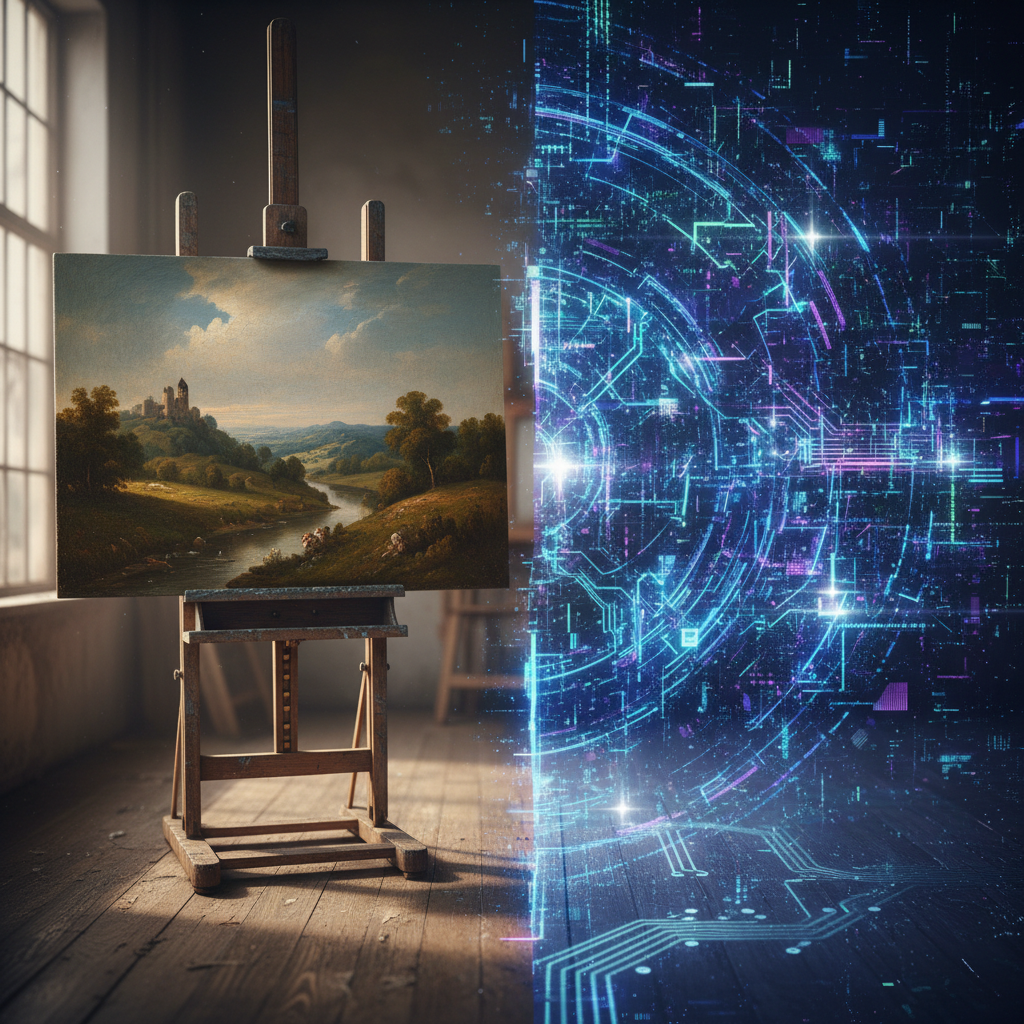
The beauty—and controversy—of Nightshade lies in its compounding effect. If a model consumes enough poisoned data, its internal categories bleed into one another. When a user logs into a future version of that AI and types, "Generate a picture of a dog," the model might spit out a picture of a leather handbag with floppy ears.
Worse for the developers, data poisoning is incredibly difficult to undo. Because the poisoned images look perfectly normal to human reviewers, they easily pass through quality control checks. Once the poison is baked into the model's foundational weights, developers often have to scrap enormous chunks of their training data and start over.
"Nightshade isn't designed to protect a single image from being copied; it is designed to increase the cost of training an AI model on unlicensed data until scraping is no longer economically viable."
Glaze vs. Nightshade: A Multi-Layered Defense
For independent artists wanting to protect their portfolios today, researchers have provided a suite of tools. The two most prominent are Glaze and Nightshade. While they sound similar, they perform entirely different defensive functions.
1. Glaze (The Shield)
Glaze is designed to protect an artist's specific, personal style from being mimicked or cloned. If an artist has a distinct way of drawing sci-fi characters, Glaze alters the image's invisible pixel map so the AI thinks it's looking at an entirely different artistic medium, like charcoal landscape sketches. If someone later prompts the AI with "Draw a spaceship in the style of Artist X," the AI fails because it never actually learned what Artist X's digital style looks like.
2. Nightshade (The Sword)
While Glaze is purely defensive, Nightshade is offensive. It doesn't just hide an artist's personal style; it actively attempts to break the model's fundamental understanding of everyday concepts (like dogs, cats, cars, and trees) if the model trains on that image without permission.
The Controversy: Self-Defense or Vandalism?
The public reaction to Nightshade has been deeply polarizing. Within the creative community, it has been hailed as a revolutionary equalizer. For independent illustrators whose livelihoods are threatened by generative tools that were trained on their unpaid labor, data poisoning represents the only real leverage they have over massive tech conglomerates.
However, AI researchers and legal experts argue the situation is far more complex. Critics of the tool describe Nightshade as a form of digital vandalism. Some argue that intentionally releasing compromised data to sabotage commercial products crosses a legal and ethical boundary. Just as deploying a glaring security flaw to disable a company's customer service bot can lead to civil liability, some experts wonder if widespread data poisoning might eventually provoke lawsuits from AI companies claiming tortious interference.
Furthermore, Open-Source AI advocates warn that data poisoning disproportionately hurts small, academic, and open-source AI projects rather than giants like OpenAI or Google, who possess the vast resources necessary to develop complex data-filtering mechanisms.
The Future of Consent-Based AI
Whether you view Nightshade as a heroic act of digital rebellion or a dangerous precedent for the open web, its existence marks a critical turning point in the AI lifecycle.
The era of treating the internet as an infinite, consequence-free buffet of training data is ending. Tools like Nightshade prove that the creators of that data have the technical capability to fight back. Ultimately, the threat of data poisoning may be the exact catalyst needed to force AI companies to abandon indiscriminate scraping in favor of legal, transparent, and ethically licensed training data.
Frequently asked questions
What is Nightshade in AI?
Nightshade is a software tool created by researchers at the University of Chicago that allows artists to subtly alter the pixels of their artwork. These invisible changes act as "poison" to AI models, disrupting their ability to learn and categorize images correctly.
Can human eyes see the changes made by Nightshade?
No. The pixel alterations applied by Nightshade are mathematically designed to be invisible to the human eye, meaning the artwork looks perfectly normal when viewed on a screen by a person.
What is the difference between Glaze and Nightshade?
Glaze is a defensive tool designed to prevent an AI from mimicking a specific artist's unique style. Nightshade is an offensive tool designed to corrupt the AI model's fundamental understanding of visual concepts (like confusing a dog with a purse) if it scrapes the data without permission.
Is using Nightshade illegal?
Currently, using Nightshade operates in a legal grey area. Artists argue it is a necessary form of digital self-defense against unauthorized data scraping, while some legal experts debate whether intentionally sabotaging commercial AI models could lead to legal disputes.
Join 45,000+ AI builders.
Three tools, two insights, one strategy — every Sunday. The signal cuts through the noise.
Free forever · unsubscribe anytime · no account required
Related reads

What is AGGI? A Beginner's Guide to the New AI Farming Revolution
Plant Culture Systems just launched AGGI, a free AI-native platform for farmers. Here is what beginners need to know about the new era of digital agriculture.

A Beginner's Guide to AI Drug Testing: How 3D Tumors Are Reshaping Medicine
This week, researchers revealed a breakthrough combining 3D-printed patient tumors with real-time AI observation, eliminating the guesswork from cancer treatments.

A Beginner's Guide to AlphaFold 3: AI's Medical Revolution
Google DeepMind's AlphaFold 3 is fundamentally changing how scientists create new medications. This beginner-friendly guide explains the massive medical breakthrough.