

Claude 4 vs GPT-5: The Infrastructure Benchmark Deciding the Market
As unprecedented infrastructure funds flow into AI data centers, the real battle between Claude 4 and GPT-5 isn't about raw intelligence—it's about the unit economics of inference.

The Illusion of the Academic Scoreboard
As the tech industry eagerly anticipates the arrival of GPT-5 and Claude 4, the discourse surrounding these frontier models is overwhelmingly focused on generic academic achievements. On X, Reddit forums, and GitHub discussions, developers argue endlessly about zero-shot reasoning capabilities, expected scores on the MMLU (Massive Multitask Language Understanding) benchmark, and theoretical gains in coding tests like HumanEval.
We are culturally conditioned to treat artificial intelligence like a remarkably talented high schooler taking standard college placement tests. We cheer when a model scores in the 99th percentile on the Uniform Bar Exam or cleanly solves elite mathematics Olympiad problems. But behind closed doors, a completely different metric has captivated the attention of major boardrooms, tech executives, and sovereign wealth funds. It isn’t about how smart the model is in a vacuum. It is about a metric far less glamorous, but far more critical to survival: inference economics.
The Multi-Billion Dollar Compute Proxy War
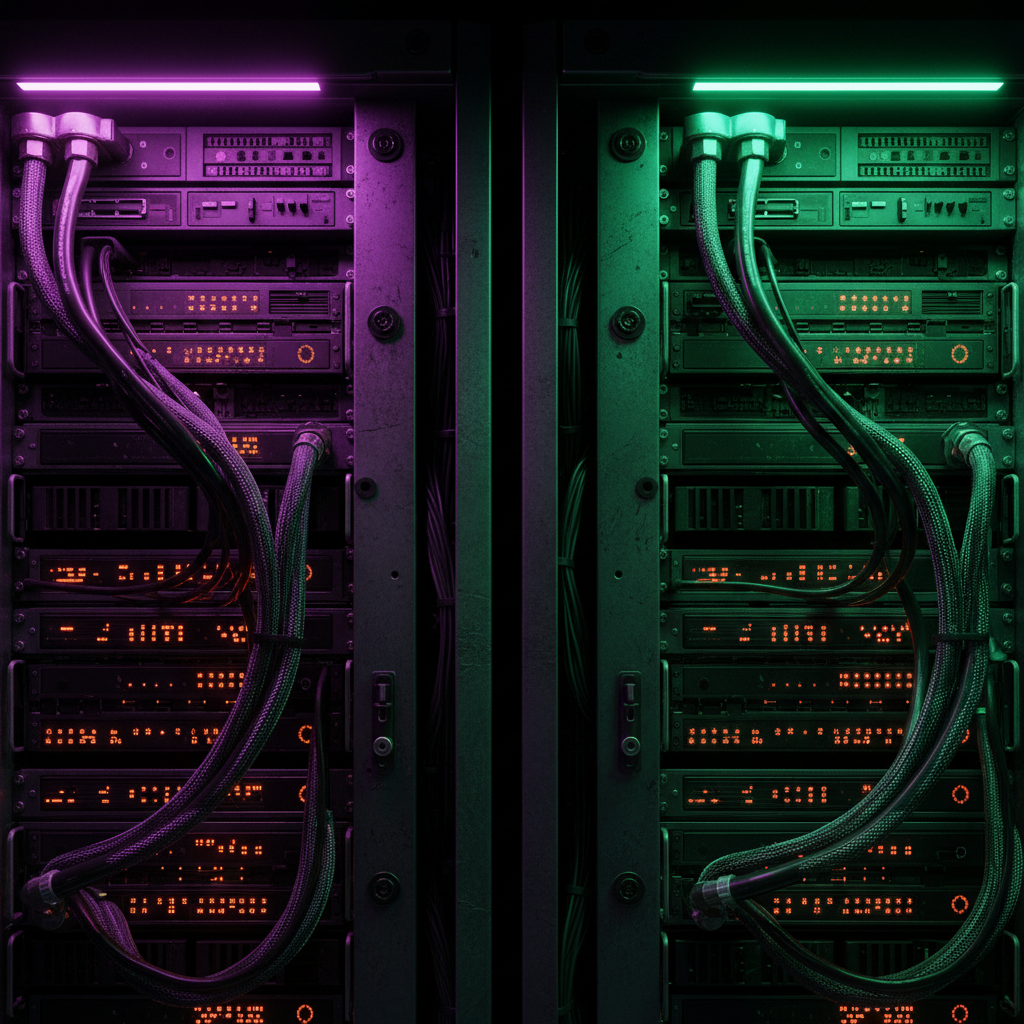
The clearest signal of this hidden battlefield emerged recently with a highly publicized massive infrastructure funding initiative spearheaded by Microsoft, BlackRock, and MGX. Seeking to marshal upwards of $100 billion to build colossal data centers and energy infrastructure, this alliance is explicitly designed to address the staggering reality of running next-generation AI at scale.
This unprecedented gathering of capital illuminates the true bottleneck. The training runs for GPT-5 and Claude 4 are undeniably expensive, reportedly costing an excess of a billion dollars each. However, training is a fixed, one-time capex expenditure. The existential threat to both OpenAI and Anthropic is the variable cost of inference—the computational power required every single time a user, agent, or API pulls an answer from the model.
Anthropic and OpenAI recognize that their upcoming flagship offerings won't just compete on IQ; they compete heavily on capital expenditure and energy efficiency. The company that can deliver highly capable intelligence at the lowest price per token will swallow the enterprise market. The market move by BlackRock and Microsoft signals a stark reality: securing raw compute at wholesale infrastructure prices is now more valuable than minor architectural breakthroughs in model reasoning.
The Real Benchmark: Cost per Agentic Action
To understand why inference economics is the ultimate kingmaker, one must examine how developers are actually integrating the current generation of models into enterprise workflows.
We are rapidly moving away from simple single-turn chatbot interactions. Modern applications rely on multi-step workflows, recursive loops, and AI agents capable of planning and executing tasks over long periods. Consider the software development sector, where legacy AI autocomplete ecosystems are being rendered obsolete by new agentic coding environments. These advanced systems read, synthesize, and rewrite entire repositories in the background without constant human prompting.
Such autonomous systems require continuous, loop-based inference. They might hit a model’s API fifty or a hundred times to accomplish a single user request. If a single reasoning step from GPT-5 costs roughly ten cents, an agentic task requiring fifty steps costs five dollars. In a consumer or B2B SaaS application run at scale, five dollars per action is economically catastrophic.
Why the $157 Billion Valuation Actually Matters
When massive venture capital rounds close, retail commentators tend to focus purely on the sheer spectacle of the resulting valuations. In reality, these are heavily calculated survival metrics. When observing the shifting financial realities of the generative AI market, it becomes clear that exorbitant valuations are necessary tools to secure the debt and compute lines required to subsidize widespread adoption.
OpenAI's strategy inherently relies on compute density supplied by Microsoft's data center expansions. Anthropic, conversely, has deeply aligned itself with Amazon Web Services and Google Cloud, specifically leaning into specialized hardware like AWS Trainium and Inferentia chips. Anthropic’s bet is that while Nvidia GPUs rule the training phase, custom silicon deployed at the cloud provider level can drastically reduce the cost of running inference for Claude 4.
If Claude 4 can achieve 98% of the cognitive capability of GPT-5 but operates at roughly one-tenth the cost per API call, it wins the war. The enterprise developer does not care if an AI is capable of writing Shakespearean sonnets in the style of Snoop Dogg. The enterprise developer cares about high-reliability JSON extraction, code synthesis, and data pipeline automation at a unit economic cost that allows them to turn a profit.
Energy, Tokens, and the Edge
The race to lower inference costs is intrinsically tied to global energy resources. Data centers are hitting massive power constraints, leading tech giants to explore nuclear energy revitalization simply to meet the grid demands of 2026 and beyond. Every generation of generative language model introduces exponentially higher parameter counts, meaning a single generated token takes far more electrical power than before.
This hardware and energy dynamic introduces a fascinating twist in the benchmark battle. Both companies are racing to construct "hybrid" architectures—models that dynamically route simple queries to smaller, hyper-efficient sub-systems while saving their expensive, heavy-duty compute parameters for complex reasoning tasks. The ability of the model itself to know when to "think hard" and when to "answer cheaply" is the algorithmic holy grail that will ultimately define the financial sustainability of GPT-5 and Claude 4.
The Verdict for 2026
The arms race between OpenAI and Anthropic is no longer a localized sprint for raw intelligence; it is a global marathon of industrial supply chains, real estate acquisition, silicon fabrication, and energy grid management.
As these two AI titans prepare to launch their respective fourth and fifth-generation models, keep your eyes off the traditional leaderboards. The MMLU scores will undoubtedly be breathtaking, but they will be largely irrelevant to the commercial success of the platforms. The true benchmark is whether these models can operate fast enough, and cheaply enough, to replace human operations at scale without bankrupting the very startups striving to deploy them. The winner will simply be whoever turns intelligence into a cheap, abundant commodity first.
Frequently asked questions
What is the real benchmark for GPT-5 and Claude 4?
While traditional benchmarks focus on raw reasoning and exam scores like the MMLU, the critical metric for the industry is 'inference unit economics'—the financial and computational cost required to generate a single token or run an agentic action at scale.
Why is inference cost so important for next-generation AI?
As AI models transition from simple chatbots to autonomous agents that execute multi-step workflows, they must perform continuous, loop-based tasks. If generating answers remains too expensive, running an AI agent becomes commercially unviable for standard business operations.
How are companies funding the massive compute demands of AI?
Leading tech firms and sovereign wealth funds are creating massive multi-billion-dollar infrastructure pools—such as the recent Microsoft and BlackRock initiative—to build giant data centers and secure energy grids specifically designed to run advanced AI models.
How do Claude 4 and GPT-5 differ in their infrastructure strategy?
OpenAI deeply relies on Microsoft's Azure infrastructure and vast computational subsidies, while Anthropic partners closely with AWS and Google Cloud, potentially leveraging specialized cloud silicon like AWS Inferentia to drastically lower inference costs.
Join 45,000+ AI builders.
Three tools, two insights, one strategy — every Sunday. The signal cuts through the noise.
Free forever · unsubscribe anytime · no account required