
A Beginner's Guide to AlphaFold 3: AI's Medical Revolution
Google DeepMind's AlphaFold 3 is fundamentally changing how scientists create new medications. This beginner-friendly guide explains the massive medical breakthrough.

For decades, creating a new life-saving drug has been a massive gamble. Pharmaceutical companies typically spend over ten years and upwards of a billion dollars to bring a single medication to market. The lion's share of that time is spent in a painstakingly slow trial-and-error process, attempting to figure out how tiny molecules interact within the human body. Discovering a new medicine is essentially trying to find the perfect molecular key for a microscopic lock.
But what if a computer could simply visualize that lock and perfectly design the key in a matter of seconds? What if artificial intelligence could accurately predict exactly how a novel drug will behave theoretically before a scientist ever pipettes chemicals in a laboratory?
This is no longer science fiction. With the recent release of AlphaFold 3, we have officially entered a new era of medical research and drug discovery. If you are not a structural biologist, the immense hype around this technology might seem overwhelming or deeply confusing. This guide breaks down exactly what AlphaFold is, how it works under the hood, and why it is widely considered the most important scientific AI breakthrough of our generation.
The Biological Puzzle: The Protein Folding Problem
To understand why this new AI tool is revolutionary, we first need to understand the fundamental building blocks of life: proteins. Proteins are the microscopic machines that do almost everything inside your body. They digest food, contract your muscles, and form the antibodies that fight off diseases. Each protein starts as a linear string of amino acids. Driven by complex physics, this string spontaneously crumples and twists into a highly specific three-dimensional shape.
"If you want to understand how a protein functions—or how to stop a disease-causing protein—you absolutely must know its final 3D shape."
For more than fifty years, scientists struggled with the "protein folding problem." In the lab, figuring out the 3D structure of a single protein using techniques like X-ray crystallography could take a dedicated researcher years to complete. The human body alone has roughly 20,000 different proteins, not to mention the millions more found in viruses, bacteria, and plants. Doing structural analysis manually was a massive bottleneck in biological research.
Enter AlphaFold: A Leap Toward Generative Biology
In 2020, Google DeepMind shocked the scientific community by essentially solving the protein folding problem with AlphaFold 2. The AI model could take the amino acid sequence of almost any protein and accurately predict its 3D shape in minutes instead of years. The open-source data transformed biological research overnight.
However, the new iteration, AlphaFold 3, takes this massive scientific leap significantly further. While its predecessor was limited to just proteins, the updated model can map out entirely different classes of biological matter, including DNA, RNA, and small molecules known as ligands. The system's true breakthrough lies in correctly mapping the complex interactions of biological molecules in real time, granting researchers a holistic view of the cellular environment.
Much like how Google DeepMind's AI has been deployed to predict extreme weather events with unprecedented speed, the organization's biology division is applying complex neural network architectures to predict the micro-weather of human biology.
How AI is Accelerating Drug Discovery
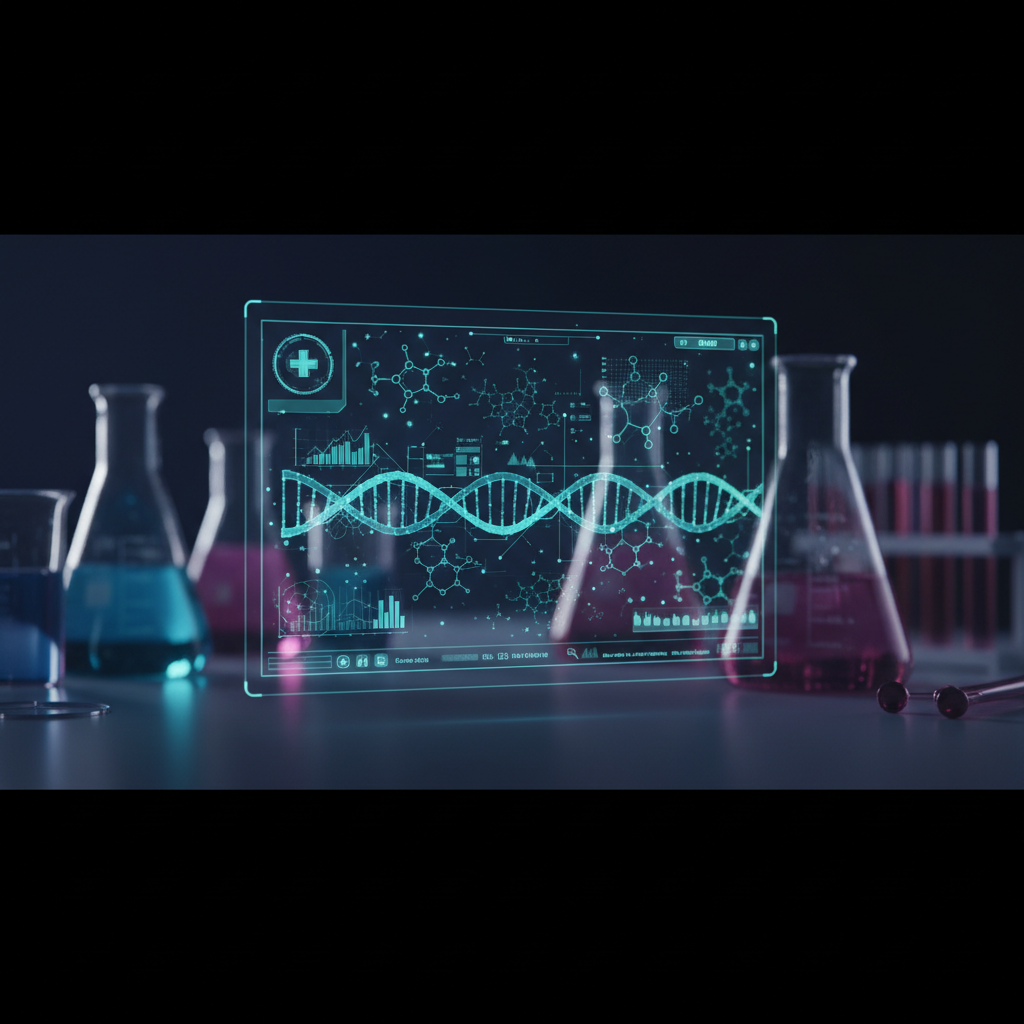
So, how does a highly technical biological mapping tool actually translate into better medicine for average patients? The answer lies in the highly complex "ligands" that AlphaFold 3 is now capable of modeling.
Most pharmaceutical drugs are small molecule ligands. To cure an ailment or stop a virus from multiplying, a drug must bind to a disease-causing protein and physically block its function. Because AlphaFold 3 can accurately simulate these delicate bindings natively on a computer, pharmaceutical scientists can now test millions of potential drug compounds digitally. They can narrow down millions of candidates to the top hundred in days, bypassing years of blind laboratory testing.
- Increased Speed: What used to take researchers three to four years in the initial discovery phase can now be accomplished in several weeks.
- Cost Reduction: By streamlining early discovery, the financial barrier for researching treatments for rare, underfunded diseases is significantly lowered.
- Higher Success Rates: Because the bindings are predicted and evaluated virtually with extreme precision, the drug candidates that proceed to physical animal and human trials are significantly more likely to succeed.
The Real-World Impact and What Comes Next
DeepMind recently spun off a new venture, Isomorphic Labs, strictly dedicated to applying AlphaFold 3's capabilities directly to commercial drug discovery. This new frontier is already securing massive, multi-million dollar partnerships with long-standing pharmaceutical giants like Novartis and Eli Lilly.
Still, while AI completely upends the initial design and discovery stages, it does not bypass the need for physical laboratories or stringent clinical trials. An AI can suggest the perfect chemical compound, but human scientists must still manufacture that compound, ensure it is non-toxic to living organisms, and confirm exactly how it distributes throughout a living patient's bloodstream.
Furthermore, as medical data explodes, researchers are increasingly relying on AI not just for modeling, but for tasks like personal knowledge management to keep track of the overwhelming influx of new findings. Developing a drug remains a fundamentally human endeavor, but the tools researchers wield are becoming exponentially sharper.
Looking Toward a Healthier Future
AlphaFold 3 represents a fundamental paradigm shift from empirical research—where we guess, check, and physically iterate—to generative biology, where computers can effectively engineer the building blocks of cures. Although you won't see a medication purely printed out by AI at your local pharmacy tomorrow, the invisible hand of models like AlphaFold 3 will almost certainly be behind the life-saving therapies that roll out over the coming decade.
Frequently asked questions
What exactly is AlphaFold 3?
AlphaFold 3 is an artificial intelligence model created by Google DeepMind that predicts the 3D structures and interactions of life's essential molecules, including proteins, DNA, RNA, and drug ligands.
How is AlphaFold 3 different from AlphaFold 2?
While AlphaFold 2 was restricted solely to predicting the structure of proteins, AlphaFold 3 can accurately model a much wider array of biological molecules and predict exactly how these different molecules physically interact together.
Will AI replace human scientists in drug discovery?
No. While AI drastically speeds up the discovery and design phase by acting as a powerful virtual simulation tool, human scientists are still entirely necessary to synthesize the drugs, test them for safety, and run physical clinical trials.
When will drugs discovered by AlphaFold 3 be available?
Clinical trials for drugs take many years to ensure safety and efficacy. However, the first wave of therapies designed with the help of advanced AI models like AlphaFold are currently entering trial phases and could reach the market within the decade.
Join 45,000+ AI builders.
Three tools, two insights, one strategy — every Sunday. The signal cuts through the noise.
Free forever · unsubscribe anytime · no account required
Related reads

What is AGGI? A Beginner's Guide to the New AI Farming Revolution
Plant Culture Systems just launched AGGI, a free AI-native platform for farmers. Here is what beginners need to know about the new era of digital agriculture.
A Beginner's Guide to AI Drug Testing: How 3D Tumors Are Reshaping Medicine
This week, researchers revealed a breakthrough combining 3D-printed patient tumors with real-time AI observation, eliminating the guesswork from cancer treatments.
Nightshade Explained: How Artists Are Poisoning AI Models in Self-Defense
As AI image generators continue to scrape the web without consent, artists are fighting back with Nightshade—a controversial tool designed to deliberately break AI models from the inside out.