

Google Opens Ironwood TPUs to Rival Clouds in Major AI Shift
Google is ending its walled-garden hardware approach by offering its high-memory Ironwood TPUs to third-party cloud platforms.
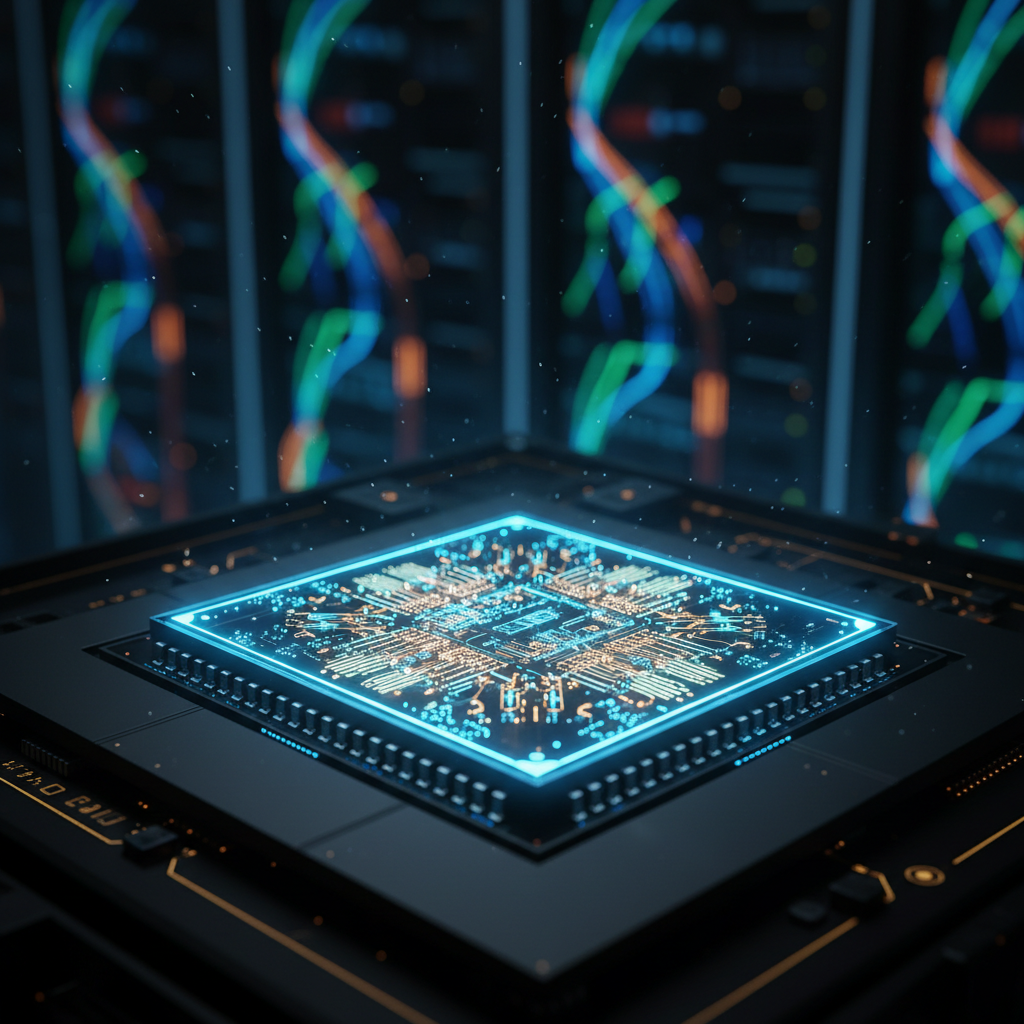
For nearly a decade, Google’s Tensor Processing Units (TPUs) have been the crown jewel of its proprietary infrastructure, locked strictly within the confines of Google Cloud. But in a move that fundamentally alters the semiconductor landscape this week, Google is tearing down its walled garden. The tech giant has announced it is making its latest generation of custom silicon available to competing cloud platforms, introducing a secondary avenue for large language model (LLM) providers desperate for massive compute.
This strategic pivot comes as the insatiable demand for generative AI models creates continuous bottlenecks in data center scaling and silicon logistics. By unbundling its hardware from its cloud services platform, Google is signaling a transition from mere cloud dominance to becoming a foundational silicon supplier that competes directly with the unassailable grip of Nvidia.
The Supremacy of the Ironwood TPU
The centerpiece of this unprecedented shift is Google’s newest architecture. According to details released over the past few days, Google is officially opening its in-house AI chips to outside cloud providers to capture a broader segment of the infrastructure market. Driving this rollout is the formidable Ironwood TPU, which represents a massive architectural leap over the previous TPU v5p.
The latest Ironwood TPU features 192GB of high-bandwidth memory (HBM), which is around six times more than previous generations. This massive memory envelope is critical for the evolving requirements of frontier AI in 2026. Today's cutting-edge models seamlessly blend multi-modal inputs—processing hour-long video, high-resolution audio, and multi-gigabyte document libraries sequentially—meaning memory bandwidth, rather than raw computation speed, has become the primary bottleneck in data centers.
By packing 192GB of HBM directly alongside the compute cores, Ironwood allows inferencing clusters to serve exceptionally large batch sizes without forcing models to splinter across multiple chips via tensor parallelism. This reduces latency significantly, cutting the cost-per-token and fundamentally increasing the financial viability of mass-market AI deployment.
Disrupting the AI Supply Chain
For years, third-party cloud hyperscalers and specialized GPU-as-a-Service providers have lived or died on their allocations of Nvidia hardware. The global competition for compute left smaller clouds waiting months for server racks. Google’s play aggressively undercuts this dynamic.
While Nvidia focuses heavily on reshoring supercomputer production to strictly manage its domestic supply chain against shifting US trade policies, Google is taking an export-heavy approach to its silicon licensing. Rather than forcing startups to migrate their entire MLOps stacks to Google Cloud Platform to use TPUs, Google will now ship Ironwood pods directly into the data centers of secondary cloud providers like CoreWeave, Lambda Labs, and even sovereign cloud initiatives across Europe and the Middle East.

This hardware separation effectively transforms Google into a dual-threat entity. They remain a top-tier cloud vendor, but they now act as a merchant silicon provider explicitly optimized for AI workloads. Industry analysts expect this to force price compression in the AI compute market, ultimately lowering the barrier to entry for enterprise developers working on specialized foundational models.
The Reality of Modern Data Center Density
Deploying Ironwood TPUs outside of Google's bespoke data centers does present tremendous engineering hurdles, particularly regarding power density and thermal management. Compute clusters in 2026 no longer resemble the virtualization servers of the previous decade. Modern racks are incredibly dense, drawing upward of 120 kilowatts each, pushing traditional air-cooled facilities far past their architectural limits.
Outside cloud providers wishing to install Ironwood clusters must adopt advanced liquid cooling topologies. Google has spent years optimizing warm-water cooling frameworks internally, allowing its data centers to operate with incredible Power Usage Effectiveness (PUE) metrics. External partners integrating Ironwood will likely be forced to retrofit their facilities with direct-to-chip cooling loops, requiring substantial upfront capital expenditure.
However, the return on investment justifies the retrofit. Because Ironwood fundamentally offers higher performance-per-watt capabilities compared to off-the-shelf gaming-derived silicon, data center operators can effectively squeeze more inferencing throughput into geographically constrained facilities.
Geopolitics and the Pursuit of Compute
Beyond basic economics, Google’s hardware pivot is deeply entangled with international technology policy. As we navigate the latter half of 2026, the global race to hoard AI infrastructure has reached unprecedented levels. State actors are increasingly viewing sovereign AI capabilities as matters of national security, prompting aggressive subsidies for local data center investments.
This democratization of access occurs alongside tightening data center regulations across the European Union and Asia. Many nations are implementing strict mandates requiring citizen data—including the massive vectors processed by generative AI models—to remain onshore. By allowing regional cloud providers to purchase and host Ironwood TPUs locally, Google provides a ready-made solution for nations attempting to build domestic frontier models without running afoul of data sovereignty laws.
What to Expect Next in the Silicon Wars
Google’s decision to untether the TPU from Google Cloud is the most significant structural change to the AI infrastructure market this year. As Ironwood units begin shipping to third-party data centers in the coming months, we anticipate several downstream effects across the industry:
- Pricing Pressure: Competing semiconductor giants will likely be forced to aggressively re-price their mid-tier inference chips as TPUs become widely accessible.
- Open Software Ecosystems: Expect open-source AI frameworks like PyTorch and JAX to receive massive community updates aimed at optimizing performance on third-party TPU deployments.
- Boutique Cloud Expansion: Specialized AI cloud hosts will expand their offerings beyond standard GPU rentals, providing users with a wider array of architectural choices based on their specific workload needs.
The arms race to build the intelligence layer of the internet has clearly shifted from a battle of algorithms to a war of infrastructure. With the Ironwood TPU now acting as a free agent in the cloud ecosystem, Google has ensured that its technological DNA will power the next phase of the AI revolution, regardless of whose logo is printed on the side of the server rack.
Frequently asked questions
What is the Google Ironwood TPU?
The Ironwood TPU is Google's newest generation of Tensor Processing Unit in 2026, offering massive memory upgrades—specifically 192GB of high-bandwidth memory—to optimize AI inference workloads.
Why is Google offering TPUs to outside clouds?
Google is seeking to capture a broader share of the AI hardware market, competing directly directly with traditional silicon suppliers like Nvidia, and enabling regional providers to host sovereign AI infrastructure.
How does 192GB of memory benefit AI developers?
Larger memory capacity allows large language models to process queries with larger batch sizes on a single chip, drastically reducing latency and the overall cost to generate each token.
Will Ironwood TPUs require special cooling?
Yes, due to their massive compute density, these clusters typically require advanced direct-to-chip liquid cooling systems rather than traditional air-cooled server fans.
Join 45,000+ AI builders.
Three tools, two insights, one strategy — every Sunday. The signal cuts through the noise.
Free forever · unsubscribe anytime · no account required
Related reads

Nvidia's $13B Hugging Face Bid Could Redefine Open-Source AI
Explosive reports this week suggest Nvidia is looking to acquire Hugging Face for $13 billion, a deal that would merge hardware dominance with open-source software.

Nvidia Unveils DSX MaxLPS at Hot Chips 2026 to Solve the AI Power Crisis
Unveiled this week at Hot Chips 2026, Nvidia's new DSX MaxLPS architecture tackles the AI power crisis by maximizing compute within fixed data center budgets.

Google Alters Android App Rules Amid AI-Driven Memory Crunch
As the AI data center boom devours the global supply of memory chips, Google is stepping in to change Android app requirements, forcing developers to adapt.