

Nvidia Unveils DSX MaxLPS at Hot Chips 2026 to Solve the AI Power Crisis
Unveiled this week at Hot Chips 2026, Nvidia's new DSX MaxLPS architecture tackles the AI power crisis by maximizing compute within fixed data center budgets.
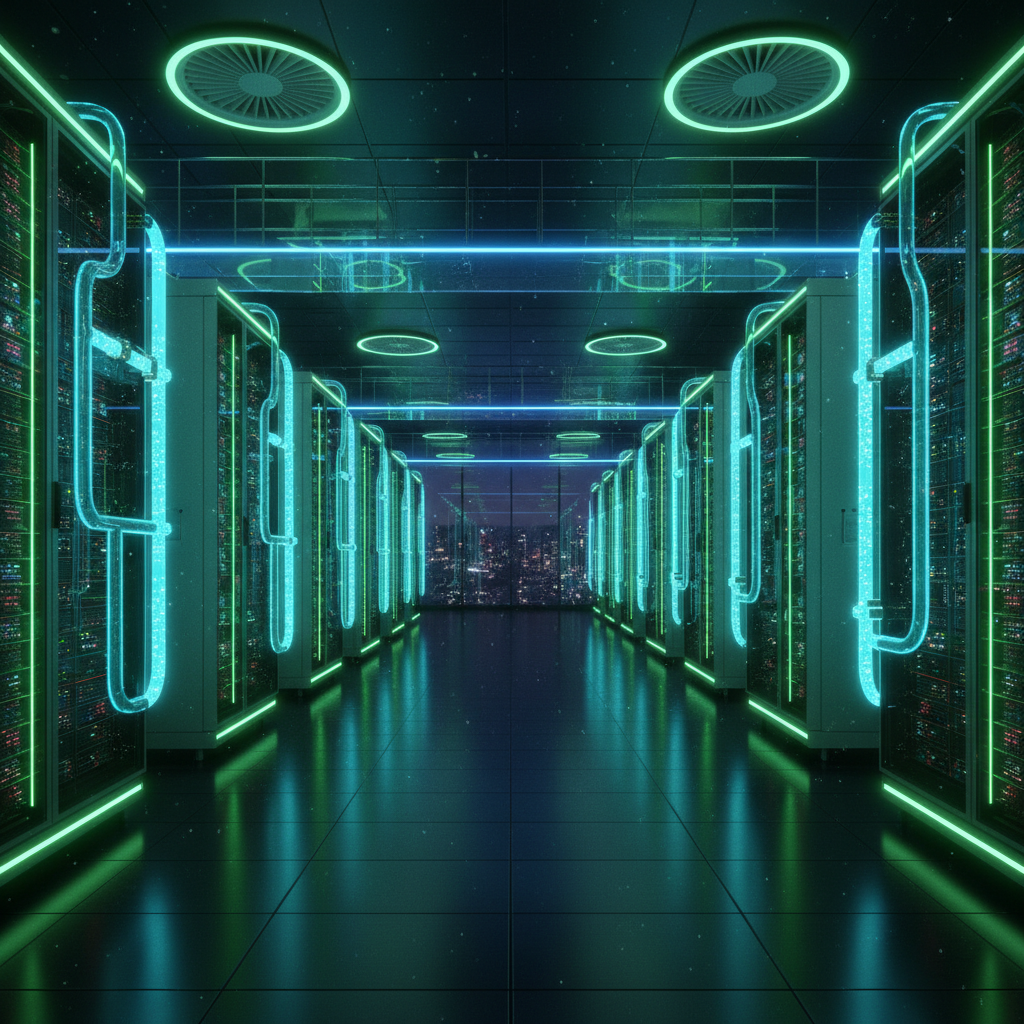
The artificial intelligence industry has officially hit a physical wall. While algorithmic breakthroughs continue at a staggering pace, the sheer physical infrastructure required to train and run next-generation frontier models is buckling under immense electrical demands. As of late August 2026, utility providers worldwide are struggling to provision the hundreds of megawatts required for modern hyperscale facilities. In response, silicon giants are shifting their focus from simply building faster chips to rethinking how power is distributed across entire server fleets.
This week at the highly anticipated Hot Chips 2026 conference, Nvidia took center stage to address this exact bottleneck. Rather than focusing solely on floating-point operations per second or memory bandwidth, the company unveiled its latest systemic breakthrough: the DSX MaxLPS architecture. This new framework represents a paradigm shift in data center design, moving the industry away from static, over-provisioned power delivery toward highly dynamic orchestration.
The End of Static Provisioning
Historically, data centers were built with rigid power assumptions. If a server rack required 50 kilowatts at maximum load, facility operators provisioned exactly that amount—plus a safety margin—ensuring the hardware would never trip a breaker. However, AI workloads are notoriously bursty. A cluster training a large language model might draw massive current for a few seconds during specific matrix multiplications, only to idle moments later while data is fetched from memory.
As the AI data center boom devours the global supply of critical infrastructure components, building massive new facilities to accommodate these peak-load spikes has become economically and logistically unviable. Nvidia's presentation at Hot Chips 2026 argued that locking up stranded power capacity based on theoretical peak utilization is a luxury the industry can no longer afford.
Enter DSX MaxLPS. The framework operates on the principle that an entire cluster rarely hits maximum utilization simultaneously. By implementing microsecond-level telemetry and dynamic load balancing, the architecture allows facility operators to safely oversubscribe their total power footprint. Nvidia executives demonstrated how this site power management strategy enables hyperscalers to pack significantly more GPUs into a facility without exceeding the utility company's megawatt cap.
Squeezing Compute from Fixed Budgets
The core benefit of the DSX MaxLPS system is its ability to extract more raw compute performance from a strictly fixed data center power budget. For major cloud providers operating legacy facilities constrained to 30 or 50 megawatts, upgrading to modern, high-density AI accelerators was previously impossible without tearing down the building and renegotiating utility contracts—a process that often takes up to five years.
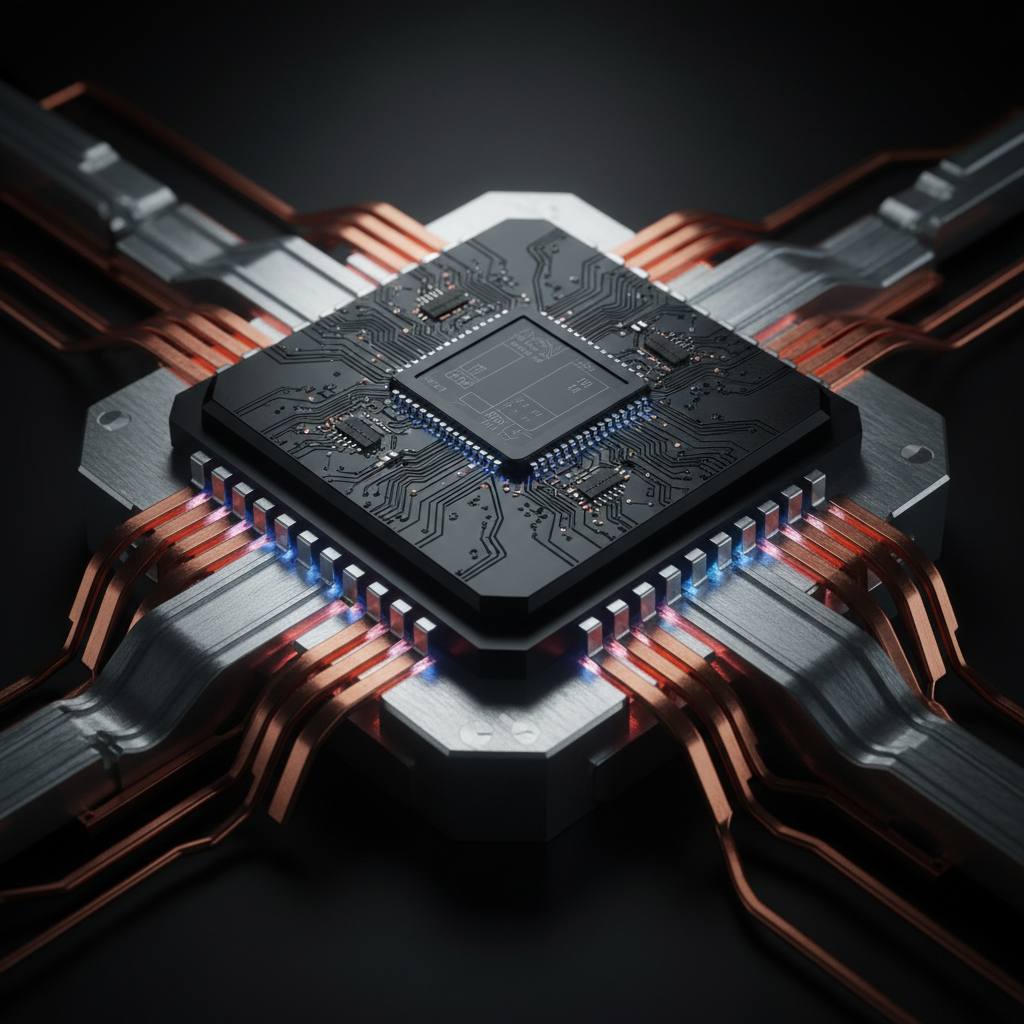
With Nvidia's new approach, power is treated as a fluid resource routed instantly to the racks that need it most. If a specific row of compute nodes is waiting on network traffic or memory retrieval, DSX MaxLPS instantly scales down their voltage and reallocates that wattage to active nodes performing heavy tensor calculations. The result is a reported 20% to 30% increase in cluster-level throughput within the exact same electrical envelope.
The Interplay of Power and Liquid Cooling
Managing this level of dense, dynamic compute requires an entirely new approach to thermal management. It is no longer sufficient to blast chilled air through raised floors. The dynamic power-shifting enabled by DSX MaxLPS creates intense, localized thermal hotspots that migrate across the data center floor in real time based on the workload.
To combat this, Nvidia's architecture tightly integrates with advanced liquid cooling systems. Coolant flow rates can now be dynamically adjusted in tandem with power delivery. When the DSX MaxLPS system detects that a specific rack is about to receive a massive surge in power allocation, the facility's cooling infrastructure preemptively ramps up fluid flow to those specific cold plates, ensuring the GPUs remain well within optimal thermal limits without wasting energy overcooling idle racks.
- Dynamic Reallocation: Shifts power in microseconds based on active tensor workloads.
- Stranded Power Recovery: Utilizes the 15-20% of facility power traditionally lost to safety margins.
- Preemptive Thermal Management: Syncs liquid cooling flow rates with predictive power spikes.
- Legacy Facility Upgrades: Allows older, power-capped data centers to house modern AI clusters.
Orchestrating the AI Ecosystem
Nvidia's announcement at Hot Chips 2026 underscores a broader strategic pivot. The company is no longer just selling GPUs; it is selling the entire "AI Factory" blueprint. By controlling the networking fabric, the power distribution telemetry, and the thermal management APIs, Nvidia is cementing its position as the indispensable architect of the modern intelligence era.
This infrastructural dominance provides Nvidia with the capital and leverage to fund aggressive expansions into the software and application layers. Over the past year, the company has broadened its reach well beyond silicon, most notably weighing a massive $30 billion valuation for AI search startup Perplexity. By ensuring that its hardware remains the most efficient per watt deployed, Nvidia guarantees that these downstream software investments run on its proprietary stack.
Looking Ahead to 2027
As we move toward the final quarter of 2026, the constraints on AI progress are definitively physical. The era of "build it bigger" is colliding with the realities of the global electrical grid. Innovations like DSX MaxLPS prove that the next major leaps in artificial intelligence will come not just from clever algorithms or node shrinks, but from ruthless efficiency in facility engineering.
For enterprise IT leaders and hyperscale operators, the message from Hot Chips 2026 is clear: power is the new premium currency. The companies that can best master the orchestration of electrons and liquid coolant will be the ones capable of training the massive, trillion-parameter models of tomorrow.
Frequently asked questions
What is Nvidia DSX MaxLPS?
Nvidia DSX MaxLPS is a newly announced site power management architecture that dynamically allocates electrical power across a data center to maximize compute efficiency.
Why did Nvidia announce this at Hot Chips 2026?
Data centers are hitting hard physical limits regarding power availability. Nvidia introduced this architecture to show how operators can extract more performance from their existing, fixed power budgets.
How does DSX MaxLPS improve AI data centers?
Instead of statically reserving power for worst-case scenarios, the system dynamically routes power and adjusts liquid cooling in real time to active server racks, recovering 'stranded' capacity.
Does this require liquid cooling?
Yes, managing such dense, dynamic power spikes creates intense thermal hotspots, making advanced liquid cooling a necessity for the architecture to function safely.
Join 45,000+ AI builders.
Three tools, two insights, one strategy — every Sunday. The signal cuts through the noise.
Free forever · unsubscribe anytime · no account required
Related reads
Google Alters Android App Rules Amid AI-Driven Memory Crunch
As the AI data center boom devours the global supply of memory chips, Google is stepping in to change Android app requirements, forcing developers to adapt.
Google Taps AMD for Hybrid TPU: Inside the 2026 Data Center Revolution
In a major shift for AI infrastructure, Google is reportedly partnering with AMD to design a hybrid TPU to tackle the compute demands of reinforcement learning.

Elon Musk's xAI Targets 10 Gigawatts in Massive Data Center Push
Elon Musk has unveiled a staggering infrastructure roadmap for xAI, aiming to multiply data center capacity seven-fold to hit 10 gigawatts of compute by 2027.