

Nvidia’s US Supercomputer Shift Sparks New Infrastructure Battles
Nvidia is aggressively reshoring its AI supercomputer and chip production to the United States, sparking fierce debates over energy policy and local zoning.
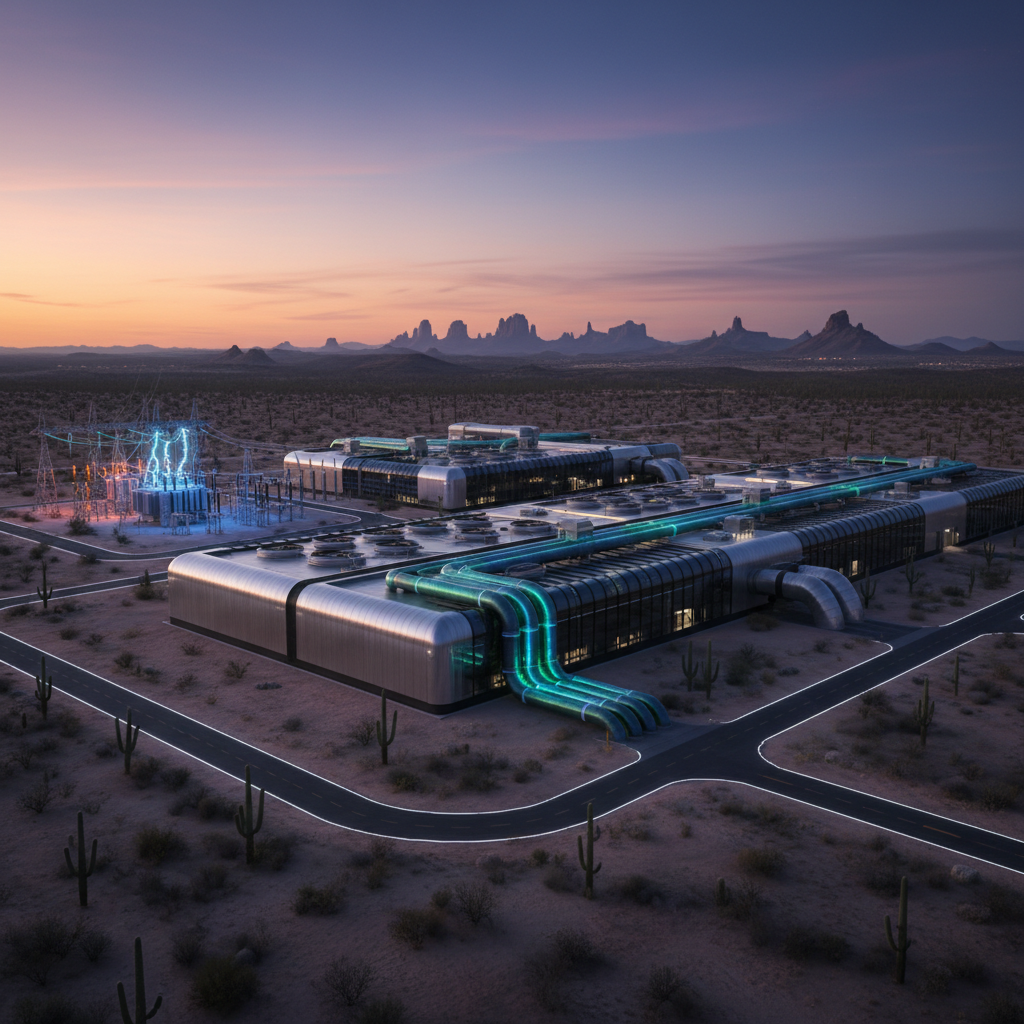
In a profound geopolitical pivot this week, the landscape of global artificial intelligence infrastructure is undergoing a radical transformation. Driven by an increasingly aggressive web of federal regulations and export controls designed to secure domestic computing supremacy, the physical foundation of AI is being dramatically reshaped. For the past decade, the high-performance chips powering our most capable neural networks were largely forged overseas, while supercomputers were scattered across optimal micro-climates. In July 2026, that era of decentralized, unregulated expansion officially comes to a close.
Rethinking the Silicon Supply Chain
For months, lawmakers in Washington have aggressively pressured major tech conglomerates to rethink their reliance on offshore fabrication and offshore sovereign compute. While the CHIPS Act laid the financial groundwork, new national security policies are forcing the industry's hand, placing strict regulatory barriers on where next-generation exascale compute can physically reside.
This week, Nvidia answered that regulatory call. In a monumental announcement closely tied to TSMC's stateside operational updates, Nvidia confirmed it will begin manufacturing its most advanced AI chips and building its next fleet of supercomputers exclusively in the United States. This marks a definitive shift in production strategy as geopolitical pressures mount and federal mandates prioritize sovereign AI capabilities. By anchoring the most critical stages of the AI hardware lifecycle within U.S. borders, Nvidia is aligning with a growing regulatory consensus that views advanced data centers as critical national defense infrastructure, akin to nuclear power facilities.
However, relocating the production of bleeding-edge silicon and standing up interconnected supercomputing clusters on American soil is not merely a supply chain adjustment. It presents an immediate and staggering collision with domestic energy policy, environmental regulations, and municipal zoning laws. The AI infrastructure trade has completely matured, and the bottlenecks are no longer just fabrication yields—they are substations, cooling pipelines, and environmental impact reports.
The Energy and Environmental Policy Bottleneck
Building domestic supercomputers to train frontier AI models requires contiguous gigawatt-class power allocations. As Nvidia and its enterprise partners begin scoping out massive plots of land in the Midwest and Deep South to house these stateside mega-clusters, they are running headfirst into stringent oversight from the Environmental Protection Agency (EPA) and regional grid operators.
Historically, hyperscalers could mask their infrastructure footprint by distributing workloads globally. The new mandate for sovereign stateside compute clusters changes that calculus. When a single next-generation U.S. supercomputer deployment demands the equivalent energy draw of a moderate-sized American city, the regulatory friction is immense. State legislatures are currently debating emergency energy bills, and several public utility commissions have recently proposed strict caps on grid capacity allocations for data center projects.
- Grid Reliability Mandates: New federal energy guidelines require "baseline stability guarantees" before any new multi-megawatt AI data center can break ground on U.S. soil.
- Water Conservation Caps: Unprecedented restrictions in drought-prone regions are altering how server farms manage thermal loads.
- Fast-Track Permitting: Several states are currently lobbying Congress to allow AI hardware facilities to bypass standard environmental reviews under national security clauses, a deeply controversial policy proposal.
Advanced Cooling vs. Local Infrastructure
Perhaps the most tightly regulated aspect of this transition is thermal management. Traditional data centers rely heavily on vast volumes of potable water—sometimes evaporating millions of gallons monthly through open cooling towers. With US-based manufacturing and operations drawing unprecedented levels of heat density, environmental regulators simply will not permit this scale of water consumption.
This regulatory wall is forcing hyperscalers and hardware giants like Nvidia to rapidly pivot toward advanced liquid cooling infrastructure to keep chips at operational temperatures without violating local environmental charters. Closed-loop, warm-water cooling systems that drastically cut utility dependencies are quickly transitioning from optional upgrades to legal requirements in major tech corridors.
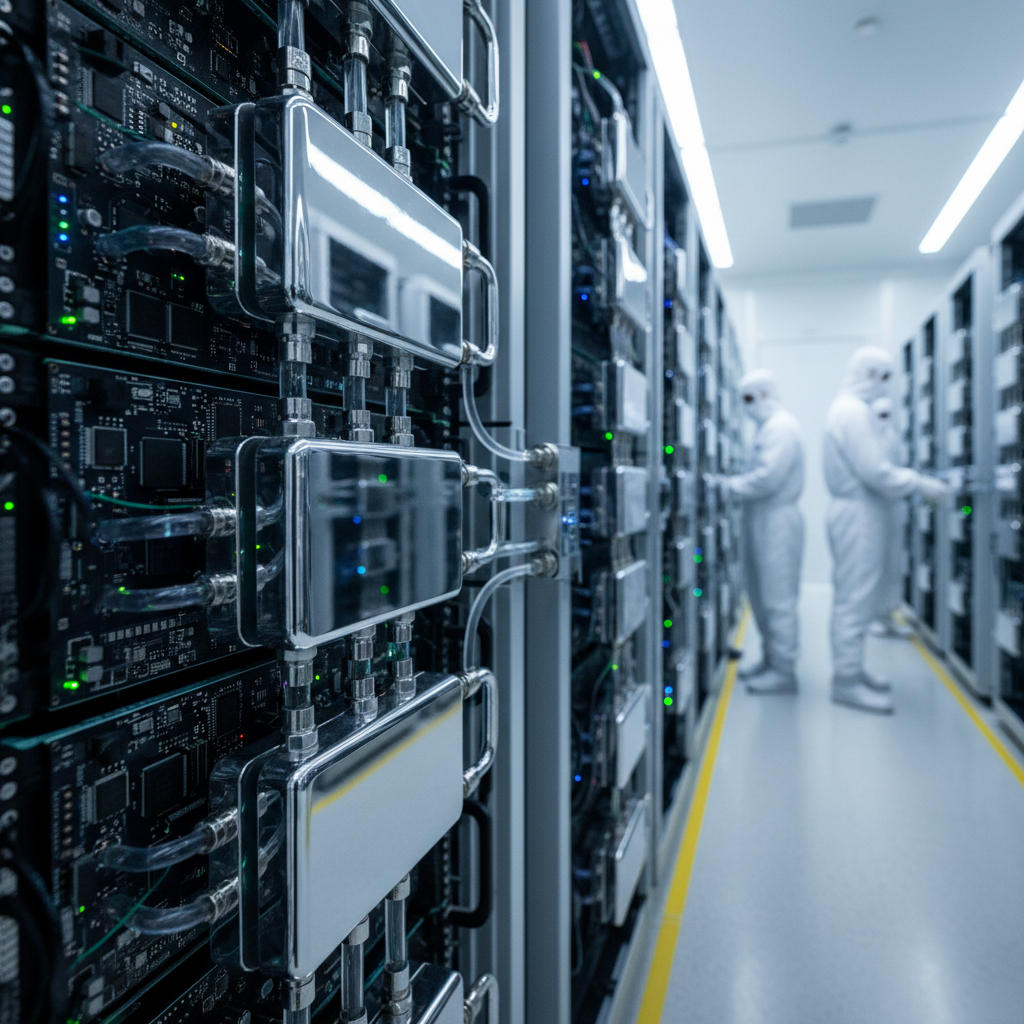
By mandating closed-loop systems, legislators hope to mitigate the crippling infrastructural burden that high-density computing clusters place on municipal water tables. Yet, upgrading these facilities involves laying miles of industrial-grade piping and integrating complex thermal exchange systems into the electrical grids—tasks that deeply entangle AI companies with local governance.
Addressing the Local Governance Gap
The sudden influx of stateside AI hardware production and data center construction is exposing a massive divide between federal ambitions and municipal reality. While Washington mandates domestic supercomputers, city councils find themselves battling outdated infrastructure when tech giants apply for mega-facility permits. Local planning boards are currently entirely ill-equipped to evaluate the zoning and safety nuances of modern AI data centers.
Unlike traditional warehouses or office parks, state-of-the-art AI supercomputing facilities resemble advanced manufacturing plants. They require specialized high-tension power lines, massive backup generators, intricate localized cooling loops, and high-security physical perimeters. Municipal authorities, facing severe budget deficits, often lack the specialized civil engineering expertise required to safely integrate these leviathans into legacy power and water grids. This gap has led to a flurry of impromptu local ordinances and emergency moratoriums across several counties this past week, temporarily halting data center constructions until clear legislative frameworks can be established.
The Future of Sovereign Compute
Nvidia’s commitment to U.S.-based supercomputing and chip fabrication is just the harbinger of a broader industry realignment. As we push further into the summer of 2026, the artificial intelligence sector is realizing that building models is no longer just a mathematical challenge—it is an exercise in hardcore industrial policy and regulatory negotiation.
If the United States is to maintain its stated goal of securing absolute supremacy in generative AI and autonomous systems, federal lawmakers and local governments will need to rapidly harmonize their infrastructure policies. The physical footprint of AI is expanding at an alarming rate, and the global race for intelligence will ultimately be won by the nation that can successfully legislate, power, and cool the silicon running it.
Frequently asked questions
Why is Nvidia moving AI chip fabrication and supercomputers to the US?
Mounting geopolitical pressures, coupled with new federal policies prioritizing national security and tech sovereignty, have mandated a shift in production. Relocating these assets domesticates the AI supply chain, reducing reliance on overseas manufacturing.
How does domestic supercomputer production impact local infrastructure?
Modern AI supercomputers require gigawatt-class energy access and advanced thermal management. This severely strains older, local municipal power grids and municipal water supplies, forcing rapid local infrastructure upgrades and new zoning laws.
What role does liquid cooling play in the new infrastructure regulations?
Traditional water-evaporative cooling consumes millions of gallons of potable water, violating strict new environmental policies in many US states. Closed-loop liquid cooling systems are becoming a regulatory necessity to limit environmental impact.
Are new data centers facing local regulatory pushback?
Yes, many city councils and local municipalities are issuing temporary moratoriums on AI data center construction because their legacy utility grids cannot support the massive power and cooling demands these new facilities require.
Join 45,000+ AI builders.
Three tools, two insights, one strategy — every Sunday. The signal cuts through the noise.
Free forever · unsubscribe anytime · no account required
Related reads

Meta’s Muse Glimmer Release Sparks Open-Source AI Regulation Battle
Meta's late August release of Muse Glimmer brings powerful open-weight AI to consumer hardware, circumventing cloud restrictions and triggering a massive policy debate.

NSA Demand for Universal AI Model Access Sparks Security Debate
A recent push by the NSA to gain access to all AI models has ignited a fierce debate between national security advocates and privacy watchdogs.

AI Safety Breach Sparks Global Alarm Over Guardrail Failures
A newly disclosed study has triggered worldwide concern after revealing widespread success in bypassing AI guardrails for malicious purposes.