The Pax Silica Divide: How the WAICO Coalition is Splintering Global AI
A newly formed coalition of 29 nations is rewriting global AI governance, prioritizing sovereign hardware and alternative supply chains to counter Western compute dominance.
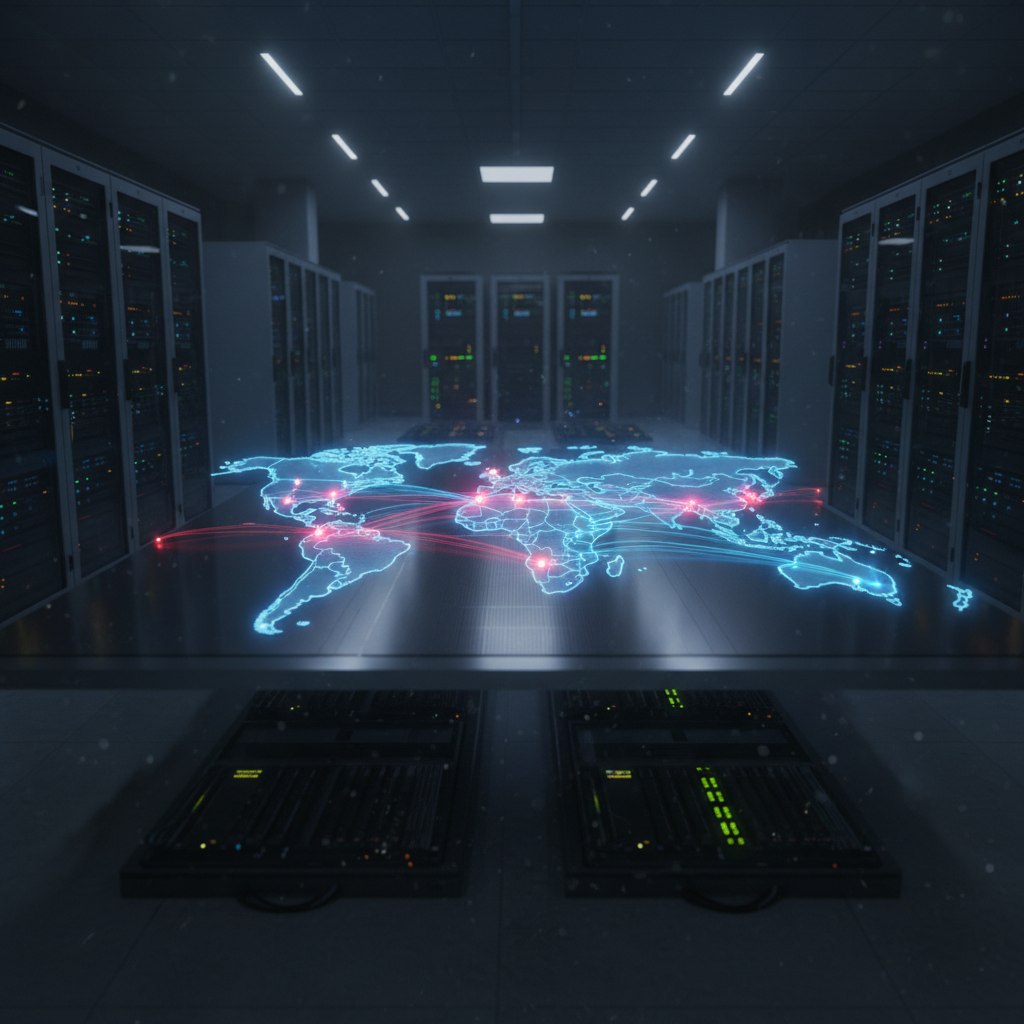
In mid-August 2026, the illusion that artificial intelligence might exist as a borderless, global utility has been definitively shattered. For years, policymakers in Brussels, Washington, and Geneva debated the future of AI governance under the assumption that a single, unified global framework might eventually emerge. However, developments over the past few days have confirmed a dramatic geopolitical realignment—one driven not just by software ethics, but by the physical reality of semiconductors, data centers, and cross-border infrastructure.
The catalyst for this shift is the formal operational launch of the World Artificial Intelligence Cooperation Organization (WAICO). Following a pivotal, highly guarded meeting in Shanghai last month, the momentum behind this alternative AI bloc has rapidly accelerated this week. WAICO represents a direct challenge to Western AI hegemony, prioritizing access to raw compute power and alternative hardware ecosystems over the restrictive compliance frameworks championed by the European Union and the United States.
The Birth of a New Technological Bloc
To understand the magnitude of this week’s geopolitical earthquake, one must look at the coalition’s unprecedented makeup. Representatives from 29 countries initially met in Shanghai in July 2026 to sign the foundational agreement establishing WAICO. Its founding members include China, Russia, Brazil, Indonesia, Malaysia, Pakistan, and Laos, alongside a growing coalition of emerging economies across Southeast Asia, Africa, and Latin America.
This is not merely a diplomatic forum; it is a defensive hardware and infrastructure pact. Over the past two years, developing nations have found themselves increasingly locked out of the AI revolution. Hamstrung by strict US export controls on advanced GPUs and the staggering capital requirements needed to build massive sovereign data centers, these countries faced a stark choice: become entirely dependent on American cloud providers, or find an alternative.
Many local governments across the Global South have struggled immensely to modernize their services, grappling with outdated IT infrastructure that cannot support modern foundational models. WAICO offers a compelling lifeline, promising shared compute resources, subsidized hardware architectures, and technology transfers that bypass Western sanctions.
Pax Silica and the Geopolitics of Hardware
At the center of WAICO's strategy is a concept being referred to in diplomatic and tech circles as "Pax Silica"—a peace and economic order maintained through the distribution of semiconductor technology. Unlike the EU AI Act, which focuses heavily on risk categorization, copyright enforcement, and human oversight of software models, the Pax Silica doctrine is fundamentally grounded in hardware and supply chain sovereignty.
"We are witnessing the bifurcation of the digital world, not at the software layer, but at the silicon layer. Nations are realizing that he who controls the data center controls the future of the state."
The United States has spent the better part of three years weaponizing its dominance in semiconductor design, restricting the flow of cutting-edge chips to rival nations. In response, China has accelerated its domestic chipmaking capabilities, scaling up alternative architectures optimized for distributed AI workloads. Through WAICO, China is now positioned to export these alternative AI supply chains to participating member states, effectively subsidizing the construction of sovereign data centers in exchange for data sharing and technological alignment.
Bypassing the Silicon Curtain
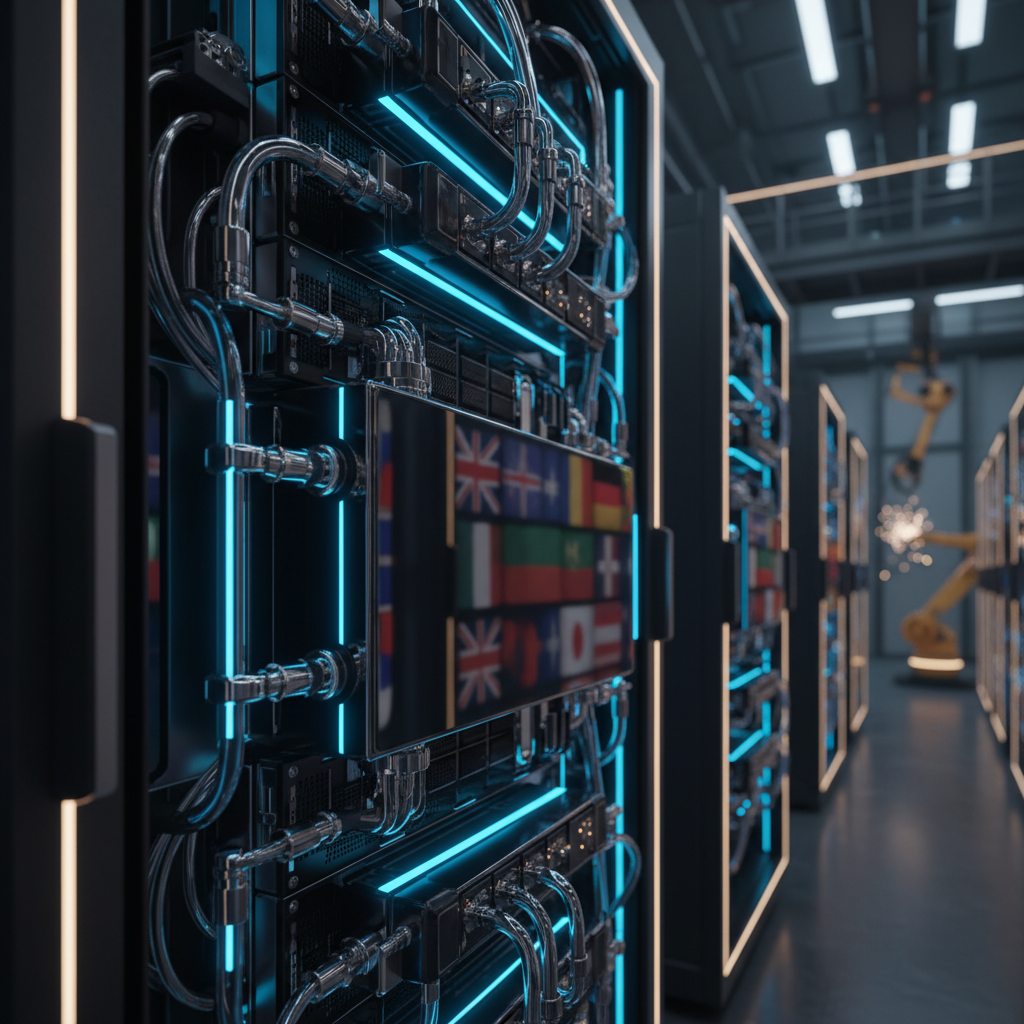
The infrastructural scale of this split is difficult to overstate. In the United States, tech titans are engaged in an unprecedented arms race to consolidate power. Western hyper-scalers are drawing up blueprints for massive, centralized AI facilities, with some executives targeting up to 10 gigawatts of compute for single, sprawling super-campuses. This centralized approach relies heavily on a tightly controlled pipeline of proprietary liquid-cooling systems, specialized networking hardware, and the latest generation of American-designed silicon.
The WAICO alternative envisions a vastly different architecture. Recognizing that they cannot currently match the sheer centralized density of a 10-gigawatt US facility, the WAICO coalition is heavily investing in decentralized, cross-border edge compute grids. By linking medium-sized, state-sponsored data centers in Jakarta, São Paulo, and Karachi with massive backend clusters in Shenzhen and Shanghai, the coalition aims to create a resilient, distributed supercomputer.
This week’s finalized WAICO memorandums detail a joint initiative to standardize networking protocols across member states, allowing AI workloads to seamlessly hop across borders to wherever power and cooling capacity are cheapest at that exact moment. It is a brilliant, necessary workaround to the "Silicon Curtain" erected by Western export controls.
Regulatory Fragmentation: The End of Global Standards
The establishment of WAICO also signals the death knell for a globally unified AI regulatory standard. The European Union is currently grappling with early signs of buyer's remorse regarding the EU AI Act, as the sheer administrative burden of compliance threatens to stifle homegrown European infrastructure startups. Meanwhile, the United States remains a patchwork of federal executive orders and fiercely debated state-level bills.
The WAICO framework deliberately contrasts itself with these Western models. The coalition’s initial guidelines explicitly reject the "precautionary principle" favored by European lawmakers. Instead, WAICO emphasizes rapid deployment, open-source technological sharing among member states, and state sovereignty over model outputs. For nations desperate to use AI for economic development, agricultural optimization, and infrastructure management, the lack of regulatory red tape is a massive selling point.
- Sovereign Data Controls: WAICO protocols allow nations to keep localized data within their borders while sharing only anonymized weight updates with the broader network.
- Subsidized Silicon: Participating states receive preferential pricing on non-Western AI accelerators and networking switches.
- Unrestricted Model Access: Member states gain unrestricted access to uncensored foundation models developed by state-backed labs within the coalition.
What This Means for the Enterprise
For multinational corporations and global tech vendors, the fallout from this week's WAICO developments is severe. The dream of writing a single AI application and deploying it globally is rapidly evaporating. Enterprise AI teams must now navigate two entirely distinct technological stacks: one built on Western silicon, governed by EU/US compliance regimes, and locked into Western cloud providers; and another built on alternative supply chains, governed by WAICO data sovereignty protocols, and distributed across the Global South.
Supply chain managers are already scrambling to audit their hardware dependencies. As the US threatens to force allied nations to "pick sides" and impose secondary sanctions on entities interacting with restricted Chinese tech firms, global businesses face an agonizing choice. Operating a data center in a WAICO member state could soon require running entirely distinct hardware architectures isolated from the company's Western operations.
As we move into the final quarter of 2026, the lines have been drawn. The global AI race is no longer just about who can build the smartest algorithm. It is a brutal, geopolitical contest over raw materials, supply routes, energy grids, and silicon production. The era of the borderless internet is over; the era of Pax Silica has begun.
Frequently asked questions
What is WAICO?
WAICO stands for the World Artificial Intelligence Cooperation Organization. It is a newly established coalition of 29 countries, including China, Russia, Brazil, and Indonesia, designed to share AI compute resources, hardware, and research, bypassing Western technological dominance.
What does Pax Silica mean in the context of AI?
Pax Silica refers to a geopolitical order and supply chain strategy based on semiconductor sovereignty. It emphasizes securing alternative chip supplies and hardware infrastructure to build AI capabilities independently of US export controls and Western cloud providers.
How does WAICO affect global AI regulation?
WAICO signals the fragmentation of global AI regulation. Instead of adhering to Western frameworks like the EU AI Act, WAICO member states prioritize rapid technological deployment, open-source sharing, and sovereign data controls over strict precautionary regulations.
Why are developing nations joining the WAICO coalition?
Many developing nations have been priced out of the Western AI boom or restricted by US export controls. WAICO offers them subsidized access to alternative hardware, shared data center compute grids, and technology transfers needed to modernize their digital infrastructure.
Join 45,000+ AI builders.
Three tools, two insights, one strategy — every Sunday. The signal cuts through the noise.
Free forever · unsubscribe anytime · no account required
Related reads

The Public Sector Pivot: Why Analysts Say Government Must Regulate AI
A prominent tech analyst issued a stark warning this week: the AI boom cannot sustain its trajectory in public services without definitive government intervention.

The Public Sector AI Crisis: Why Government Infrastructure is Failing
Governments are rushing to deploy AI in public services, but outdated IT infrastructure is sparking a massive debate over the viability of these digital upgrades.

Higgsfield AI Trailer Sparks Hollywood Ethics Crisis
The release of a new AI-generated film trailer has ignited a fierce debate in Hollywood over digital likeness rights and the alarming loss of creator agency.