

Higgsfield AI Trailer Sparks Hollywood Ethics Crisis
The release of a new AI-generated film trailer has ignited a fierce debate in Hollywood over digital likeness rights and the alarming loss of creator agency.
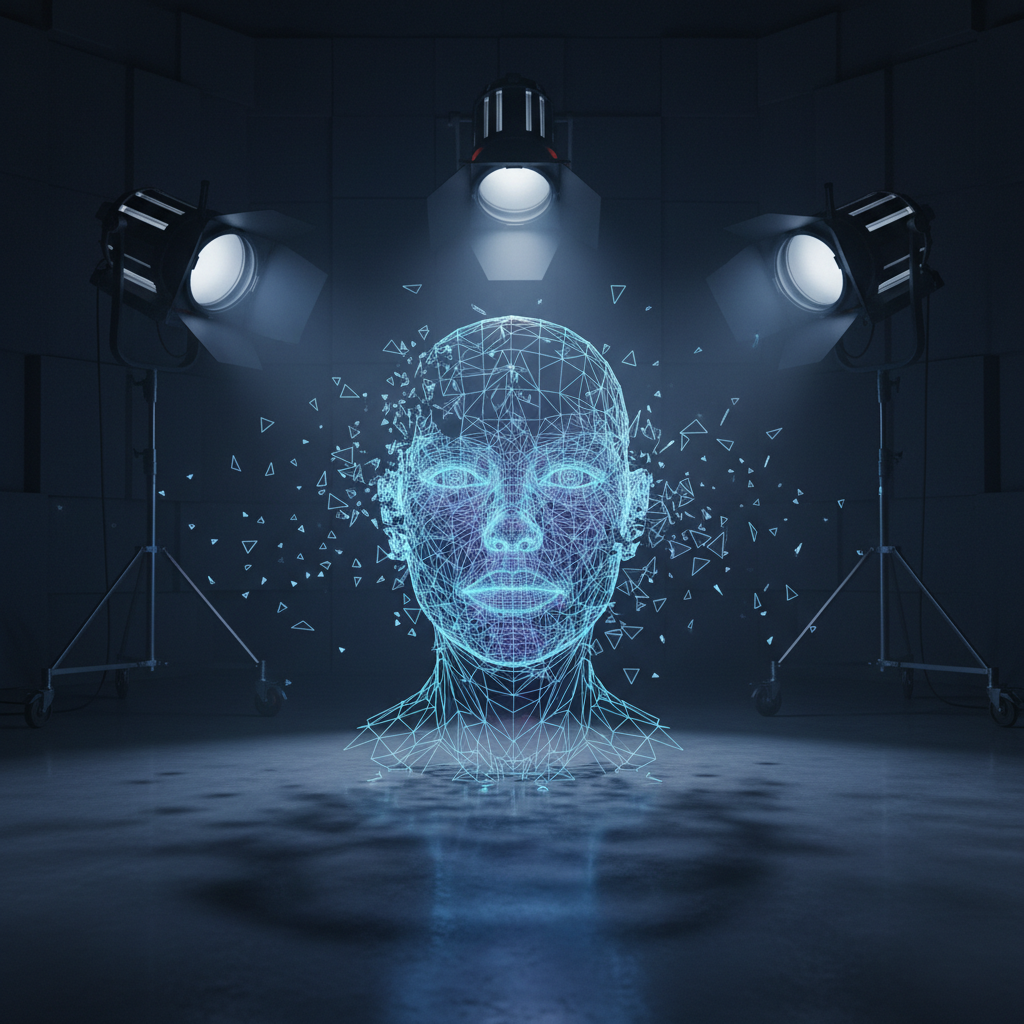
The rapid acceleration of generative video has officially collided with the entertainment industry's most sensitive legal tripwire: the human likeness. In the past few days, Hollywood has been thrown into a state of intense debate following a highly controversial demonstration of AI video synthesis. What began as a showcase of technological prowess has rapidly evolved into a major ethics and security incident, raising unprecedented questions about who owns a digital face when algorithms can infinitely replicate it.
The Cully Hill Boys Flashpoint
Earlier this week, a new generative video project titled The Cully Hill Boys began circulating rapidly across industry networks, powered by Higgsfield AI's latest capabilities. Unlike previous AI-generated shorts that relied on stylized, clearly synthetic characters, this trailer crossed into photorealistic, hyper-specific human rendering. The incident didn't stem from the quality of the video alone, but rather the underlying workflow demonstrated by the creators, which effectively decouples a human actor's physical performance from their on-screen likeness.
By utilizing advanced motion retargeting and minimal reference data, the system allows a director to entirely puppeteer a character without the original actor ever stepping on set. Industry professionals immediately flagged this as a critical threshold. As noted by legal analysts dissecting the release, as AI cleanly separates performance, likeness, and reach, the industry is rushing to figure out how next-generation business models will preserve agency and rights for human talent. The realization that an actor's digital identity could be hijacked, manipulated, and deployed without explicit, per-use consent has sparked outrage across guilds and talent agencies.
Decoupling Performance from Identity
The ethical crisis centers on the concept of "likeness extraction." In traditional filmmaking, an actor's performance and their visual identity are intrinsically linked; the person in front of the camera is the person on the screen. Higgsfield AI's underlying technology, as demonstrated in the controversial trailer, effectively severs this link. A secondary actor, or even a completely synthetic kinematic skeleton, can drive the emotional and physical performance, while the likeness of a recognizable individual is "pasted" over the top with flawless temporal consistency.
From a security perspective, this represents a massive vulnerability for public figures. If a commercial AI platform can generate a hyper-realistic performance from only a handful of unauthorized reference images, the potential for non-consensual casting skyrockets. Bad actors could easily generate feature-length content starring prominent actors in defamatory, explicit, or politically compromising roles, completely bypassing traditional studio gates. The incident has prompted major studios to urgently re-evaluate their security postures, realizing that auditing AI models is no longer just about preventing code vulnerabilities, but about securing biometric and likeness data against algorithmic theft.
"We are looking at the unauthorized cloning of human capital. If a director can type a prompt and cast me in a film I never agreed to, we have fundamentally lost control of our own identities." — Screen Actors Guild internal memo, August 2026
Security Risks and Creator Backlash
The backlash to The Cully Hill Boys trailer mirrors a growing unrest across multiple digital entertainment sectors. Creators are increasingly pushing back against technologies that strip away their autonomy. Just as we've seen immense pushback from developers regarding social vibe coding agents that automate game creation without fair attribution, the film industry is drawing a hard line in the sand regarding synthetic casting.
In the 72 hours since the trailer's wider circulation, several critical security and ethical demands have emerged from talent representatives:
- Cryptographic Watermarking: Guilds are demanding that any AI-generated video featuring a human likeness must include irremovable, hardware-level watermarks to distinguish synthetic performances from authentic ones.
- Algorithmic Consent Protocols: Talent agencies are drafting emergency contract riders stating that actors must provide cryptographic "keys" to unlock their likeness for a specific generation, ensuring they cannot be retroactively added to scenes.
- Data Provenance Tracking: Platforms must prove that the training data used to generate a specific likeness was acquired legally and with explicit commercial consent, shifting the burden of proof onto the AI developers.
The Road Ahead for Digital Rights
The fallout from this week's events is likely to trigger immediate regulatory scrutiny. While the EU AI Act laid foundational rules for deepfakes, the nuanced issue of "performance separation" in commercial entertainment remains a legal gray area. Current copyright frameworks protect a recorded performance, but they struggle to protect the abstract concept of an actor's "vibe" or kinematic style when mapped onto a synthetic face.
Ultimately, the controversy surrounding Higgsfield AI's latest demonstration is a wake-up call. The technology to create entire films using digitized, unconsenting talent is no longer a futuristic theory; it is a present reality. Unless developers and lawmakers can rapidly implement systems that mathematically guarantee consent and preserve creator agency, the entertainment industry faces a prolonged and bitter war over the fundamental rights to the human face.
Frequently asked questions
What is the controversy surrounding The Cully Hill Boys trailer?
The trailer demonstrated new AI capabilities that completely separate a physical performance from a digital likeness, raising major ethical concerns about unauthorized casting, loss of actor agency, and the hijacking of digital identities.
How does AI separate performance from likeness?
Advanced AI tools allow a synthetic or stand-in actor to drive the physical movements and emotions of a scene, while a hyper-realistic digital likeness of a different person is mapped over them seamlessly, requiring no actual set time from the final actor.
What are Hollywood actors demanding in response?
Talent guilds are pushing for hardware-level cryptographic watermarking, algorithmic consent protocols that require digital "keys" to use a face, and strict data provenance tracking to ensure likenesses are only used with explicit permission.
Are there security risks associated with this AI video technology?
Yes. Without safeguards, malicious actors can generate hyper-realistic, non-consensual deepfakes of public figures for defamatory or explicit purposes, bypassing traditional media security entirely.
Join 45,000+ AI builders.
Three tools, two insights, one strategy — every Sunday. The signal cuts through the noise.
Free forever · unsubscribe anytime · no account required
Related reads

Aladynoulli AI Sparks Healthcare Ethics Crisis Over Genetic Profiling
A newly unveiled predictive model combining EHR and genetic data for over 680,000 patients has sparked a global debate on diagnostic AI safety and data privacy.

The New Cold War: How US and China Are Gearing Up for High-Stakes AI Safety Talks
Diplomatic tensions rise as the US and China prepare for mid-September AI safety dialogues, highlighting a fractured approach to global AI regulation.

Retailers Rewrite Policies to Block AI Shopping Bots at Checkout
E-commerce giants are drawing a hard line on customer data this week, rewriting terms of service to block autonomous AI bots from completing online checkouts.