

Walmart's AI Supply Chain Shift Exposes Retail's Edge Compute Gap
Walmart’s abrupt move to production-grade AI for last-mile logistics has exposed a critical hardware gap for e-commerce teams unprepared for the heavy infrastructure required.
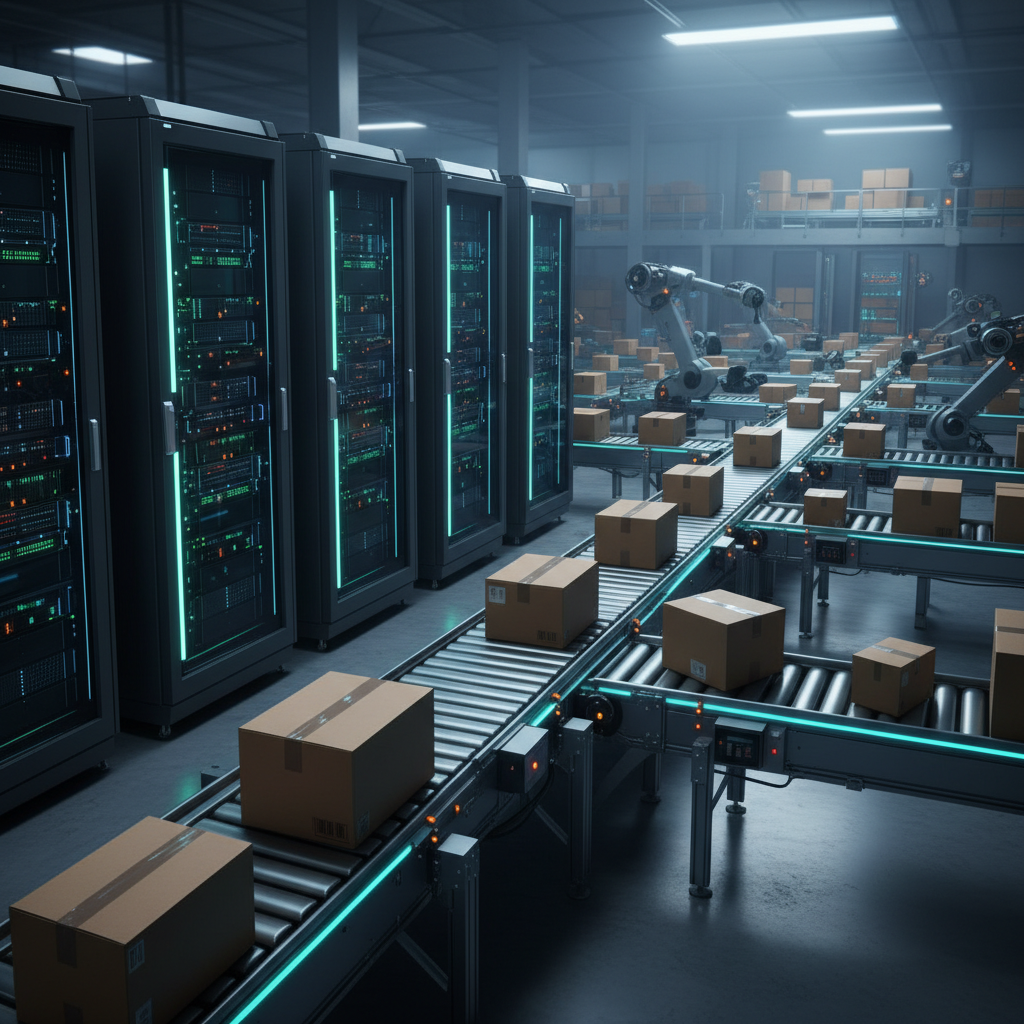
For the past two years, the retail industry has viewed artificial intelligence primarily as a software overlay—a tool for crafting better marketing copy, generating dynamic product images, and powering customer service chatbots. But the reality of modern e-commerce is far more industrial. Earlier this week, on August 16, 2026, a decisive shift occurred in the logistics space that has sent shockwaves through mid-market and enterprise retail operations alike. The era of lightweight API calls is ending; the era of heavy iron, localized compute, and edge hardware has officially arrived.
According to a morning brief published by the MarketScale Newsroom, this aggressive hardware pivot is reshaping retail operations significantly faster than the industry projected. The catalyst? Walmart’s confirmation that its highly anticipated last-mile and fulfillment AI systems have successfully transitioned from limited, isolated pilots directly into full-scale production. This isn't merely an algorithm update; it is a massive, capital-intensive infrastructure deployment that requires processing petabytes of real-time supply chain data precisely where the physical goods reside.
The Heavy Iron Behind the AI Supply Chain
Moving a supply chain AI model from a pilot phase to a production environment fundamentally changes its architectural requirements. In a pilot, e-commerce teams can afford to route data back to centralized, cloud-based data centers. The latency—perhaps a few hundred milliseconds—is acceptable when evaluating whether a predictive model successfully routes a delivery truck or anticipates a regional stockout.
In a full production environment operating at the scale of a global retailer, those milliseconds equate to millions of dollars in lost operational efficiency. Walmart’s shift means its systems are now making thousands of autonomous decisions per second across its entire fulfillment network. This includes dynamically re-routing automated guided vehicles (AGVs) on warehouse floors, instantly recalculating last-mile delivery trajectories based on live municipal traffic feeds, and autonomously re-allocating inventory across micro-fulfillment centers before a human operator even registers a demand spike.
To execute this without network congestion, the compute power must physically live inside the warehouse. Retailers are now forced to deploy ruggedized data center racks directly onto the concrete floors of their distribution centers, investing heavily in dedicated AI inference chips capable of handling high-velocity streaming data in environments lacking traditional data center climate control.
The Push for Edge Processing in Warehouses
This paradigm shift underscores the critical role of edge computing in modern retail logistics. E-commerce teams are rapidly discovering that their existing IT infrastructure—often consisting of basic networking gear and legacy inventory management servers—is entirely insufficient for the thermal and computational demands of continuous AI inferencing.
Deploying production-level supply chain AI requires specialized hardware. Facilities are being retrofitted with edge-specific GPUs designed for low-power, high-throughput operations. Because a typical fulfillment center lacks the sophisticated liquid cooling loops of a hyperscale data center, hardware manufacturers are racing to supply retail-ready silicon that can withstand dust, vibration, and temperature fluctuations while still delivering teraflops of processing power.
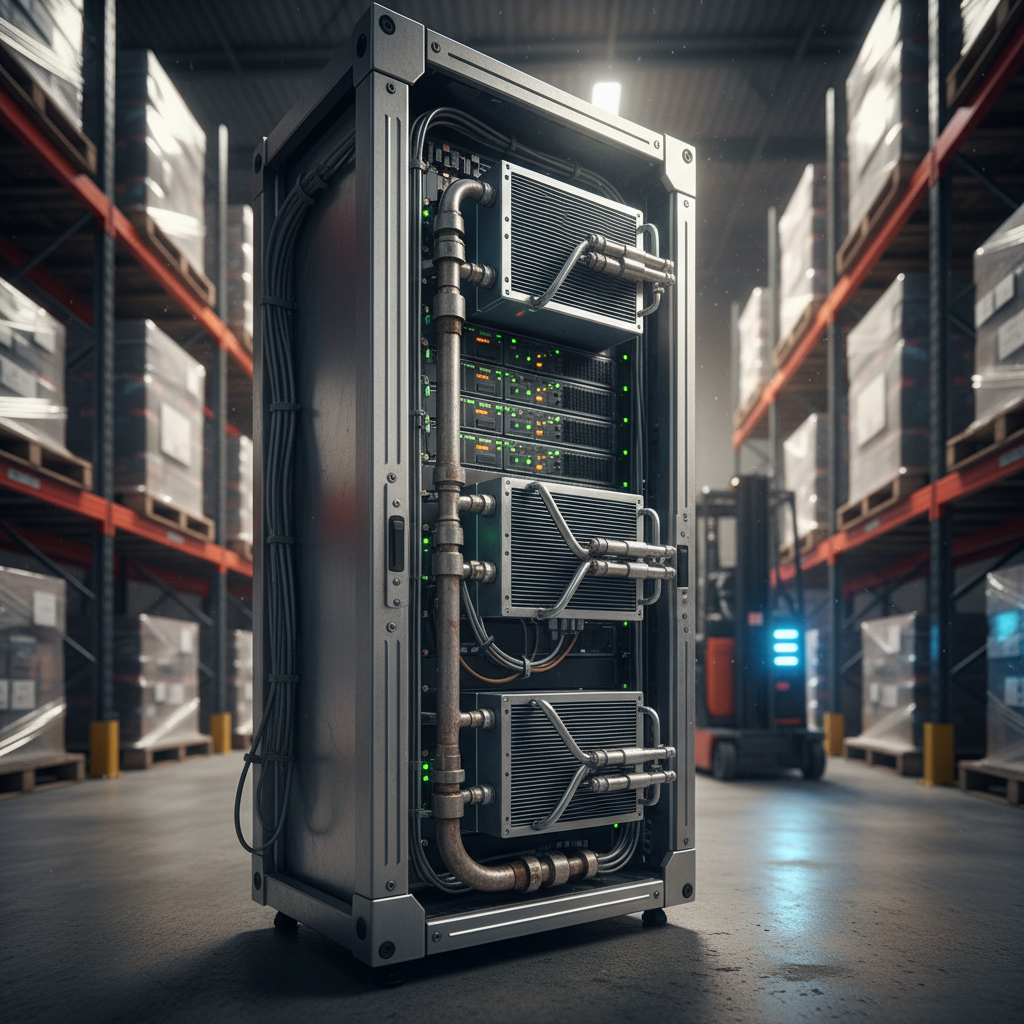
This localized compute strategy allows AI models to process visual data from thousands of warehouse cameras instantly. By running computer vision models directly on edge nodes, systems can track inventory movement on conveyor belts, monitor worker safety, and identify mislabeled packages in real-time without ever sending video feeds back to the cloud. The hardware investment is exorbitant, but the operational yield in fulfillment speed and accuracy is unprecedented.
Mid-Market Retailers and the Compute Squeeze
While retail titans have the capital expenditure budgets to absorb the cost of outfitting hundreds of warehouses with dedicated AI hardware, mid-market retailers are finding themselves squeezed out of the logistics race. The software models required to optimize a supply chain are increasingly open-source and accessible, but the silicon required to run them in real-time is not.
As these smaller e-commerce operations attempt to keep pace with next-day and same-day delivery expectations, they are running headfirst into a massive infrastructure bottleneck. Relying solely on third-party cloud providers for real-time logistics inferencing introduces unacceptable latency and incurs staggering bandwidth costs. Consequently, many teams are stuck in "pilot purgatory," possessing the algorithms necessary to modernize their operations but lacking the localized hardware compute budget to deploy them effectively on the warehouse floor.
The divide between retailers who own their compute infrastructure and those who lease it is widening. Supply chain optimization is no longer just a data science problem; it is a facilities and thermal management problem that IT departments were completely unprepared to solve this fiscal year.
When Front-End Agents Meet Back-End Silicon
Compounding this hardware crisis is the simultaneous evolution of customer-facing technologies. The rise of autonomous AI agents negotiating purchases and initiating transactions on behalf of human consumers is driving up the volume of complex query loads hitting retail servers.
When an AI agent requests a hyper-specific, multi-layered product bundle, the front-end query must seamlessly integrate with the back-end fulfillment AI to verify localized inventory, predict packing times, and guarantee a delivery window in milliseconds. If the edge infrastructure at the regional distribution center cannot parse the request instantly, the transaction fails, or the AI agent abandons the cart for a competitor with faster infrastructure.
This dual pressure—front-end agentic query volumes and back-end robotic orchestration—means that e-commerce IT budgets must be fundamentally restructured. Software licensing fees, once the dominant line item for digital retail teams, are quickly being eclipsed by hardware procurement and power provisioning costs.
The End of the Software Illusion
The events of this past week signal the definitive end of AI as purely a software illusion in the retail sector. As models move from isolated cloud environments into the gritty reality of physical logistics, the companies that will dominate the next decade of e-commerce are those treating AI as heavy industry.
For e-commerce teams scrambling to adjust to this new reality, the immediate mandate is clear: audit existing warehouse infrastructure, secure edge-compute hardware supply chains, and prepare for a retail landscape where logistics superiority is determined not by the smartest algorithm, but by the fastest silicon on the warehouse floor.
Frequently asked questions
What does it mean for supply chain AI to move from pilot to production?
Moving to production means the AI system is no longer just being tested on historical data or isolated scenarios. It is actively managing live, real-time logistics, making thousands of autonomous decisions per second regarding inventory routing, robotics, and delivery dispatch.
Why does retail logistics AI require edge computing?
Real-time automated logistics require ultra-low latency. Sending data back and forth to a central cloud server takes too long when managing fast-moving conveyor belts or robotic forklifts. Edge computing places the processing hardware physically inside the warehouse to eliminate that network delay.
How does edge computing impact e-commerce IT budgets?
It represents a massive shift from operational expenditure (like cloud software subscriptions) to capital expenditure. Retailers must now purchase, install, and maintain expensive hardware, such as inference chips and specialized server racks, directly inside their fulfillment centers.
What is the connection between customer AI agents and warehouse infrastructure?
As AI shopping agents become more common, they generate complex, rapid-fire queries about product availability and shipping times. To answer these accurately and instantly, the front-end software must tightly integrate with the back-end warehouse edge servers to confirm real-time inventory and logistics capability.
Join 45,000+ AI builders.
Three tools, two insights, one strategy — every Sunday. The signal cuts through the noise.
Free forever · unsubscribe anytime · no account required
Related reads

The $8 Billion AI Shopping Boom: Why Retailers Are Fighting for Data
U.S. consumers are flocking to AI chatbots for product recommendations, leaving major retailers in a high-stakes battle to retain control over their proprietary customer data.

How to Audit Your Stack Using the Summer 2026 AI Safety Index
With the newly released Summer 2026 AI Safety Index revealing that current models frequently dismiss frontier risks, enterprise developers must urgently rethink their practical alignment strategies.

How AI Agents Are Quietly Replacing Mid-Level Operations in 2026
AI agents are transforming business operations in 2026 by automating management, workflows, reporting, customer support, and decision-making. Learn how enterprises are adopting agentic AI and what it means for the future of work.