

A Beginner's Guide to Agentic Commerce: How AI is Shopping for You
Your next online purchase might not be made by you. Here is everything you need to know about the rise of agentic commerce and AI shopping assistants.
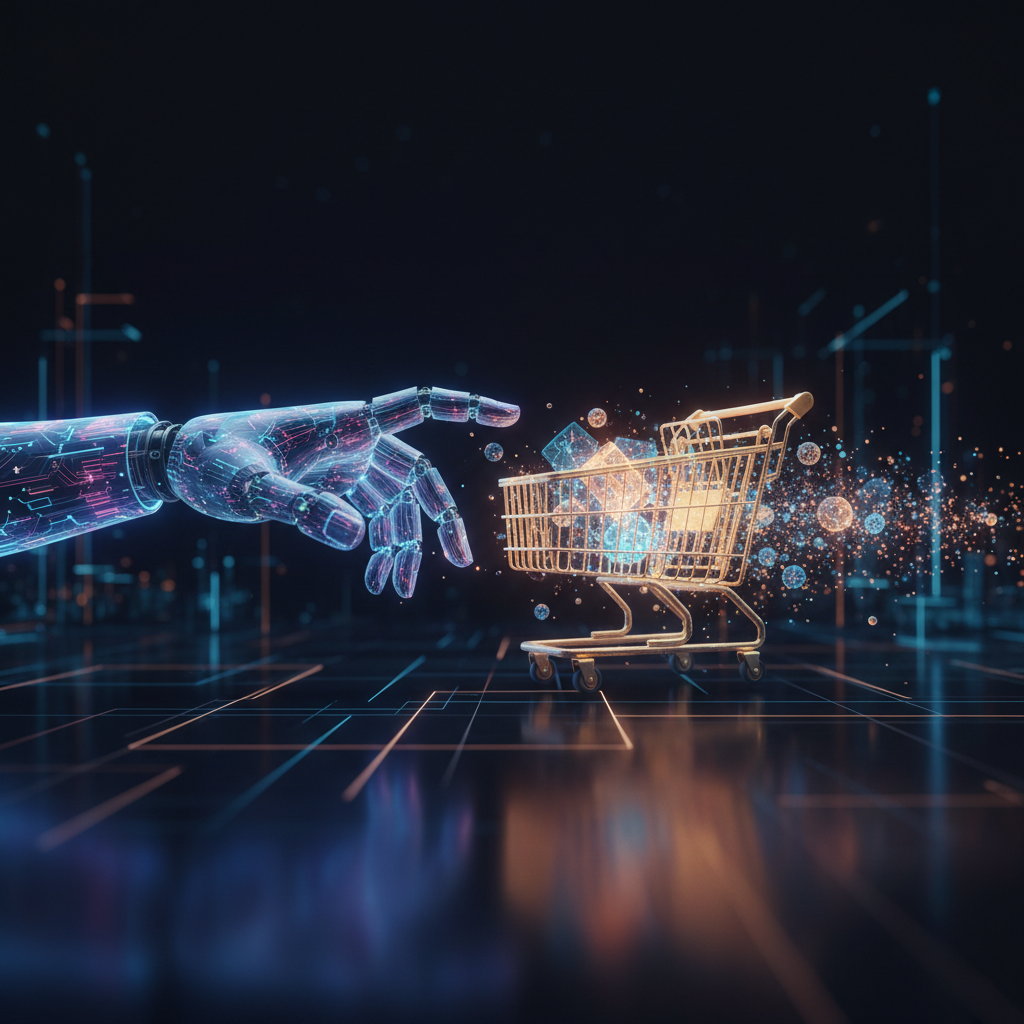
For the past three decades, the fundamental mechanics of online shopping have remained relatively unchanged. You open a browser, navigate to a digital storefront, scroll through endless grids of products, apply manual filters, read reviews, and eventually click a checkout button. But this week, a profound shift in digital retail has come into sharp focus. We have officially entered the era of agentic commerce—a paradigm where artificial intelligence doesn't just recommend products, but actually handles the purchasing process on your behalf.
If you have felt overwhelmed by the sheer volume of choices, sponsored listings, and fragmented checkout systems across the web, you are not alone. Tech giants and retail platforms alike are recognizing this friction. Instead of forcing consumers to do the heavy lifting, the industry is pivoting toward autonomous AI agents. These digital proxies are designed to understand your preferences, scour the internet for the best deals, verify inventory, and securely execute payments without requiring you to lift a finger.
What Exactly is Agentic Commerce?
Agentic commerce refers to a retail ecosystem where autonomous AI agents act as intermediaries between buyers and sellers. In a traditional e-commerce model, the human shopper is the active participant navigating a passive website. In agentic commerce, the human provides a high-level goal, and the AI takes over the execution.
"Find me a highly-rated, waterproof, four-person camping tent under $250 that can be delivered to my house by Thursday afternoon. Use my default payment method."
In 2023, an AI could have provided a list of links to tents matching that description. Today, in late 2026, the AI agent can evaluate current stock across dozens of retailers, verify the authenticity of customer reviews using semantic analysis, cross-reference shipping logistics, and automatically complete the checkout process via secure API integrations. The agent acts as your personal digital procurer.
This fundamentally alters the user experience in three key ways:
- Discovery: Shoppers no longer rely on SEO-gamed search results or visually exhausting product grids. Agents bypass front-end marketing and evaluate raw product data.
- Evaluation: AI models can instantly synthesize thousands of user reviews, filtering out bot-generated noise to provide a singular, reliable consensus on a product's quality.
- Transaction: Checkout friction drops to zero. Biometric authorization allows the AI to trigger secure digital payments across different platforms seamlessly.
The Numbers: Why Retailers Are Scrambling This Week
The transition to agentic commerce isn't just a futuristic concept—it is actively happening right now, and the financial implications are staggering. This week, a comprehensive industry report released by the Nexi Group highlighted just how rapidly this technology is moving from experimental pilots to production-level reality.
According to the latest data, early adopters of these technologies are seeing an incredible 38% conversion lift in conversational shopping flows. When consumers can simply speak or text their desires to an agent rather than navigating clunky drop-down menus, purchase abandonment plummets. Furthermore, the report projects that a staggering 25% of all global e-commerce could involve AI agents by the year 2030.

For retailers, this presents a dual-edged sword. On one hand, the reduction in checkout friction means higher sales volumes and fewer abandoned carts. On the other hand, it completely disrupts traditional visual marketing. If a customer's AI agent is the one "looking" at the store, expensive website redesigns, flashy banner ads, and impulse-buy pop-ups become entirely invisible.
The Battle for the Customer Relationship
As agentic commerce scales, a massive turf war is emerging over who actually owns the customer relationship. Historically, brands built loyalty through immersive website experiences and targeted email campaigns. But when an AI agent becomes the middleman, the brand risks becoming nothing more than a commoditized API endpoint—a faceless warehouse fulfilling orders initiated by a tech company's chatbot.
This dynamic is forcing major brands to fundamentally rethink their digital strategies. If a consumer relies exclusively on a third-party AI assistant to buy their groceries or restock their cosmetics, the retailer loses vital insight into browsing behavior and cart-building habits. The urgency to secure direct integrations with these AI agents has triggered a fierce battle over retail customer data, as brands fight to ensure their platforms remain the primary point of contact for the end consumer.
The Hidden Cost: Powering the AI Shopper
While the user-facing experience of agentic commerce feels like magic, the backend reality is intensely resource-heavy. Every time an AI agent evaluates fifty different retailers to find the perfect pair of running shoes, it is making complex API calls, processing massive amounts of text via Large Language Models (LLMs), and executing real-time logic.
Scaling this capability to millions of daily shoppers requires an astronomical amount of compute power. Behind the scenes, the physical infrastructure of the internet is being rapidly overhauled to support this automated economy. The shift is so profound that tech leaders are proposing unprecedented expansions, including aggressive plans to multiply data center capacity globally just to handle the influx of autonomous digital transactions.
How Brands Must Adapt for the Agentic Era
For businesses looking to survive this transition, traditional search engine optimization (SEO) is no longer enough. The new frontier is Large Language Model Optimization (LLMO) or generative engine optimization. Brands must ensure their product catalogs are perfectly structured, machine-readable, and instantly accessible to AI crawlers.
Here are the immediate steps forward-thinking retailers are taking in 2026:
- Embracing Headless Commerce: Retailers are decoupling their backend inventory and payment systems from their front-end websites, allowing AI agents to plug in directly via secure APIs.
- Structuring Data Impeccably: Vague product descriptions are out. Highly structured, hyper-specific metadata (exact dimensions, precise material composition, real-time inventory counts) is crucial because AI agents rely on hard facts, not marketing fluff.
- Fostering Authentic Reviews: Because AI agents can synthesize thousands of reviews and detect sentiment anomalies in milliseconds, authentic, high-quality customer feedback is more important than ever for product visibility.
The Future of Buying
Agentic commerce is redefining what it means to be a consumer. As we move deeper into the late 2020s, the concept of manually browsing pages of products will likely begin to feel as archaic as ordering out of a mail-order catalog. The technology is here, the infrastructure is being built, and the consumer demand for zero-friction shopping is undeniable. The only question remaining is which retailers will adapt to serve the machines, and which will be left behind in the human-only web.
Frequently asked questions
What is agentic commerce?
Agentic commerce is a new retail model where autonomous AI agents handle the discovery, evaluation, and purchasing of products on behalf of a human consumer, minimizing the need for manual browsing and checkout.
How do AI agents make online shopping easier?
AI agents eliminate friction by understanding a user's natural language request (e.g., 'buy me a durable winter coat under $100'), scanning multiple retailers for the best match, reading reviews to ensure quality, and automatically processing the secure payment.
Why is agentic commerce bad for traditional retail marketing?
Because AI agents evaluate underlying product data rather than viewing a website's visual interface, traditional marketing tactics like flashy banner ads, pop-ups, and visually driven impulse buys become ineffective.
How can businesses optimize for AI shopping agents?
Retailers need to focus on providing highly structured, accurate metadata, ensuring their APIs are easily accessible for headless commerce, and prioritizing authentic customer reviews that AI algorithms use to evaluate product quality.
Join 45,000+ AI builders.
Three tools, two insights, one strategy — every Sunday. The signal cuts through the noise.
Free forever · unsubscribe anytime · no account required
Related reads

A Beginner's Guide to AI Drug Testing: How 3D Tumors Are Reshaping Medicine
This week, researchers revealed a breakthrough combining 3D-printed patient tumors with real-time AI observation, eliminating the guesswork from cancer treatments.

Nightshade Explained: How Artists Are Poisoning AI Models in Self-Defense
As AI image generators continue to scrape the web without consent, artists are fighting back with Nightshade—a controversial tool designed to deliberately break AI models from the inside out.

A Beginner's Guide to AlphaFold 3: AI's Medical Revolution
Google DeepMind's AlphaFold 3 is fundamentally changing how scientists create new medications. This beginner-friendly guide explains the massive medical breakthrough.