

How Multi-Agent AI is Reshaping Sustainable Farming in 2026
A new multi-agent AI deployment in European greenhouses this week is setting a groundbreaking standard for sustainable, resource-efficient agriculture.
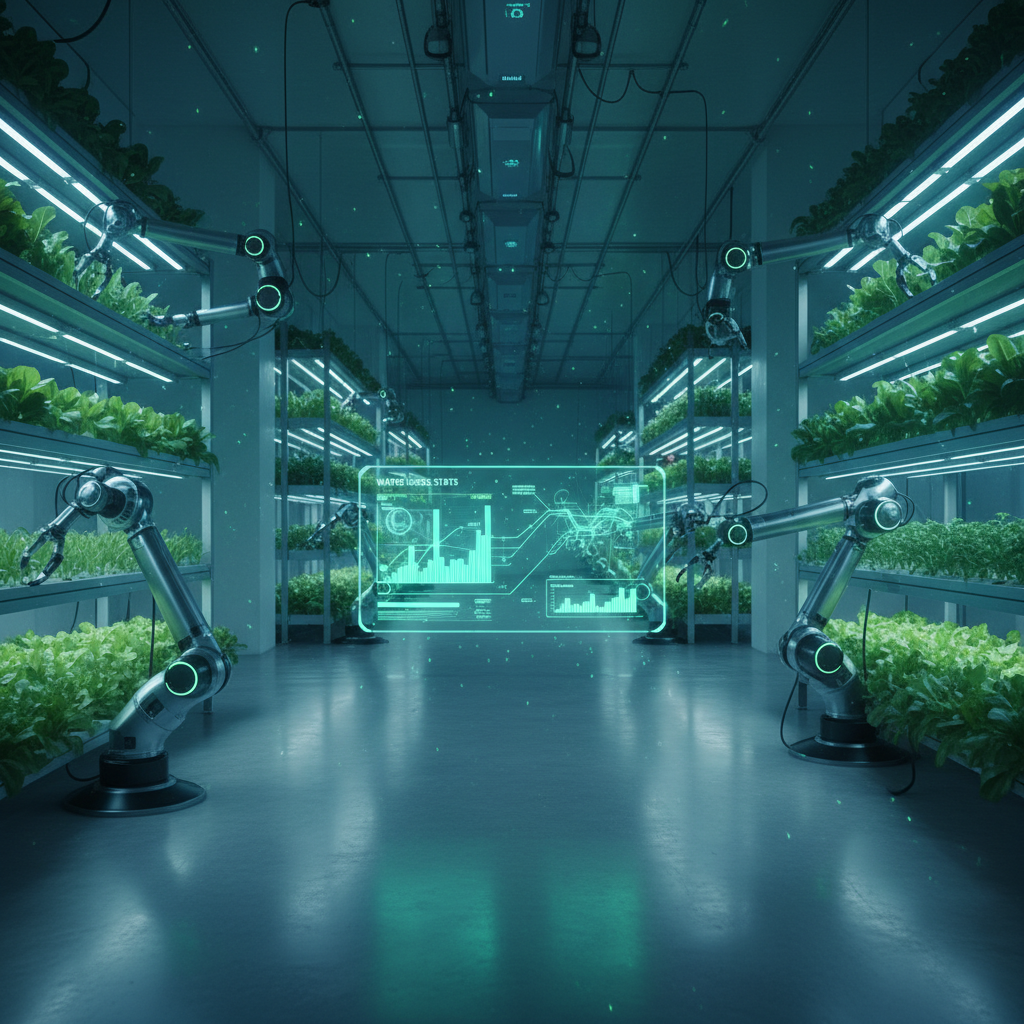
In the past few days, a quiet revolution has taken root across 40 massive commercial greenhouses in the Netherlands and southern Spain. A European agricultural consortium officially brought "AgriGrid" online—a multi-agent artificial intelligence system designed to autonomously manage every biological and mechanical variable in high-density indoor farming. Unlike the rudimentary automated timers and simple threshold sensors of the early 2020s, this week's deployment represents the first true commercial-scale application of autonomous, agentic AI in the fight for climate-resilient agriculture.
As severe droughts continue to threaten traditional open-field crop yields across Southern Europe in 2026, the agricultural sector is under immense pressure to do more with significantly less. The AgriGrid rollout is not just a proof of concept; it is a vital infrastructure upgrade that relies on real-time AI reasoning to drastically slash water consumption and eliminate synthetic fertilizer runoff.
The AgriGrid Architecture: Beyond Basic Automation
To understand why this week's deployment is so pivotal, one must look at how the technology diverges from previous iterations of "smart farming." Historically, greenhouse software operated on rigid, centralized logic. If the soil moisture dropped below 30%, the system turned on the water. If the temperature rose above 25 degrees Celsius, it opened the vents. It was reactive, linear, and inherently wasteful, as it treated an entire multi-acre greenhouse as a single, homogenous environment.
AgriGrid shifts the paradigm entirely by utilizing multi-agent reinforcement learning. The system divides a one-acre greenhouse into roughly 500 distinct micro-zones, assigning a dedicated AI "agent" to each. These digital agents monitor local sensor data—plant canopy temperature, soil microbiome health, ambient humidity, and vapor pressure deficit. More importantly, these agents negotiate with one another in real-time.
If the agents in the northern quadrant detect an incoming heatload from the afternoon sun, they do not simply blast the air conditioning. Instead, they communicate with neighboring agents to dynamically adjust shade curtains and localized misting systems, pre-cooling the micro-climate before the heat stress even registers on the plants. This highly granular, localized approach to problem-solving is proving far more resilient and resource-efficient than centralized, top-down software architectures.
Staggering Reductions in Water and Resource Use
The early telemetry data coming out of the Spanish facilities over the last 72 hours is nothing short of remarkable. By allowing AI agents to continuously debate and optimize resource distribution thousands of times per minute, the facilities are reporting a 42% reduction in water usage compared to their most efficient automated baselines from 2025.
- Precision Irrigation: Water is no longer applied on a schedule, but delivered in micro-doses exactly when a specific plant's vascular system is ready to uptake moisture.
- Nutrient Optimization: Synthetic fertilizer use has plummeted by 31%, as the AI agents mix dynamic nutrient recipes on the fly based on real-time soil chemistry.
- Energy Efficiency: By predicting natural weather patterns up to 48 hours in advance, the agents rely heavily on passive cooling and heating, slashing the electricity required for HVAC systems.
The environmental implications are profound. In fact, according to peer-reviewed agricultural research published in the past few days, if multi-agent frameworks were scaled across just 20% of the world's indoor farming infrastructure, it could save billions of gallons of fresh water annually while virtually eliminating the nitrogen runoff that creates oceanic dead zones.

Overcoming the Edge Compute Bottleneck
Of course, orchestrating thousands of autonomous AI agents requires a staggering amount of compute power. Until very recently, the latency involved in sending millions of data points to a centralized cloud server and waiting for a response made real-time agentic farming impossible. A sudden cloud outage or a brief dip in rural internet connectivity could result in a catastrophic crop loss within hours.
The breakthrough that made this week's AgriGrid launch possible is the maturation of edge AI hardware. Each of the 40 facilities is equipped with on-site, hyper-dense localized servers capable of running specialized small language models (SLMs) and reinforcement learning algorithms natively. These edge servers process the sensor telemetry and execute agent negotiations locally, entirely untethered from the broader internet.
This shift to localized infrastructure resolves one of the agricultural industry's greatest anxieties regarding artificial intelligence: operational sovereignty. Farm managers retain complete control over their proprietary crop data, and the physical safety of the crops is not held hostage by external cloud providers.
The Economics of Agentic Agriculture
While the environmental benefits are compelling, the rapid deployment of this technology in 2026 is ultimately driven by brute economics. Profit margins in commercial agriculture are notoriously razor-thin. The escalating costs of energy, chemical inputs, and fresh water have threatened the viability of indoor farming over the past two years.
Early financial modeling from the AgriGrid launch suggests the system could pay for its own hardware and software integration costs within just 14 months, driven entirely by the savings on utility and fertilizer bills. Furthermore, because the AI optimizes the growing conditions so precisely, the facilities are seeing a 15% increase in total harvestable biomass—meaning more tomatoes and leafy greens make it to the supermarket shelf per square meter of real estate.
"We are no longer just growing food; we are managing living, breathing data centers where biology and silicon work in perfect tandem to extract the maximum possible caloric value from the absolute minimum environmental input."
It is becoming increasingly evident that the agricultural sector is accelerating AI adoption at a pace that rivals even the most aggressive enterprise software migrations. Institutional investors are taking notice, shifting capital away from speculative consumer apps and into hard, physical infrastructure tech that addresses tangible supply chain vulnerabilities.
Looking Ahead: The Blueprint for Climate Resilience
As the first week of the AgriGrid deployment concludes, farm managers and AI engineers are already looking to the next phase. Upcoming software patches are expected to introduce multi-modal capabilities, allowing the AI agents to process live video feeds from drone cameras to identify microscopic pests or fungal infections days before they become visible to the human eye.
The success of multi-agent AI in European greenhouses offers a highly optimistic blueprint for the future of global sustainability. It proves that our most pressing climate challenges—resource scarcity, water conservation, and food security—can be tangibly mitigated not just through policy, but through the intelligent, autonomous orchestration of our agricultural infrastructure. If this week is any indication, the farm of the future will be less about human intuition and more about the invisible, unceasing dialogue of a thousand digital minds working to protect the earth's finite resources.
Frequently asked questions
What is multi-agent AI in agriculture?
Multi-agent AI involves dividing a farm or greenhouse into smaller zones, each managed by its own AI 'agent.' These agents communicate and negotiate with each other in real-time to optimize resources like water, light, and temperature across the entire facility.
How does the new AgriGrid system save water?
Instead of watering crops on a rigid schedule, AgriGrid uses hyper-local sensor data to deliver micro-doses of water only when a specific plant's root system requires it, reducing overall water consumption by up to 42%.
Why is edge computing necessary for smart farms?
Edge computing allows AI processing to happen on localized servers physically located at the farm. This eliminates reliance on remote cloud servers, ensuring that the AI can manage the farm in real-time even if internet connectivity drops.
Will this AI technology make indoor farming more profitable?
Yes. By drastically cutting the costs of essential inputs like electricity, synthetic fertilizers, and water—while simultaneously increasing crop yields—the technology is projected to pay for its own installation costs within roughly 14 months.
Join 45,000+ AI builders.
Three tools, two insights, one strategy — every Sunday. The signal cuts through the noise.
Free forever · unsubscribe anytime · no account required
Related reads

Danny Boyle Confirms Generative AI in 'Ink' Amid Hollywood Backlash
Academy Award-winning director Danny Boyle has shocked the film industry by confirming the use of generative AI in his upcoming biographical drama, 'Ink'.

The Invisible AI Boom: How RegTech is Quietly Saving Fintech in 2026
Fintech's latest AI revolution isn't a flashy consumer chatbot—it's a multi-billion dollar overhaul of backend compliance and real-time fraud detection.

Inside Aidoc: The Lab Building 2026's Breakthrough Radiology AI
This week, Aidoc secured an FDA Breakthrough Device Designation for its First Read technology, a generative AI model that drafts preliminary radiology reports.