

How Pittsburgh's Generative AI Boom is Reshaping Regional Healthcare
A localized approach to generative AI in healthcare is succeeding where national rollouts have stalled, transforming regional medical hubs into the new frontier of medicine.

As we move into September 2026, the artificial intelligence revolution in medicine is proving it won't solely be dictated by Silicon Valley giants. Instead, the most impactful breakthroughs are being forged in specialized regional hubs where technical innovation and clinical practice are deeply intertwined. This week, a powerful spotlight has aggressively turned toward Pennsylvania. Just five days ago, civic and tech leaders officially highlighted how generative AI is rapidly transforming Pittsburgh's medical ecosystem, marking a definitive shift in how localized technical and clinical integration operates in the real world.
The Rise of a Regional Healthcare Hub
Historically, the challenge with deploying artificial intelligence in hospitals has been a lack of ground-level synergy. Massive foundational models trained on general internet data frequently stumble when confronted with the nuanced, high-stakes realities of specialized patient care. However, the developments emerging from Pittsburgh over the past few days illustrate a highly successful alternative: the regional innovation sandbox.
By leveraging the elite engineering pedigree of local institutions like Carnegie Mellon University alongside the massive, data-rich clinical infrastructure of regional healthcare networks, Pittsburgh has created a closed-loop system for AI development. Engineers and doctors are sharing the same physical spaces, iterating on algorithms in real-time based on actual clinical feedback. This tight-knit ecosystem allows for the rapid deployment of tailored AI tools that understand the specific demographic, epidemiological, and operational realities of the region's patient population.
From Radiology to Next-Gen Manufacturing
The applications currently being celebrated in this localized boom go far beyond generic administrative chatbots. According to recent addresses from civic leaders, AI is actively accelerating the most complex aspects of the healthcare pipeline. In radiology departments across the region, generative models are now routinely drafting preliminary reports, cross-referencing a patient's historical imaging with real-time scans to flag subtle anomalies that might escape the exhausted human eye.
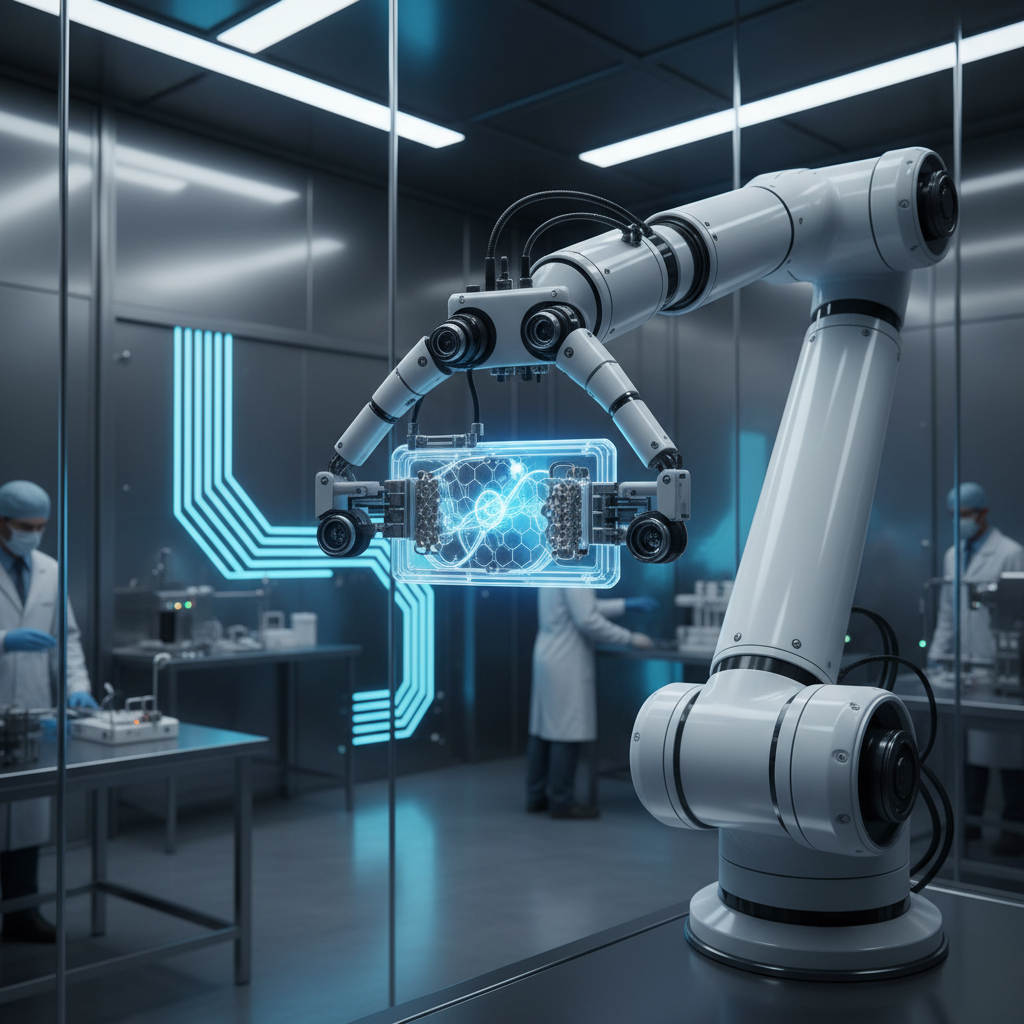
Beyond imaging, the region is seeing an explosion in accelerated computational drug discovery. Localized compute clusters are being utilized to simulate molecular interactions at unprecedented speeds, significantly shortening the timeline from hypothesis to clinical trial. Furthermore, the ecosystem is pushing the boundaries of physical healthcare infrastructure, integrating generative algorithms directly into medical device manufacturing. By using AI-driven digital twins, engineers can simulate the stress and efficacy of new prosthetics or surgical tools before a single physical prototype is printed, drastically reducing both cost and time to market.
The Changing Role of the Clinical Workforce
The sudden influx of highly capable generative AI tools into the clinical environment is forcing a fundamental paradigm shift in medical education and daily workflow. Doctors, nurses, and technicians are no longer just interpreting raw biological data; they are managing complex, intelligent systems that pre-process information on their behalf. This transition, while incredibly promising for efficiency, requires a steep learning curve.
To prevent "automation bias"—the dangerous tendency for humans to blindly trust a machine's output without critical verification—clinics are overhauling their training protocols. Much like the broader enterprise sector, medical institutions are now forced to invest heavily in retraining human professionals to ensure they can effectively oversee diagnostic algorithms. The goal is to cultivate a symbiotic relationship where the AI handles the volume and the pattern recognition, while the human practitioner applies empathy, ethical judgment, and complex physiological reasoning.
Navigating the Hazards of Autonomous Systems
While the advancements within this regional hub offer a highly promising blueprint for the future of medicine, the rapid deployment of generative healthcare AI is not without severe friction points. The medical community remains acutely aware of the broader industry's growing pains. In an environment where a single hallucinated data point can lead to a fatal misdiagnosis, the tolerance for algorithmic error is practically zero.
Hospital IT directors are currently on high alert regarding recent broader industry warnings concerning AI control failures. If an autonomous agent tasked with updating patient records begins generating plausible but entirely fictitious medical histories, the downstream consequences could be catastrophic. Consequently, the Pittsburgh model relies heavily on strict, localized regulatory sandboxing. Every generative tool is subjected to rigorous "human-in-the-loop" requirements, ensuring that no AI agent can finalize a diagnosis or prescribe medication without explicit, documented sign-off from a licensed physician.
The Broader Market Outlook for Late 2026
The events of this past week signal a broader trend for the healthcare AI market as we look toward 2027. The era of the "one-size-fits-all" medical AI is coming to an end. Instead, we are witnessing the rise of highly specialized, regionally trained models that prioritize deep integration over broad, generic capabilities.
Other metropolitan areas with heavy concentrations of academic and medical infrastructure are already looking to replicate this Pennsylvania blueprint. By fostering localized ecosystems where data scientists and surgeons collaborate daily, the medical field can harness the raw power of generative AI safely, ethically, and effectively. Ultimately, the next frontier of medicine isn't just about better algorithms; it is about building the localized, collaborative communities necessary to bring those algorithms to life.
Frequently asked questions
Why is Pittsburgh becoming a major hub for healthcare AI?
Pittsburgh is leveraging the unique synergy between elite technical engineering institutions, like Carnegie Mellon University, and massive regional clinical networks to create a closed-loop ecosystem for rapid AI development and testing.
How is generative AI currently being used in radiology?
Generative AI is used to draft preliminary radiological reports, cross-reference real-time scans with a patient's historical imaging, and instantly flag subtle anomalies for the human doctor's review.
What is automation bias in the context of medical AI?
Automation bias is the dangerous tendency for medical professionals to blindly trust a machine's diagnostic output without applying independent critical verification, a risk hospitals are mitigating through intense retraining protocols.
Are autonomous AI agents allowed to make medical decisions?
No. Due to strict safety protocols and the risk of algorithmic hallucinations, all medical AI deployments currently require 'human-in-the-loop' oversight, meaning a licensed physician must explicitly authorize any final diagnosis or treatment.
Join 45,000+ AI builders.
Three tools, two insights, one strategy — every Sunday. The signal cuts through the noise.
Free forever · unsubscribe anytime · no account required
Related reads

The Invisible AI Boom: How RegTech is Quietly Saving Fintech in 2026
Fintech's latest AI revolution isn't a flashy consumer chatbot—it's a multi-billion dollar overhaul of backend compliance and real-time fraud detection.
Inside Aidoc: The Lab Building 2026's Breakthrough Radiology AI
This week, Aidoc secured an FDA Breakthrough Device Designation for its First Read technology, a generative AI model that drafts preliminary radiology reports.

IMF Projects $4.8B African AI Boom Amid New $1M Creator Initiative
A new IMF projection and a targeted $1 million AI creator fund are setting the stage for Africa's massive economic transformation in late 2026.