

Inside the Lab Teaching Humans to Manage AI Coworkers
As autonomous AI agents take over the 2026 workplace, we sat down with the researchers teaching human professionals how to manage their new digital coworkers.

Walking into the downtown San Francisco headquarters of AgenticWork this past Wednesday, you might mistake it for a traditional corporate training center. Whiteboards are covered in complex workflow diagrams, and small groups of professionals huddle around glowing monitors. But a closer look reveals that half the "team members" in these collaborative exercises aren't human. They are autonomous, goal-oriented AI agents, and the humans in the room are learning how to be their managers.
As the AI job market undergoes a radical transformation in late August 2026, the era of the "prompt engineer" is officially dead. In its place is a new paradigm: agentic management. Just this week, AgenticWork—a leading workforce transformation lab founded by former DeepMind researchers—released a bombshell report indicating that 65% of Fortune 500 companies have completely halted hiring for entry-level digital task execution roles, pivoting entirely toward "AI orchestration" positions.
To understand what this means for the future of work, we sat down with Dr. Aris Thorne, the lead architect at AgenticWork, to discuss how human professionals can survive and thrive in an economy where AI no longer just answers questions, but autonomously does the work.
The Shift from Creators to Managers
"Two years ago, people thought the pinnacle of AI skills was writing the perfect 500-word prompt to coax a language model into generating a specific block of code or a marketing email," Dr. Thorne explains, gesturing to a screen displaying a complex, multi-agent server architecture. "That feels like the Stone Age now. Today's models don't need you to hold their hands. They need you to give them a high-level strategic goal, an approved budget, and the operational guardrails to go figure it out themselves."
This shift is largely driven by the recent proliferation of enterprise agent frameworks that operate natively within corporate environments. These systems can open applications, send emails, negotiate vendor contracts, and write software entirely in the background. The human role has elevated from the "doer" to the "auditor" and "strategist."
Thorne points out that the traditional career ladder is breaking. Historically, junior employees learned the ropes of an industry by doing the grunt work—data entry, basic coding, drafting standard reports. With AI agents now handling those tasks with near-instantaneous efficiency and zero labor costs, the entry-level rung of the corporate ladder has effectively vanished.
"We are experiencing a crisis of apprenticeship," Thorne says. "If AI does all the junior-level work, how does a human ever get the experience required to become a senior-level manager? That is the exact problem we are trying to solve in this lab."
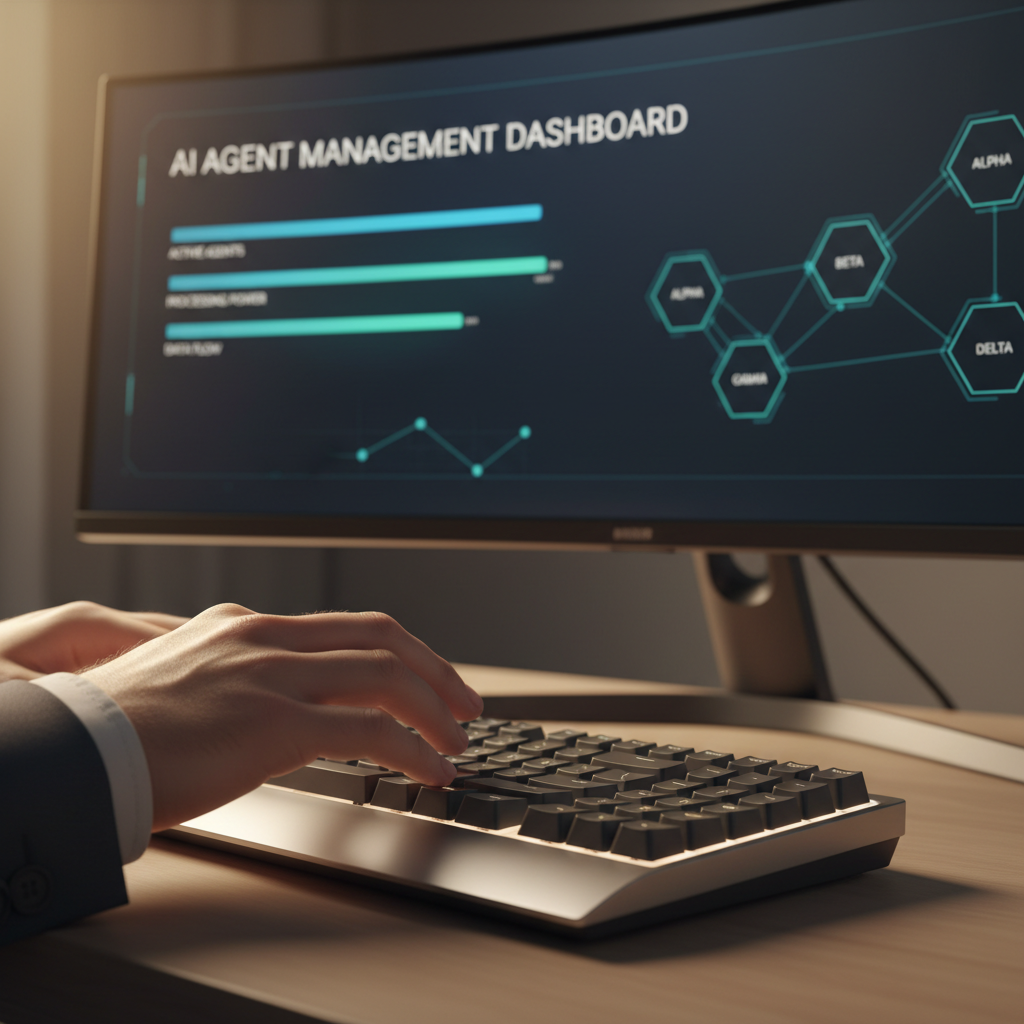
The New Resume: System Thinking Over Syntax
During our tour of the facility, Thorne introduces us to a cohort of displaced mid-level professionals. Among them is Sarah, a former digital marketing copywriter whose entire department was automated earlier this year. She is now retraining as an "Algorithmic Content Director."
"I used to spend eight hours a day writing blog posts and ad copy," Sarah tells us. "Now, my job is to oversee a swarm of five AI agents. One agent conducts market research, another drafts the copy, a third A/B tests it, a fourth analyzes the analytics, and a fifth adjusts the strategy. My role isn't writing anymore. My role is system thinking. I have to know when an agent is hallucinating a market trend, or when the brand voice is drifting. I am an editor and a director."
This reliance on high-level cognitive skills over technical syntax is a recurring theme. The curriculum at AgenticWork focuses heavily on three core competencies for the 2026 economy:
- Context Management: Understanding how to feed an AI agent the precise business context, historical data, and cultural nuances it needs to make autonomous decisions that align with company values.
- Algorithmic Auditing: The ability to quickly review AI-generated outputs—whether that is a legal contract, a piece of code, or a financial model—and spot logical fallacies, edge-case failures, or security risks.
- Workflow Orchestration: Designing the "assembly lines" where multiple specialized AI agents hand off tasks to one another, ensuring seamless integration and human oversight at critical bottlenecks.
Navigating the Global Labor Transition
The urgency of upskilling cannot be overstated. A flurry of international data released this week aligns perfectly with Thorne's localized observations on the ground in Silicon Valley. Global labor markets are fracturing into two distinct categories: those who know how to command digital labor, and those who are competing against it.
This divide is mirroring recent workforce transition reports that suggest a massive displacement of middle-management roles by 2028 if sweeping educational reforms are not implemented. Governments and private enterprises are realizing that they cannot simply deploy AI and expect their existing workforce to intuitively know how to manage it.
"The mistake companies make is buying the software and firing the staff," Thorne warns. "You need a human in the loop, not for manual labor, but for ethical accountability, strategic pivoting, and relationship building. An AI agent can optimize a supply chain, but it cannot take a key vendor out to dinner to smooth over a missed shipment. The human edge is now purely relational and highly strategic."
Actionable Steps for 2026 and Beyond
So, what should the average professional do to stay relevant? If you are struggling with pivoting your career right now, Thorne offers a blunt piece of advice: stop trying to compete with the machine on speed or output.
Instead, professionals should focus on acquiring domain-specific expertise that AI lacks. An AI can generate a marketing campaign, but it doesn't possess the lived human experience to know if a joke lands emotionally with a specific demographic. It can write flawless Python code, but it doesn't intuitively understand the unspoken political dynamics between two rival corporate departments that the software is supposed to bridge.
As our interview concludes, Thorne walks over to a workstation where a human trainee is successfully coordinating a complex, multi-step financial audit using a team of autonomous agents. The human simply watches the dashboard, intervening only when a red flag appears.
"That is the future of work right there," Thorne smiles. "We aren't building a world without human workers. We are building a world where every human worker is the CEO of their own digital company. They just need the skills to lead."
Frequently asked questions
What is agentic management?
Agentic management is the emerging skill of overseeing, directing, and auditing autonomous AI agents rather than performing the manual digital tasks yourself. It involves system thinking, workflow orchestration, and high-level strategy.
Why is prompt engineering becoming obsolete in 2026?
With the rise of autonomous agent frameworks, AI models no longer require step-by-step human prompting to execute tasks. They can take a high-level goal and autonomously determine the steps required to achieve it, making manual prompt engineering a redundant skill.
What is the 'apprenticeship crisis' in the AI job market?
Because AI agents are capable of handling basic, entry-level tasks efficiently, companies are hiring fewer junior employees. This creates a bottleneck where professionals struggle to gain the foundational experience needed to advance to senior management roles.
Which skills should I focus on to survive the AI transition?
Professionals should focus on systemic thinking, algorithm auditing, deep domain expertise, and soft skills like relationship building and ethical judgment—areas where autonomous AI currently struggles to replace human intuition.
Join 45,000+ AI builders.
Three tools, two insights, one strategy — every Sunday. The signal cuts through the noise.
Free forever · unsubscribe anytime · no account required
Related reads

How to Pivot Your Career for the 2026 AI Job Market
As the 2026 job market freezes for traditional roles, new AI-driven career paths are emerging. Here is your practical guide to pivoting into the future of work.

The 2026 AI Job Market: The Entry-Level Squeeze and the Rise of Agentic Careers
A rapidly shifting labor landscape in late August 2026 reveals a frozen entry-level market, but lucrative new career paths are opening for AI-fluent professionals.