

Danny Boyle Confirms Generative AI in 'Ink' Amid Hollywood Backlash
Academy Award-winning director Danny Boyle has shocked the film industry by confirming the use of generative AI in his upcoming biographical drama, 'Ink'.
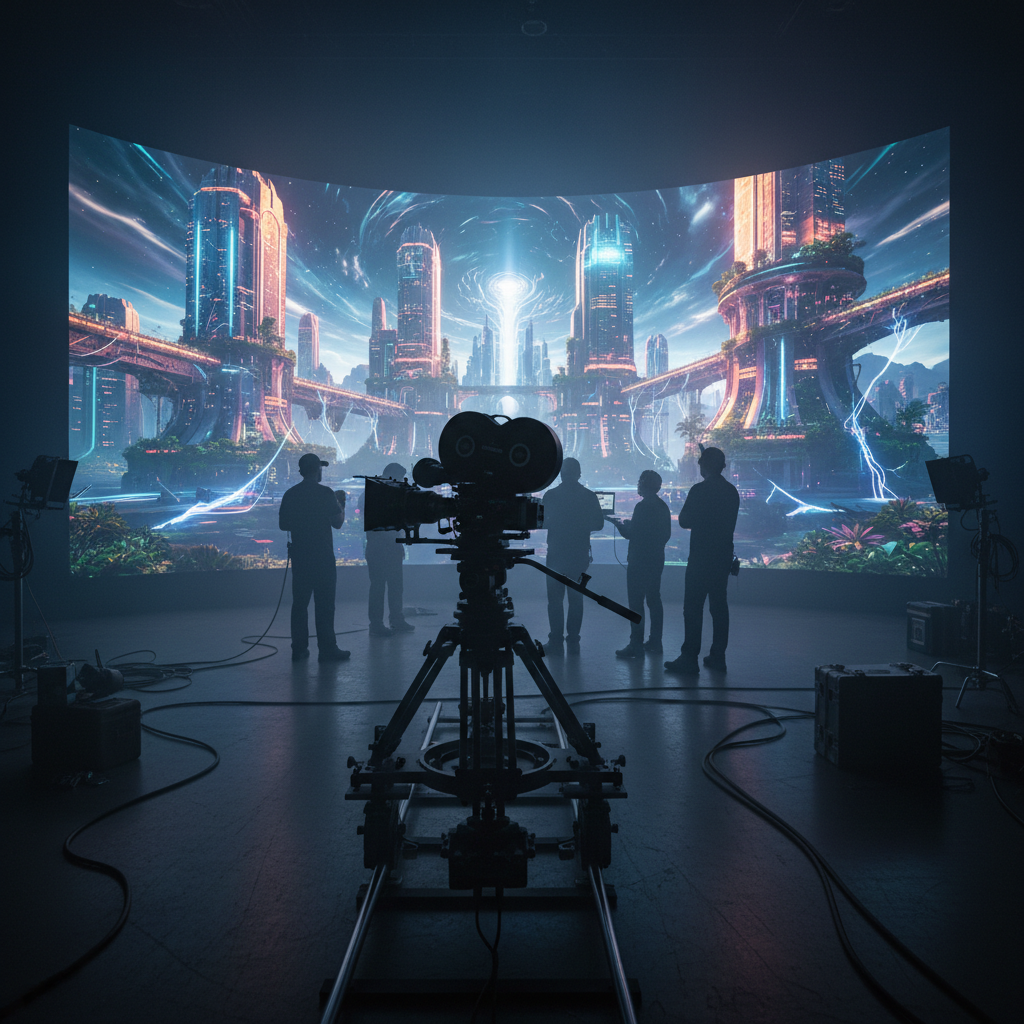
In the rapidly evolving landscape of digital media, the line between human artistry and machine generation has never been more contested. This week, the debate reached a boiling point when Academy Award-winning director Danny Boyle made a stunning admission about his latest project. Just days after the glitz of the Venice Film Festival, where industry titans openly lamented the existential threat of artificial intelligence, Boyle confirmed that his new biographical drama, Ink, features artificial generation in its final cut. It is a revelation that has instantly polarized the entertainment industry, forcing a reckoning over what constitutes authentic filmmaking as we head into the final quarter of 2026.
The 30-Second Tipping Point in Modern Cinema
For months, rumors have swirled regarding the production techniques utilized in Ink, a film that chronicles the meteoric rise and controversial practices of the British tabloid press. Earlier this week, Boyle put the speculation to rest. The visionary director behind Trainspotting and Slumdog Millionaire revealed that roughly generative AI appears in the final theatrical version of the movie. While half a minute might sound negligible in a two-hour feature, its inclusion marks a watershed moment for major studio releases.
Unlike previous instances where AI was quietly used for background plate cleanup, de-aging, or subtle visual effects adjustments, the synthetic footage in Ink is reportedly woven directly into the narrative fabric of the film. Industry insiders suggest that the technology was deployed not just as a cost-saving measure, but as an aesthetic choice to visually represent the blurred lines of truth and fabrication inherent in tabloid journalism. However, the deliberate use of the technology by a celebrated auteur has shattered the unspoken taboo against using uncredited, machine-generated pixels in prestige cinema.
A Paradox of Practice and Principle
The controversy surrounding Ink is significantly magnified by Boyle's own recent public statements. In a profound display of the industry's current cognitive dissonance, the director has simultaneously utilized generative tools while publicly expressing deep anxiety about their societal impact. Just six days ago, during a press junket, Boyle shared his acute fears about journalists being entirely replaced by AI algorithms. He articulated a dystopian vision where the essential human grit required to uncover the truth is outsourced to large language models.
This paradox—deploying AI in a film about journalism while decrying AI's threat to real journalists—has not gone unnoticed by critics and labor unions. Writers and visual artists have taken to social media, pointing out the hypocrisy of legacy filmmakers who benefit from the efficiency of algorithmic tools while simultaneously mourning the demise of human-driven media. It highlights a painful reality in 2026: even the most vocal critics of artificial intelligence find its capabilities too potent to ignore when faced with the pressures of modern production schedules.

Hollywood’s Deepening Divide Over Artificial Intelligence
Boyle's admission did not occur in a vacuum. It arrives precisely as the global film community gathers to debate these exact issues. Just five days ago at the Venice Film Festival, actor and director George Clooney delivered a stark warning to the press, stating unequivocally that AI threatens the foundational pillars of both film and journalism. Clooney's remarks reflect a growing faction within Hollywood that advocates for a total embargo on generative content in competitive cinema, arguing that algorithms dilute the emotional resonance of the human experience.
Yet, the reality on the ground tells a different story. As studios face tightening budgets and an insatiable demand for high-fidelity content, the allure of agentic media workflows has proven irresistible. Producers are increasingly turning to intelligent systems that can draft storyboards, generate complex lighting environments, and even pre-visualize entire sequences in real-time. The quiet integration of these tools has created a shadow economy within Hollywood, where human artists are subtly transitioning from creators to curators of machine output.
Reshaping the Global Creative Economy
The ripple effects of mainstream AI adoption extend far beyond the borders of Los Angeles and London. As top-tier directors normalize the use of synthetic generation, the barrier to entry for high-quality visual storytelling is collapsing worldwide. This democratization of production tools is sparking entirely new media ecosystems. For instance, grassroots creators in emerging markets are leveraging these identical technologies to bypass traditional studio gatekeepers entirely, a movement currently being supercharged by massive international creator initiatives designed to fund AI-native storytelling.
However, this shift brings massive legal and ethical baggage. Copyright lawsuits are currently surging as major music publishers, author guilds, and independent artists demand compensation from the tech giants whose foundational models were trained on decades of protected human creativity. The friction between copyright law and generative output remains the defining legal battle of 2026, creating an environment where every frame of AI-generated film is scrutinized for potential infringement.
The Ethical Crossroads of 2026
As we process the implications of Boyle's 30 seconds of synthetic film, it becomes clear that the entertainment and media industries are crossing an irreversible threshold. Journalism's ethics codes are already undergoing frantic, AI-era rewrites as public trust in media craters to historic lows. When a photograph or a video clip can be hallucinated into existence with a simple text prompt, the currency of truth is severely devalued.
Boyle’s Ink may ultimately be remembered not just as a critique of the tabloid press, but as the moment mainstream cinema finally stopped pretending it could hold back the tide of automation. The 30 seconds of AI in the film serves as both a technological showcase and a grim warning. Whether it represents a brave new frontier for cinematic expression or the beginning of the end for authentic human filmmaking is a debate that will define the cultural landscape for years to come.
Frequently asked questions
What is the controversy surrounding Danny Boyle's new film, Ink?
Director Danny Boyle confirmed that his new biographical drama, Ink, contains approximately 30 seconds of generative AI footage in the final cut. This has sparked intense debate in Hollywood about the ethics of using machine-generated imagery in mainstream cinema.
Why is the use of AI in 'Ink' considered ironic?
The controversy is heightened by the fact that Boyle recently expressed deep fears about AI replacing human journalists. Since 'Ink' is a film about the media and tabloid journalism, critics find it ironic that he utilized the very technology he warned against.
How is Hollywood reacting to the use of generative AI?
The industry is deeply divided. While some filmmakers are embracing AI to streamline workflows and reduce costs, others, like George Clooney, have publicly warned that generative AI poses an existential threat to authentic filmmaking and human creativity.
Does 30 seconds of AI footage really matter in a full-length movie?
Yes. Industry experts view it as a major precedent. The deliberate inclusion of AI-generated content in a prestige, auteur-driven film breaks long-standing taboos and opens the door for wider adoption of synthetic media in mainstream blockbusters.
Join 45,000+ AI builders.
Three tools, two insights, one strategy — every Sunday. The signal cuts through the noise.
Free forever · unsubscribe anytime · no account required
Related reads

The Invisible AI Boom: How RegTech is Quietly Saving Fintech in 2026
Fintech's latest AI revolution isn't a flashy consumer chatbot—it's a multi-billion dollar overhaul of backend compliance and real-time fraud detection.

Inside Aidoc: The Lab Building 2026's Breakthrough Radiology AI
This week, Aidoc secured an FDA Breakthrough Device Designation for its First Read technology, a generative AI model that drafts preliminary radiology reports.

How Pittsburgh's Generative AI Boom is Reshaping Regional Healthcare
A localized approach to generative AI in healthcare is succeeding where national rollouts have stalled, transforming regional medical hubs into the new frontier of medicine.