
How Majorana 2 Could Transform the Future of Quantum Computing
Microsoft's Majorana 2 chip could mark a major breakthrough in quantum computing. By leveraging topological qubits designed for greater stability and lower error rates, the technology aims to overcome some of the biggest challenges facing today's quantum systems. This article explores how Majorana 2 works, why topological quantum computing matters, and what Microsoft's latest advances could mean for the future of AI, scientific research, cybersecurity, and large-scale computing.
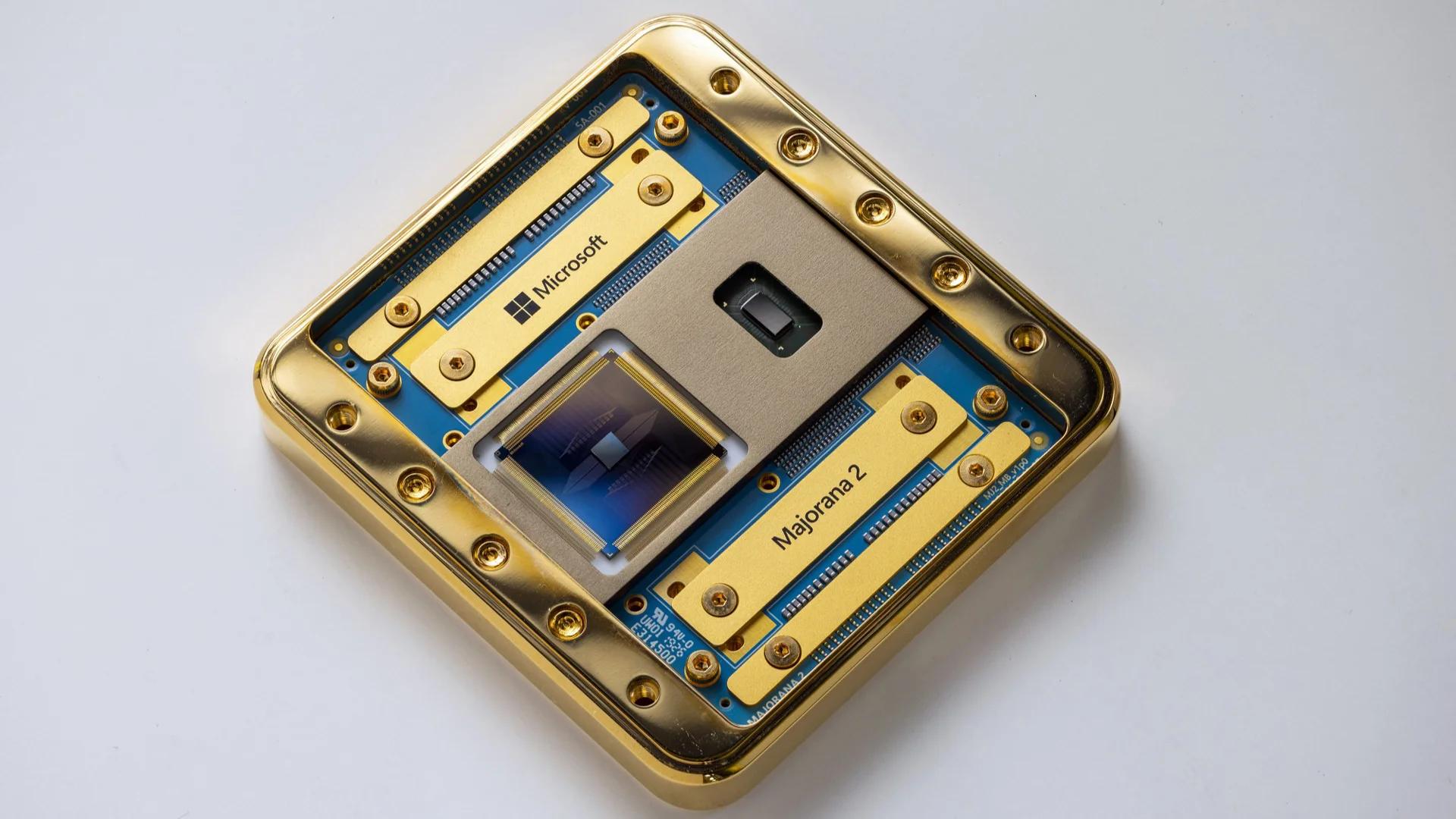
Microsoft has officially unveiled Majorana 2, its next-generation topological quantum chip that achieves a 1,000-fold increase in qubit reliability compared to previous iterations. This breakthrough, powered by the newly released Microsoft Discovery agentic AI platform, has allowed the company to accelerate its timeline for a scalable, commercially viable quantum computer to 2029—cutting the original projection in half. By integrating advanced materials science with autonomous AI agents, Microsoft is solving the 'noise' problem that has long plagued the quantum computing industry.
The Quantum Leap: What is Majorana 2?
Majorana 2 is a topological quantum computing chip designed to provide high-fidelity qubits that are inherently protected from environmental noise. Unlike traditional superconducting qubits that lose their quantum state (decoherence) in microseconds, Majorana 2 qubits boast a mean lifetime of 20 seconds, with some instances reaching a full minute. This stability is achieved through a unique materials stack that utilizes lead as a superconductor, providing a robust foundation for topological protection.
Defining the Core Technology
To understand the significance of this announcement, it is essential to define the specific terminology used by Microsoft's quantum team:
Topological Qubit: A type of qubit that stores information in a way that is physically protected from local disturbances, similar to how a knot in a string remains a knot even if the string is moved.
Qubit Lifetime: The duration a qubit can maintain its quantum state (superposition) before collapsing due to environmental interference.
Agentic AI: AI systems capable of autonomous reasoning, goal-setting, and executing complex workflows without constant human intervention.
How Agentic AI Accelerated the Majorana Roadmap
The development of Majorana 2 was significantly accelerated by Majorana 2 research, which utilized autonomous AI agents to manage the intricate R&D process. These agents did not just process data; they hypothesized new material combinations, automated the measurement of thousands of devices, and identified microscopic flaws that human researchers might have missed. This synergy between human expertise and AI autonomy is the cornerstone of the new Microsoft Discovery platform.
The Role of Microsoft Discovery
Microsoft Discovery is now generally available as a platform for 'Frontier R&D.' It allows organizations to deploy teams of specialized AI agents to solve complex scientific problems. In the case of Majorana 2, these agents were used to:
Automate Measurements: Running 24/7 cycles of device testing that would take humans months to complete.
Optimize Fabrication: Refining the materials stack to ensure the highest possible purity in the superconducting layers.
Filter Raw Data: Distilling terabytes of noise into actionable insights regarding qubit performance.
For those looking to implement similar efficiencies in their own workflows, exploring ai automation tools can provide a starting point for integrating agentic logic into business and research processes.
Majorana 2 vs. Traditional Quantum Architectures
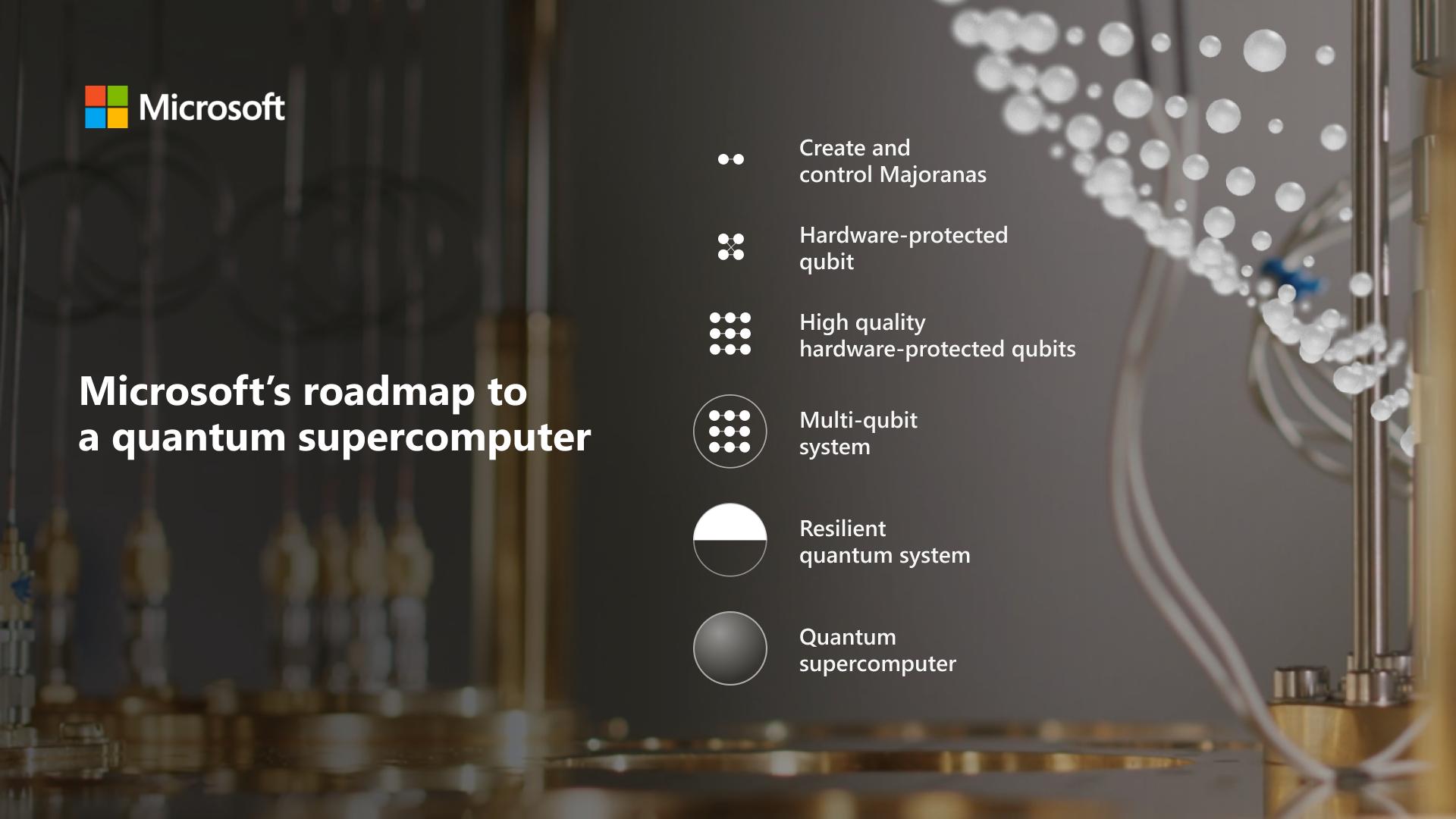
The primary differentiator for Microsoft’s approach is the focus on 'topological' stability. While competitors like IBM and Google have focused on increasing the number of qubits, Microsoft is prioritizing the quality and size of the qubits. Majorana 2 qubits are approximately 1/100th of a millimeter in size, allowing for massive scalability within a small physical footprint.
FeatureTraditional Superconducting QubitsMajorana 2 (Topological)Typical LifetimeMicroseconds (10^-6s)20 - 60 SecondsError ProtectionSoftware-based (High overhead)Hardware-level (Topological)Qubit SizeRelatively Large1/100th of a millimeterOperation SpeedVariable~1 MicrosecondScalability PotentialLimited by wiring/cooling bulkHigh due to small qubit size
The Engineering Behind the Breakthrough
The shift from Majorana 1 to Majorana 2 involved a fundamental change in material composition. By moving to a lead-based superconducting layer, Microsoft engineers were able to create a more stable environment for the Majorana zero modes. This material choice is critical because it offers a higher critical temperature and better magnetic field tolerance than previous aluminum-based designs. The AI agents within the Discovery platform were instrumental in simulating how these materials would interact at the atomic level, predicting the topological phase transitions with unprecedented accuracy before a single physical chip was fabricated.
Real-world Use Cases and Industry Impact
The implications of a 1,000-fold increase in reliability cannot be overstated. In the current NISQ (Noisy Intermediate-Scale Quantum) era, most quantum calculations are hampered by errors that accumulate faster than they can be corrected. Majorana 2 changes this equation by providing a hardware-level solution to error correction.
Revolutionizing Material Science
One of the most immediate applications of Majorana 2 will be in the field of chemistry. Simulating the FeMoco molecule—the active site of the nitrogenase enzyme—is a task currently impossible for classical computers. Success in this area could lead to the development of synthetic catalysts that mimic natural nitrogen fixation, drastically reducing the energy required to produce fertilizer and potentially lowering global energy consumption by several percentage points.
Financial Modeling and Optimization
Beyond the laboratory, the financial sector stands to benefit from the increased qubit lifetime. Complex Monte Carlo simulations used for risk assessment and option pricing require high-fidelity gates. Majorana 2's stability allows for deeper quantum circuits, enabling more complex paths to be calculated without the quantum state collapsing mid-computation. This could lead to near-instantaneous portfolio optimization in volatile markets.
What This Means for Developers
For the broader developer community, the announcement of Majorana 2 and Microsoft Discovery signals a shift in how we interact with quantum stacks. Microsoft is not just releasing hardware; they are integrating quantum capabilities into the Azure ecosystem. Developers will soon be able to utilize Azure Quantum Elements to call upon these topological qubits via high-level languages like Q#.
Integration with Copilot: Microsoft has launched a Discovery app for GitHub Copilot, allowing developers to use agentic AI to assist in writing quantum-ready code and simulating molecular structures directly within their IDE.
Hybrid Computing Models: The future will likely involve hybrid workflows where classical AI agents identify problems and quantum processors solve the specific sub-problems related to probability and simulation.
Lower Entry Barriers: By abstracting the complexities of topological physics through the Discovery platform, Microsoft is making it possible for software engineers—not just PhD physicists—to contribute to quantum development.
Implementation Considerations and Risks
Despite the optimism, the path to 2029 is not without hurdles. Maintaining the cryogenic environments required for Majorana 2 remains a significant engineering challenge. While the qubits themselves are small, the dilution refrigerators required to keep them at millikelvin temperatures are large and expensive. Organizations looking to adopt this technology must consider the infrastructure costs and the specialized talent required to manage quantum-classical hybrid systems.
Furthermore, there is the 'Quantum Threat' to cybersecurity. As Majorana 2 brings us closer to a cryptographically relevant quantum computer, the urgency to transition to post-quantum cryptography (PQC) increases. Microsoft is concurrently working on these standards, but the rapid acceleration of the roadmap means that the window for enterprise migration is closing faster than previously anticipated.
Expert Insights: The Shift to Agentic Science
According to Chetan Nayak, Microsoft Technical Fellow, the 1,000-fold improvement in reliability is not just a marginal gain; it is a fundamental shift in the feasibility of quantum computing. The integration of Microsoft Discovery suggests that the future of science is no longer just about human intuition, but about 'Agentic Science.' By allowing AI to handle the 'brute force' of discovery—testing millions of permutations—human scientists can focus on high-level strategy and ethical oversight.
Key Takeaways for the Tech Industry
Reliability Over Quantity: Microsoft is betting that a few highly reliable topological qubits are more valuable than thousands of noisy, error-prone ones.
AI-Driven R&D: The use of agentic AI in the development of Majorana 2 proves that AI is now a primary driver of hardware innovation, not just a software tool.
Accelerated Timelines: The jump from a decade-long roadmap to a 2029 goal signals that the 'Quantum Winter' may be ending sooner than expected.
Democratized Research: With the release of the Microsoft Discovery app for GitHub Copilot users, advanced R&D tools are becoming accessible to individual researchers.
Conclusion
The introduction of Majorana 2 represents a pivotal moment in the race for quantum supremacy. By achieving a 20-second qubit lifetime and leveraging the autonomous power of Microsoft Discovery, Microsoft has moved quantum computing from the realm of theoretical physics into the territory of engineering reality. As we approach 2029, the synergy between agentic AI and topological hardware will likely be the catalyst that finally unlocks the full potential of the quantum age. This is no longer a question of 'if' quantum computing will change the world, but a matter of 'when'—and according to Microsoft, that 'when' is less than five years away.
Frequently asked questions
What is Majorana 2?
Majorana 2 is Microsoft's next-generation topological quantum chip that uses a new materials stack to achieve 1,000 times better qubit reliability than previous models.
When will Microsoft have a scalable quantum computer?
Microsoft has updated its roadmap to aim for a commercially valuable, scalable quantum computer by the year 2029.
How long do the qubits last in Majorana 2?
The qubits in Majorana 2 have a mean lifetime of 20 seconds, with some instances lasting up to a full minute, which is significantly longer than traditional superconducting qubits.
What is Microsoft Discovery?
Microsoft Discovery is an AI platform for Frontier R&D that uses autonomous agent teams to accelerate scientific discovery, optimize experiments, and manage complex research workflows.
Join 45,000+ AI builders.
Three tools, two insights, one strategy — every Sunday. The signal cuts through the noise.
Free forever · unsubscribe anytime · no account required
Related reads
Nvidia's $13B Hugging Face Bid Could Redefine Open-Source AI
Explosive reports this week suggest Nvidia is looking to acquire Hugging Face for $13 billion, a deal that would merge hardware dominance with open-source software.
Nvidia Unveils DSX MaxLPS at Hot Chips 2026 to Solve the AI Power Crisis
Unveiled this week at Hot Chips 2026, Nvidia's new DSX MaxLPS architecture tackles the AI power crisis by maximizing compute within fixed data center budgets.
Google Alters Android App Rules Amid AI-Driven Memory Crunch
As the AI data center boom devours the global supply of memory chips, Google is stepping in to change Android app requirements, forcing developers to adapt.