

The Fair Trade AI Movement: Over 30,000 Creators Mobilize for Consent
A massive rebellion is brewing across the media landscape this week. Over 30,000 artists have united to demand control over how generative AI uses their work.
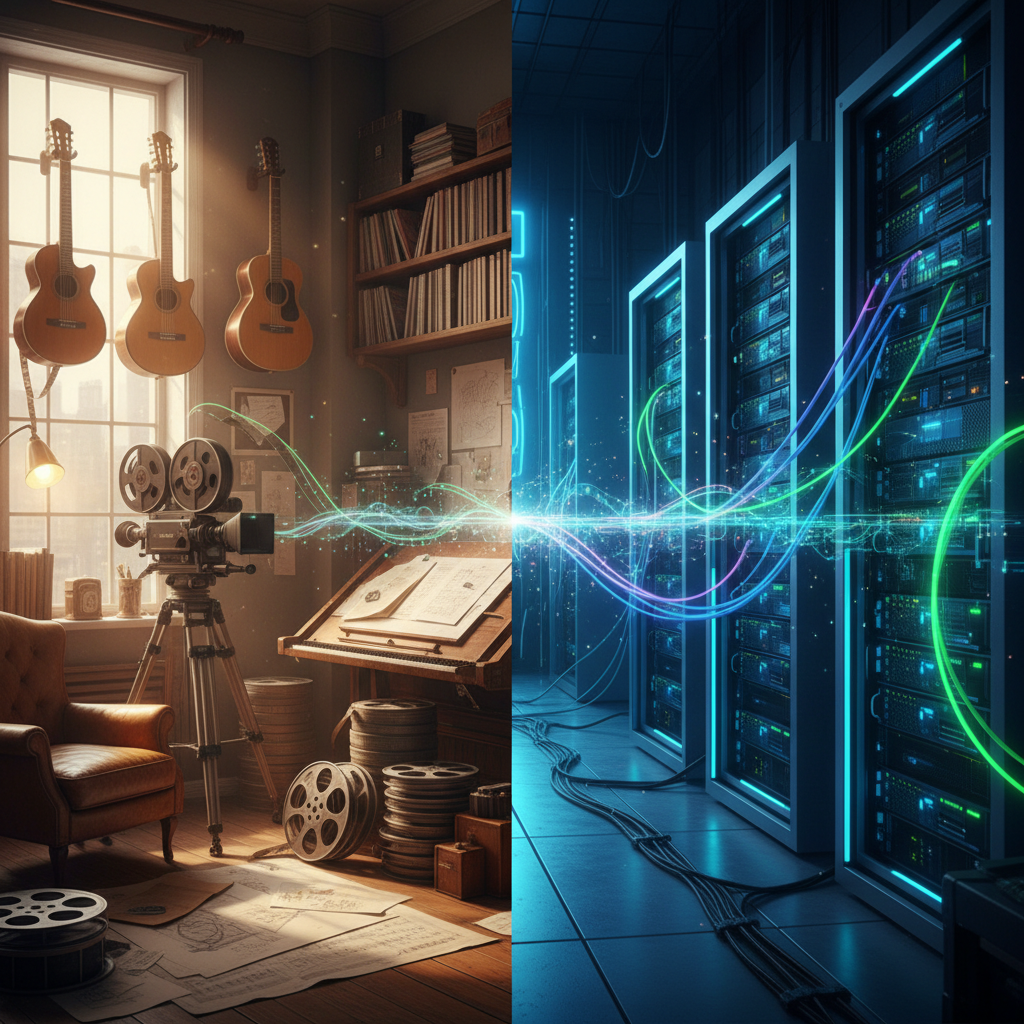
We are officially entering a new frontier of the generative media era, and human creators are no longer content to merely observe. As the quality of AI-generated music, film, art, and journalism reaches unprecedented heights in mid-2026, the debate around how these foundational models are built has dramatically intensified over the past few days. Gone are the philosophical discussions about whether artificial intelligence can truly create art; the conversation has aggressively pivoted to data sovereignty, copyright, and economics.
At the bleeding edge of this cultural flashpoint is a massive mobilization within the independent creator economy. This week, a sprawling coalition of musicians, visual artists, and filmmakers successfully thrust a decentralized consent framework into the mainstream spotlight. The core argument is highly practical: if AI platforms intend to profit off generative media, the human artists who supplied the training data must participate in the upside.
The Rise of the Fair Trade AI Initiative
The tipping point arrived in recent days as a massive digital campaign went viral, sharply contrasting the tech industry's "move fast and scrape everything" mentality with demands for foundational respect. By organizing across social platforms and creator forums, advocates have solidified their stance around a clear, non-negotiable benchmark: builders of generative models must secure explicit opt-in consent before ingesting copyrighted works.
This organized resistance is functioning under a rallying cry making massive waves online. The Fair Trade AI initiative is built on a simple idea: you should get to decide whether your work trains AI, and get paid if it does. As of this week, more than 30,000 artists have said yes, signing pledges that demand tech conglomerates rewrite their data ingestion pipelines to honor creator agency.
For these thousands of signees, the issue goes far beyond simple attribution. Modern AI platforms are not simply generating "inspired" works; they are mimicking specific vocal timbres, distinct artistic brushstrokes, and nuanced cadences of established journalists. The Fair Trade AI movement insists on developing a standardized licensing layer—one that mathematically tracks how much a specific creator's training data influenced an output, translating that micro-contribution into royalty payments.
Reckoning with the Music and Audio Revolution
The music sector has arguably been the hardest hit by unauthorized ingestion, making it the epicenter of the current rebellion. Today’s top-tier foundational models can instantly compose studio-quality tracks featuring indistinguishable vocal replications and complex, multi-stem arrangements. Yet, the foundations of these algorithms remain deeply secretive, leaving producers and vocalists questioning whether their back catalogs served as unwilling teachers.
This technological leap has already triggered massive structural shockwaves across the industry. Major labels have spent recent months locked in a bitter landmark copyright lawsuit targeting some of the highest-profile AI music generators, claiming industrial-scale infringement. However, for independent artists unrepresented by mega-labels, courtroom victories offer little immediate relief. The Fair Trade pledge operates as a localized, grassroots solution to a problem courts are moving far too slowly to solve. It envisions a future where independent artists can easily inject metadata into their compositions, marking them with cryptographic tags that either strictly prohibit AI scraping or route micropayments to a centralized creator wallet.
Generative Video and the Visual Arts Take a Stand
The momentum of the Fair Trade concept is rapidly spilling beyond audio and into film, generative video, and visual arts. Just days ago, major software vendors rolled out unprecedented generative AI functionality capable of conjuring hyper-realistic, scene-by-scene video sequences from simple text prompts. As video model capabilities skyrocket—effectively eliminating the need for traditional camera budgets in certain commercial projects—filmmakers, animators, and digital artists are waking up to an existential threat.
Unlike music, which relies heavily on publishing rights societies like ASCAP or BMI, the visual arts lack a unified collective bargaining framework. This makes visual artists particularly vulnerable to having entire portfolios fed into latent diffusion models. By adopting the principles of the grassroots consent movement, illustrators and video directors are fighting back against platforms that offer a "black box" approach to media generation. They are arguing that no AI video generator can achieve stylistic brilliance without having first strip-mined the internet's most comprehensive art depositories such as ArtStation, Behance, and leading stock video platforms.
Journalism and the Fight for Intellectual Property
Parallel to the visual and musical creator economies, the journalism and digital writing sectors are confronting their own AI crisis. Personalized algorithmic news feeds and autonomous writing tools are ingesting decades of investigative reporting to synthesize on-demand content. While many publications have begun negotiating multi-million-dollar licensing deals behind closed doors, independent reporters, newsletter writers, and freelance journalists find themselves left out of the negotiations.
The Fair Trade push highlights this disparity. As AI companies strike lucrative content distribution agreements exclusively with massive legacy media conglomerates, the independent journalists whose raw reporting informs Large Language Models (LLMs) continue to receive zero compensation. The burgeoning movement demands that LLMs adopt clear attribution standards, ensuring that when an AI system references specific exclusive reporting, it provides a transparent path back to the original creator and compensates them through automated micro-transactions.
The Future of Co-Creation: Coexistence or Conflict?
As we navigate July 2026, the question is no longer how to put the artificial intelligence genie back in the bottle. Generative media is here to stay, irreversibly reshaping the creative landscape. The genuine battlefront is architectural: will the tools of tomorrow be built atop a transparent, ethically compensated data economy, or will they continue to rely on the shadow scraping that defined the initial generative boom?
The success of this week's sweeping mobilization proves that the creator class is organized, legally savvy, and unwilling to be optimized out of their own industry. If tech companies intend to launch the next generation of generative models safely to the public market without drowning in class-action litigation, they will eventually have to sit down at the negotiating table. The path forward is no longer just about generating synthetic media; it is about paying the human hands that built the foundational intelligence behind it.
Frequently asked questions
What is the Fair Trade AI movement?
The Fair Trade AI movement is a widespread creator-led initiative demanding that AI companies seek explicit consent and outline fair compensation mechanisms before using copyrighted art, music, or video to train generative AI models.
Why did 30,000 artists sign the recent pledge?
Artists from music, film, and visual arts signed the pledge to collectively reject unauthorized data scraping, pushing the tech industry to adopt standard opt-in tools and royalty structures for generative outputs.
How is AI affecting the independent music industry?
AI music generators are capable of recreating studio-quality instrumentation and vocal timbres. While this provides new production tools, independent artists argue their uncompensated previous works were scraped to train these algorithms, undermining their market value.
Does this movement impact AI video generation?
Yes. As generative AI video tools advance to produce high-fidelity scenes without traditional cameras, filmmakers and visual artists are joining the movement to protect independent visual copyright from being fed into video-generating models.
Join 45,000+ AI builders.
Three tools, two insights, one strategy — every Sunday. The signal cuts through the noise.
Free forever · unsubscribe anytime · no account required
Related reads
China's Microdrama Boom: How AI is Reshaping Film in 2026
Seemingly overnight, new generative video tools have taken over China's booming microdrama sector, transforming everything from post-production to script evaluation.

How AI is Helping Patients Solve Rare Medical Mysteries
Patients and doctors are increasingly turning to advanced AI models to diagnose rare diseases, transforming how the medical community solves complex health cases.
Bot-to-Bot Retail: How AI Agents Are Taking Over E-Commerce
A new industry report released this week reveals that autonomous AI agents are rapidly transforming digital payments and e-commerce operations.