

A Beginner's Guide to Medical Imaging AI in 2026
Waiting weeks for test results is a thing of the past. Learn how medical imaging AI is revolutionizing diagnostics and patient care in 2026.
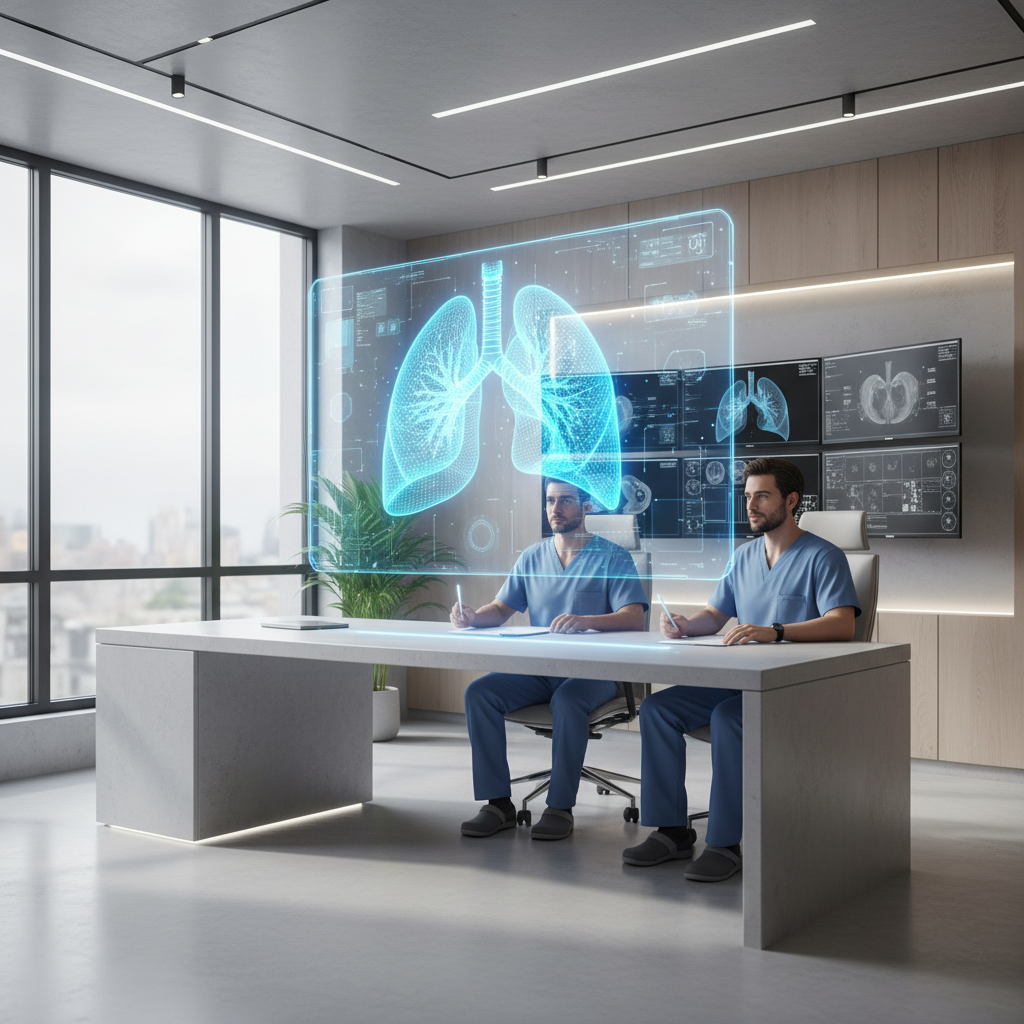
If you have ever had an X-ray, MRI, or CT scan, you likely remember the anxiety of the waiting game. Historically, it could take days or even weeks for a busy human radiologist to analyze your images, look for subtle anomalies, and send a final report to your primary care physician. But if you walk into a major hospital today, in September 2026, that timeline has fundamentally changed. The integration of artificial intelligence into healthcare is no longer a distant sci-fi promise—it is actively saving lives on the front lines of modern medicine.
This week has brought a particularly major turning point in how the public perceives healthcare algorithms. Over the past few days, a sweeping new industry report confirmed that AI-powered machines can now quickly and accurately review medical images, identifying complex diseases more effectively than human radiologists across several key diagnostic categories. For patients, this means faster diagnoses, earlier interventions, and significantly better outcomes.
But how exactly does a computer "read" an X-ray? If you are new to the world of health tech, the sheer volume of jargon can be overwhelming. This beginner's guide breaks down everything you need to know about how AI is currently transforming medical imaging, why it matters for your health, and what the future of doctor-algorithm collaboration looks like.
What is Medical Imaging AI?
At its core, medical imaging AI relies on a branch of computer science known as "computer vision." Just as large language models like ChatGPT have been trained to understand and generate human text, computer vision models are trained to understand and interpret visual data. In the healthcare sector, this visual data consists of millions of anonymized X-rays, MRIs, PET scans, and ultrasounds.
Developers feed these vast datasets into neural networks—complex algorithms designed to mimic the human brain's pattern recognition capabilities. By showing the AI millions of examples of healthy lungs alongside millions of examples of lungs with early-stage tumors, the system learns to spot the microscopic pixel variations that indicate disease.
Unlike the human eye, which is limited by fatigue, lighting conditions, and natural optical limits, an AI model analyzes scans at the pixel level. It can detect a gradient shift in tissue density that is literally invisible to a human physician. When applied to real-world patient care, this means an AI can flag a microscopic lung nodule or a minuscule hairline fracture that might otherwise go completely unnoticed until it develops into a severe, symptomatic problem.
The Diagnostic Breakthroughs of September 2026
The latest wave of healthcare AI is not just about spotting problems; it is about automating the entire workflow to cut down on dangerous delays. We are now seeing hospital systems deploy these tools as the first line of defense in emergency rooms and urgent care centers.
When a patient gets a scan today, the image is immediately routed through an AI triage system before a human doctor ever opens the file. If the AI detects a critical, life-threatening condition—such as a brain bleed, a collapsed lung, or a pulmonary embolism—it immediately bumps that patient's scan to the very top of the radiologist's queue, sounding a digital alarm.
Beyond simple triage, the AI is now helping with the heavy lifting of clinical documentation. For instance, recent regulatory milestones have cleared the way for advanced tools, such as an FDA-designated generative AI model that can actually draft preliminary radiology reports. By writing out the initial findings, the AI saves physicians hours of dictation time, allowing them to focus entirely on verifying the results and planning patient treatments.
Solving the Global Doctor Shortage
To understand why hospitals are rushing to adopt AI, you have to understand the unprecedented crisis facing global healthcare systems. Around the world, there is a severe shortage of trained radiologists and specialized diagnosticians. An aging global population means more people require complex medical imaging, resulting in an explosive increase in the number of scans being performed daily.
Physicians are being asked to read scans at an impossible pace, leading to high rates of burnout and, inevitably, diagnostic errors. Medical imaging AI acts as an untiring co-pilot. It does not need to sleep, it never loses focus after a twelve-hour shift, and it can process a complex 3D MRI in seconds rather than minutes.
- Increased Accuracy: AI models cross-reference thousands of diagnostic markers simultaneously, drastically reducing the rate of false negatives (missed diseases) and false positives (false alarms).
- Unprecedented Speed: What used to take hours or days can now be processed in a matter of seconds, enabling immediate, emergency interventions when every minute counts.
- Cost Efficiency: By catching diseases in their earliest stages—when they are cheapest and easiest to treat—AI helps drive down the overall cost of healthcare for both providers and patients.
Will Artificial Intelligence Replace Your Doctor?
This is the most common question patients ask when they learn an algorithm is reviewing their test results. The short answer for 2026 is: absolutely not. The current standard of care is "human-in-the-loop" AI.
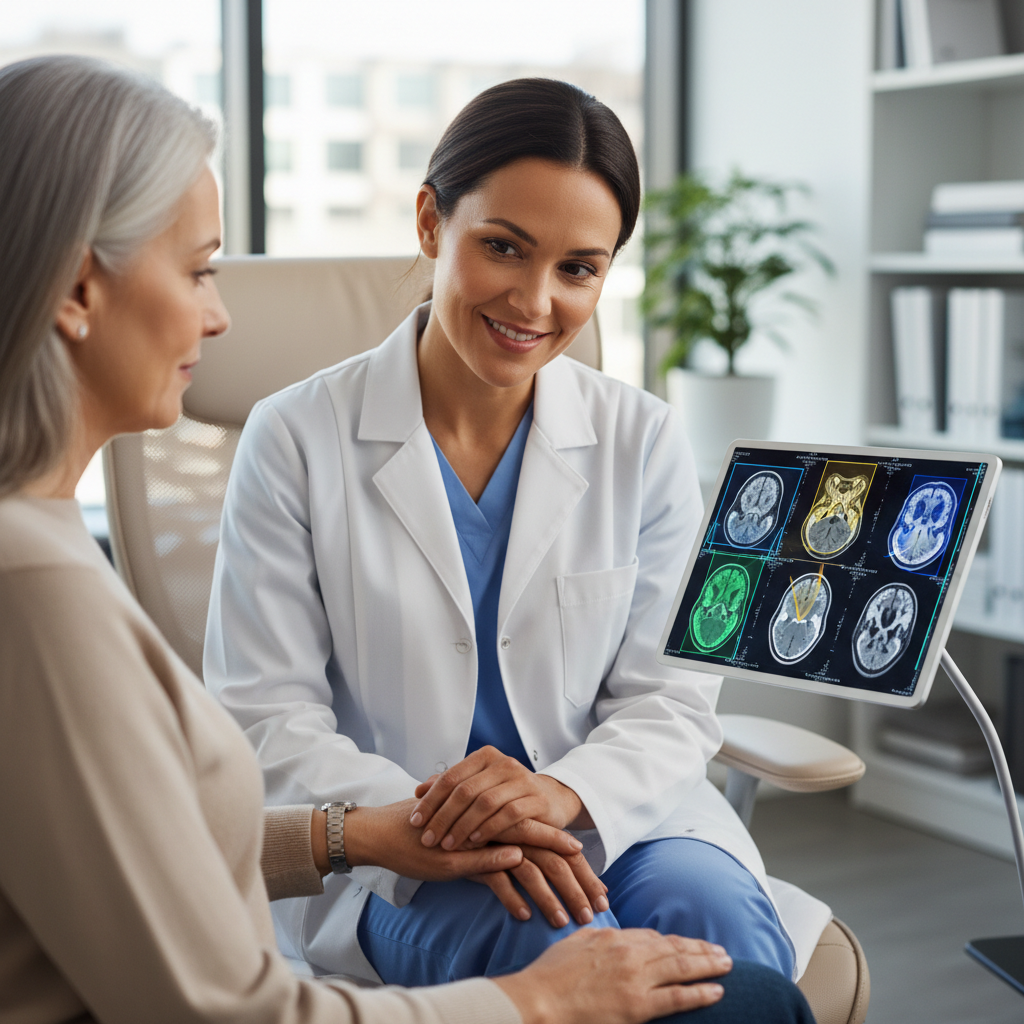
The algorithm acts as a highly advanced assistant, but the human radiologist retains all ultimate decision-making authority. The AI might highlight a suspicious area on a breast cancer screening and suggest a probability score, but the physician determines if a biopsy is necessary, taking into account the patient’s full medical history, family background, and physical symptoms—context that the AI simply does not possess.
That being said, the technology is evolving at a breakneck pace. While today's tools are collaborative, the medical community is already preparing for a massive paradigm shift. Experts are closely watching new data; some researchers predict that fully autonomous clinical AI could match or exceed the holistic diagnostic capabilities of human specialists by the end of the decade. For now, however, the goal is augmentation, not replacement.
The Road Ahead for Patients
As we navigate the end of 2026, the integration of AI in healthcare represents one of the most profound medical leaps since the invention of the MRI itself. For the average patient, this technological revolution happens entirely behind the scenes. You won't see the complex algorithms crunching data in the cloud, nor will you see the neural networks analyzing pixels.
What you will see is a healthcare system that is faster, more accurate, and more attuned to preventative care. You will experience shorter wait times, earlier diagnoses, and more face-to-face time with doctors who are no longer buried under endless piles of paperwork and digital scans. Artificial intelligence isn't just changing how computers read medical images; it is fundamentally changing what it means to be a patient.
Frequently asked questions
What is medical imaging AI?
Medical imaging AI uses artificial intelligence and computer vision to analyze scans like X-rays, MRIs, and CT scans. It is trained to detect microscopic abnormalities and patterns that indicate diseases, often faster and more accurately than the human eye.
Will AI replace human radiologists?
As of 2026, AI is not replacing radiologists. Instead, it acts as a powerful co-pilot, helping doctors triage urgent cases, highlight suspicious areas on scans, and draft preliminary reports. A human doctor still makes the final diagnostic and treatment decisions.
How does AI speed up hospital visits?
AI algorithms can analyze a medical scan in seconds. If the AI detects a critical, life-threatening emergency (like a brain bleed), it immediately bumps that patient to the front of the doctor's queue, reducing wait times and allowing for faster treatment.
Is AI in healthcare safe for patients?
Yes. Current medical AI tools are rigorously tested and subject to strict regulatory approvals, such as FDA clearance in the United States. They are designed to reduce human error and act as an additional safety net for patients by double-checking a doctor's work.
Join 45,000+ AI builders.
Three tools, two insights, one strategy — every Sunday. The signal cuts through the noise.
Free forever · unsubscribe anytime · no account required
Related reads

A Beginner's Guide to the 2026 US-China AI Safety Talks
As the United States and China prepare for critical artificial intelligence safety dialogues this September, understanding the global tech divide is essential.

A Beginner's Guide to Agentic Creativity in 2026 Media
Dive into the new era of entertainment as agentic AI and real-time sports intelligence completely reshape gaming, broadcasting, and consumer media.

A Beginner's Guide to AI Cybersecurity: The Phishing Epidemic of 2026
Generative AI has radically altered the cybersecurity landscape this year, turning easily spotted scams into hyper-personalized, automated attacks.