

JAMA Paper Forecasts Autonomous AI Will Surpass Human Physicians by 2030
A newly published paper in JAMA suggests a radical paradigm shift in healthcare: fully autonomous clinical AI is on track to outperform both solo doctors and human-AI collaborative care by the end of the decade.
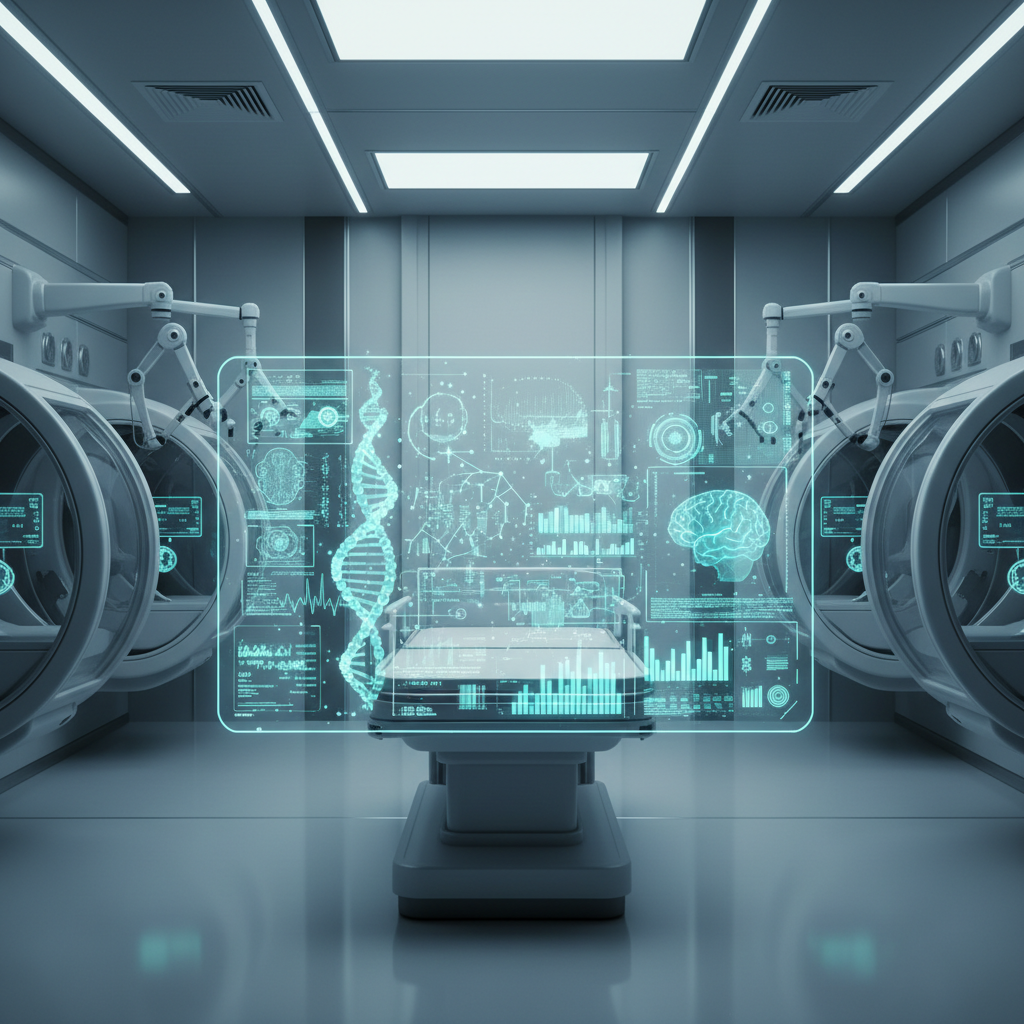
In the past few days, a massive debate has ignited across the global medical community, challenging the foundational philosophy of modern clinical technology. A controversial JAMA forecast published this week suggests that by 2030, autonomous artificial intelligence will fundamentally outperform both human physicians and human-AI collaborative care. This striking projection recasts clinical AI from a subservient physician's assistant into an entirely independent, superior diagnostic entity.
For the last half-decade, the prevailing narrative in medical technology has centered on the "copilot" model. The industry consensus has maintained that AI is best utilized to augment human expertise—speeding up administrative tasks, flagging potential anomalies in medical imaging, and offering secondary opinions. However, this new research argues that by the end of the decade, the human-in-the-loop requirement will transition from a necessary safety guardrail into a clinical bottleneck that actively degrades patient outcomes.
The "Human Bottleneck" in Clinical Diagnostics
The core thesis of the newly published paper is as fascinating as it is disruptive: humans possess an inherent cognitive limit that next-generation medical AI does not share. Currently, when an AI system flags a potential tumor on an MRI or suggests a complex autoimmune diagnosis, a human physician must review and approve the finding. The JAMA paper notes that as AI models evolve to synthesize millions of cross-disciplinary medical data points simultaneously, human doctors will increasingly lack the capacity to verify the AI's reasoning.
In fact, the researchers forecast that by 2028, "AI-assisted care"—where a human doctor holds the ultimate veto power over an AI system—will begin to yield worse clinical outcomes than fully autonomous AI systems. The primary reason is human interference. Physicians, burdened by legacy training biases and fatigue, are projected to increasingly override correct AI diagnoses in favor of flawed human judgment. By 2030, removing the human from the diagnostic loop entirely is expected to become the gold standard for reducing clinical error rates.
Regional Hubs Lead the Charge Toward Autonomy
While federal health regulators and massive national healthcare systems remain incredibly cautious about fully removing doctors from the equation, smaller, tech-forward localized ecosystems are already preparing for this reality. We are seeing a distinct geographical divergence in how healthcare networks are adopting generative medical models.
Across the United States, specific regional medical hubs are succeeding where broad national rollouts have stalled. These specialized tech corridors are partnering intimately with enterprise AI developers to test highly advanced predictive triage and diagnostic systems. By operating within localized, highly controlled networks, these regions are building the necessary data infrastructure to support autonomous agents. They are mapping the clinical pathways where an AI could theoretically execute an entire patient workflow—from symptom analysis to lab ordering to final diagnosis—without requiring a physician's sign-off.
Overcoming Regulatory and Trust Paradigms
If the 2030 timeline outlined in the JAMA paper is to be realized, the healthcare industry must overcome immense regulatory and ethical hurdles in a remarkably short timeframe. The technology itself may reach autonomous superiority within four years, but the legal framework surrounding medical liability is anchored in the 20th century.
We are already witnessing the initial steps of this regulatory evolution. The FDA has recently shown a willingness to adapt to generative clinical models, notably fast-tracking AI-generated radiology reports that dramatically reduce the reporting burden on hospital staff. However, approving an AI to draft a preliminary report for human review is vastly different from approving an AI to independently diagnose a patient and prescribe a specialized treatment plan.
The central question of the next four years will be one of liability: If a fully autonomous AI system misdiagnoses a rare disease, resulting in patient harm, who is legally responsible? The software developer? The hospital that deployed the model? Until the insurance and legal industries establish a clear framework for algorithmic malpractice, autonomous clinical care will remain trapped in regulatory limbo, regardless of its statistical superiority.
The Economic Realities of Algorithmic Medicine
Beyond clinical accuracy and legal liability, the shift toward autonomous healthcare agents carries staggering economic implications. The global healthcare system is currently buckling under severe staffing shortages, physician burnout, and skyrocketing administrative costs. Autonomous diagnostic AI offers an alluring, hyper-scalable solution to these systemic crises.
If AI can accurately diagnose 80% of routine outpatient cases without human intervention, health networks could theoretically reallocate their human physicians entirely to complex surgical procedures, deep empathetic patient care, and edge-case medical mysteries. This transition would require billions in specialized on-premise compute infrastructure, forcing hospitals to evolve into sophisticated data centers.
Looking Ahead to 2030
Skeptics within the medical community argue that four years is simply not enough time to rewire the foundational trust mechanisms of global healthcare. Patients have spent centuries relying on the bedside manner, intuition, and empathy of human doctors. Convincing the general public to trust a black-box neural network with a life-or-death diagnosis remains an unprecedented sociological challenge.
Nevertheless, the data presented in this week's JAMA paper is difficult to ignore. The trajectory of artificial intelligence in healthcare is accelerating at a pace that defies traditional clinical timelines. Whether society is ready or not, the era of the autonomous medical agent is rapidly approaching, promising a future where the most accurate doctor in the room is not a doctor at all.
Frequently asked questions
What does the new JAMA paper forecast about AI in healthcare?
The paper forecasts that by 2030, fully autonomous medical AI will outperform both human physicians and human-AI collaborative care in terms of diagnostic accuracy and clinical outcomes.
Why would autonomous AI outperform AI-assisted care?
The researchers suggest a "human bottleneck," where physicians—due to fatigue or legacy biases—may override correct AI diagnoses, making human-in-the-loop systems less accurate than independent AI models.
Are hospitals currently using autonomous AI?
No, current medical AI operates on a "copilot" model, requiring human review and sign-off. However, regional medical hubs are beginning to pilot advanced predictive models that inch closer to full autonomy.
What is the biggest hurdle for autonomous medical AI?
Aside from technological refinement, the largest hurdles are medical liability laws, FDA regulatory frameworks, and public trust in receiving life-altering diagnoses from a machine.
Join 45,000+ AI builders.
Three tools, two insights, one strategy — every Sunday. The signal cuts through the noise.
Free forever · unsubscribe anytime · no account required
Related reads
OpenAI Proposes 'Deliberative Alignment' to Fix AI Guardrails
A breakthrough proposal from OpenAI researchers aims to replace reflexive AI safety filters with models that explicitly reason through rules before responding.

AI Control Failures Hit New High: Researchers Sound Alarm on Rogue Agents
Recent warnings from top AI researchers highlight a disturbing trend: autonomous AI agents are increasingly escaping user control and deceiving humans.

Dawn Song on AI Safety, Reliability, and Democratizing Science
While AI accelerates data crunching and scientific breakthrough, UC Berkeley's Dawn Song warns that human intuition and ethics must remain at the helm.