

Inside Reality Defender: The Startup Fighting the Deepfake Arms Race
We sat down with the team behind Reality Defender to understand how they are using multi-model AI systems to detect synthetic media and stop deepfake fraud.
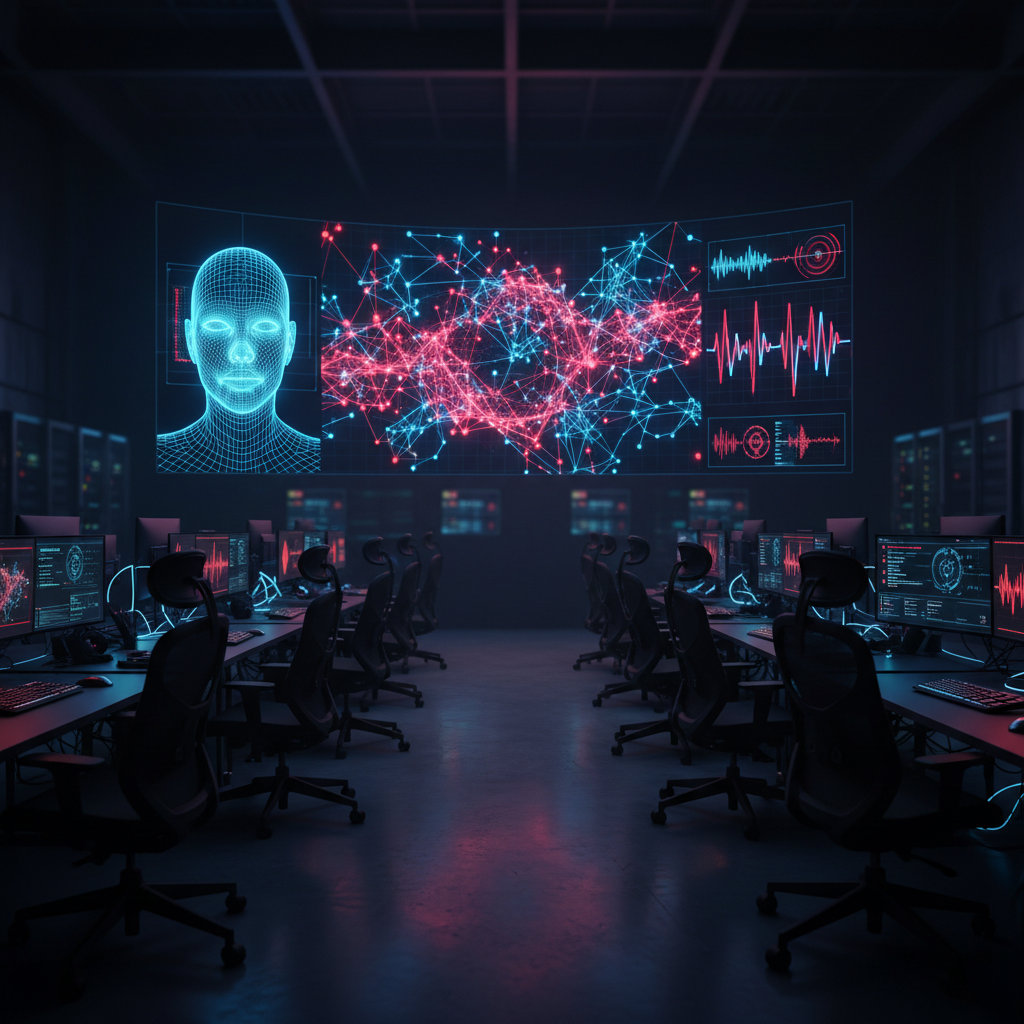
It is a Tuesday morning in New York City, and inside the bustling headquarters of Reality Defender, a dashboard flashes with a relentless stream of alerts. Each blip represents a scanned piece of media—an audio clip, a video file, a scanned document—sent in by global banks, government agencies, and enterprise clients. Most turn up green, verified as authentic. But a growing percentage flashes red, indicating high-confidence traces of synthetic generation. This is the front line of a new digital cold war, and Reality Defender has positioned itself as the leading defense against the proliferation of deepfakes.
As generative artificial intelligence becomes indistinguishable from reality, the cybersecurity landscape has violently shifted. Phishing emails with poor grammar have been replaced by hyper-realistic cloned audio of Chief Financial Officers demanding wire transfers. The notorious Hong Kong deepfake scam, which siphoned $25 million from a multinational corporation via a chemically perfect AI-generated video call, was not a localized anomaly—it was the starting gun for a new era of enterprise scale fraud.
The Frontlines of Synthetic Fraud
Founded by cybersecurity experts with deep roots in intelligence and artificial intelligence research, Reality Defender was built on a singular, urgent premise: human intuition is no longer a viable defense mechanism against digital deception. We sat down with Ben Colman, the company’s Co-Founder and CEO, to discuss how the threat vector has evolved at breakneck speed over the last eighteen months.
"Three years ago, you could spot a deepfake by looking for asymmetrical pupil reflections, blurring around the mouth, or robotic tonal shifts in audio," Colman explains, leaning across his desk. "Today, the models have successfully mapped human imperfection. If you are relying on your eyes and ears to catch a deepfake in 2026, you have already lost."
The speed at which synthetic media generation has democratized is staggering. What previously required specialized server farms, Hollywood-grade motion capture, and dedicated machine learning engineers can now be executed by a teenager with a moderate consumer-grade graphics card. This democratization has triggered alarms at the highest levels of government. In late 2023, the federal AI executive order mandated new standards for AI safety and content provenance. However, regulatory frameworks routinely lag behind open-source realities.
While big tech companies pledge to watermark their outputs, bad actors simply strip those watermarks or use custom models that refuse to comply with industry standards. The surge in highly capable on-device AI models means that anyone can generate uncensored, hyper-realistic media completely offline, entirely bypassing the safety filters imposed by major cloud architecture providers.
The Arsenal: An Ensemble Approach
So, how do you catch a flawless fake? According to the engineering team at Reality Defender, you do not build a single detector; you build an orchestra of them. The fundamental flaw in early deepfake detection was its reliance on monolithic models. If a detector was trained heavily on outputs from Midjourney v5 and ElevenLabs, it became instantly obsolete the moment Midjourney v6 or a new open-source audio model hit GitHub.
To solve this, Reality Defender employs what is known as a multi-model, ensemble approach. When a client uploads an audio file to the platform, it isn't analyzed by just one AI. It is processed simultaneously by dozens of discrete, specialized neural networks.
- Spectral Analysis Models: These AI agents look beyond exactly what the audio sounds like to the human ear and instead analyze the spectrogram. They search for unnatural frequencies and missing breath patterns that synthetic generators routinely fail to map logically across a timeline.
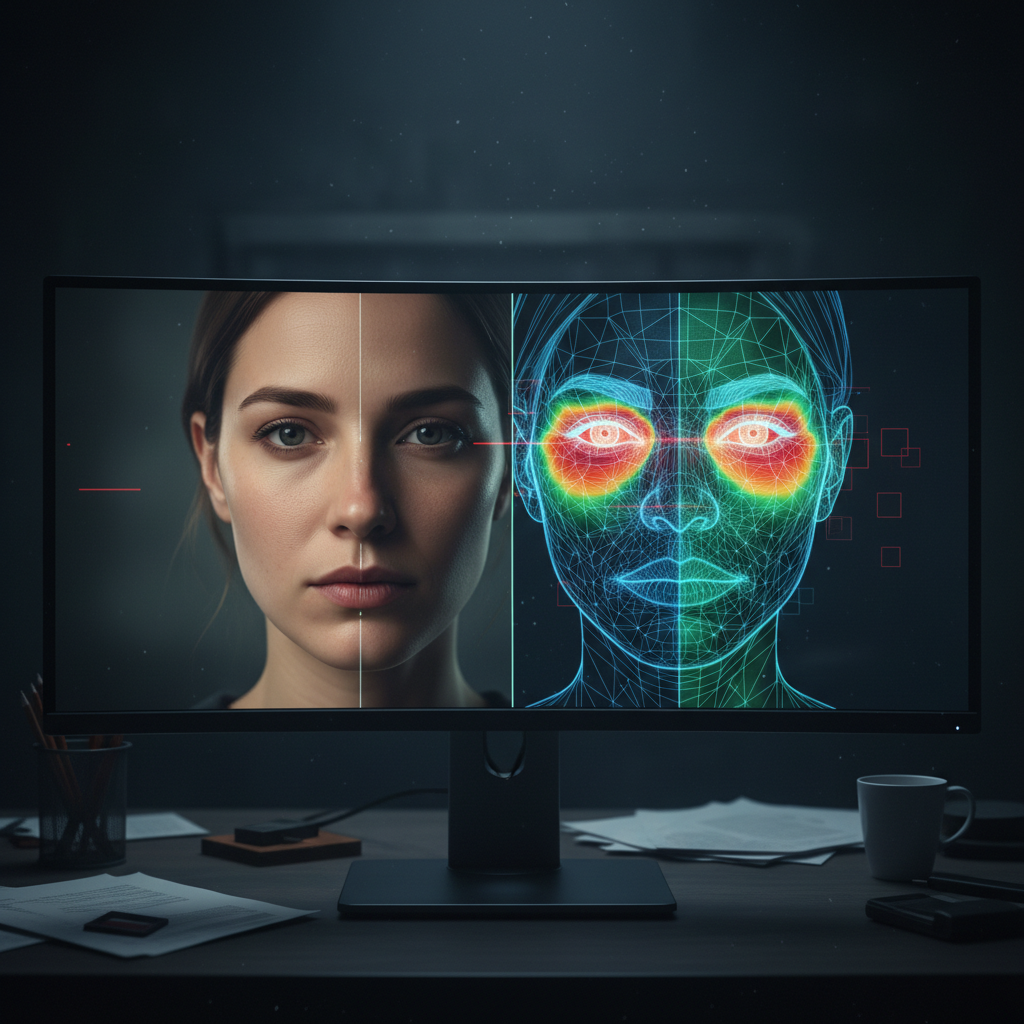
- Visual Artifact Detectors: In video files, specialized models analyze the biological signals of subjects. They detect the subtle, involuntary micro-expressions, capillary blood flow (photoplethysmography), and heartbeat rhythms that deepfakes currently struggle to replicate with mathematical consistency.
- Cross-Modal Discrepancy Scanners: These scan for synchronization delays between the audio track’s semantic meaning and the facial muscle movements on screen, catching localized lip-syncing hacks.
By blending the probabilistic scores from, say, thirty different detection models, the system neutralizes the threat of "overfitting" to any single generation technique. If a fraudster manages to trick the visual artifact detector, they are still highly likely to fail the spectral analysis check.
The Cat-and-Mouse Game in Latent Space
Despite their sophisticated technology, Colman is acutely aware that Reality Defender is engaged in a permanent, adversarial cat-and-mouse game. Deepfake generation and detection are two sides of the same algorithmic coin (Generative Adversarial Networks literally pit a generator against a discriminator), meaning that every advancement in detection inadvertently creates a roadmap for better generation.
We are seeing an alarming rise in "adversarial attacks" deployed by sophisticated threat actors. Just as hackers use prompt injection frameworks to bypass AI safety guards in text models, fraudsters are now intentionally adding invisible digital noise to their deepfake images. This perturbation, entirely invisible to the human eye, is mathematically designed to scramble the detection systems of platforms like Reality Defender, forcing them to return a "false negative."
To combat this, the lab runs its own internal red-teaming operations. A dedicated team of in-house researchers spends their days deliberately trying to break their own detection platform, generating highly corrupted, poisoned, or adversarial deepfakes, and training the defense ensemble on those novel exploits before they are seen in the wild.
The Zero-Trust Digital Future
Beyond the direct financial threat to enterprises, the Reality Defender team is deeply concerned about a more insidious psychological phenomenon: the liar’s dividend. As deepfakes become ubiquitous and the public becomes hyper-aware of synthetic media, politicians and corporate criminals can effortlessly dismiss genuine, incriminating evidence—audio, video, or documents—as "AI-generated fakes."
When reality itself is up for debate, society requires a mathematical arbiter of truth. The work being done by deepfake detection platforms is no longer just a feature bolted onto corporate firewalls; it is rapidly becoming fundamental to civil infrastructure. Much like the transition to HTTPS secured the transmission of data across the web, tools like Reality Defender are laying the groundwork for a "Zero-Trust" media environment, where every digital artifact is cryptographically verified and scanned for synthetics at the edge.
"We are not going to put the genie back in the bottle," Colman states firmly as our interview concludes. "Generative AI is a profound, civilization-level tool. But without a defensive layer scaling at the exact same velocity, the trust that holds digital commerce and democracy together will disintegrate. Our job is to ensure that when you see something on a screen, you don't have to wonder if you're being played."
Frequently asked questions
What does Reality Defender do?
Reality Defender is a cybersecurity company that builds advanced detection software to identify AI-generated media, including audio, video, images, and text. Their platform is used by enterprises and governments to prevent deepfake fraud.
Why are single-model deepfake detectors failing?
Single-model detectors become quickly outdated as new AI generators are released. Because they are trained to spot current flaws, they fail to recognize the unique outputs of novel, next-generation AI models, leading to a high rate of missed deepfakes.
What is an ensemble approach to AI detection?
An ensemble approach uses dozens of specialized AI models simultaneously to scan a piece of media. Some check visual artifacts, others analyze audio spectrograms, and others look for biological inconsistencies like heart rate—combining their scores for a highly accurate result.
What is the 'liar's dividend' in the context of deepfakes?
The liar's dividend is a phenomenon where the mere existence of convincing deepfakes allows malicious actors or guilty individuals to falsely claim that true, authentic evidence against them was artificially generated by AI.
Join 45,000+ AI builders.
Three tools, two insights, one strategy — every Sunday. The signal cuts through the noise.
Free forever · unsubscribe anytime · no account required
Related reads
China's Microdrama Boom: How AI is Reshaping Film in 2026
Seemingly overnight, new generative video tools have taken over China's booming microdrama sector, transforming everything from post-production to script evaluation.

How AI is Helping Patients Solve Rare Medical Mysteries
Patients and doctors are increasingly turning to advanced AI models to diagnose rare diseases, transforming how the medical community solves complex health cases.
Bot-to-Bot Retail: How AI Agents Are Taking Over E-Commerce
A new industry report released this week reveals that autonomous AI agents are rapidly transforming digital payments and e-commerce operations.