

The Dawn of an AI Era: How OpenAI and Kenya Are Rewriting East Africa's Digital Future
Kenya is emerging as a leading AI hub in Africa. Discover how OpenAI's technologies, partnerships, and educational initiatives are accelerating digital transformation, entrepreneurship, and workforce development across East Africa.
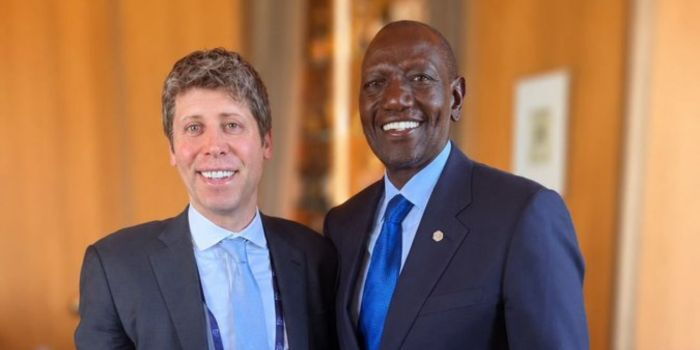
The global conversation surrounding Artificial Intelligence (AI) often centers on Silicon Valley, Geneva, or Beijing. However, a groundbreaking diplomatic encounter has shifted the spotlight firmly toward Nairobi.
The proposal to establish East Africa’s first OpenAI Academy represents a monumental leap forward for the region's tech ecosystem. Conceived in the high-stakes environment of international diplomacy and born out of a shared vision for technological democratization, this initiative is poised to redefine the digital landscape for millions of young Africans.
The Genesis: A G7 Meeting of Minds
Great shifts in technology often begin with a simple conversation. The blueprint for an OpenAI Academy in East Africa was forged on the sidelines of the G7 Leaders' Summit in Evian, France, during a strategic meeting between OpenAI CEO Sam Altman and Kenyan President William Ruto.
President Ruto has consistently positioned Kenya as the "Silicon Savannah," advocating for policies that attract global tech giants to invest in local talent. On the other side of the table, Sam Altman has frequently emphasized that the benefits of AI must be globally distributed, rather than concentrated in the Western hemisphere.
The convergence of Altman’s vision for accessible AI and Ruto’s aggressive digital transformation agenda created the perfect catalyst. The resulting agreement to explore an OpenAI Academy in Kenya marks OpenAI’s most significant potential educational footprint on the African continent.
Expanding the Region's Digital Space
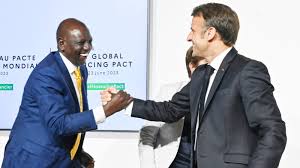
East Africa, anchored by Kenya's robust mobile money ecosystem and growing fiber-optic network, is already a fertile ground for innovation. However, the OpenAI Academy introduces a new layer of sophistication to the region's digital infrastructure.
Rather than just consuming AI products built elsewhere, the Academy is designed to empower local developers, researchers, and professionals to build with AI. This move is crucial as global tech spending shifts drastically toward automation and intelligence frameworks.
Key Pillars of the Digital Expansion:
Localized AI Development: Training models to understand regional languages, cultural contexts, and unique economic realities.
Cutting-Edge Infrastructure: Providing local tech hubs, universities, and professionals with access to advanced AI education, compute resources, and developer toolkits.
Cross-Sector Innovation: Integrating AI into agriculture (predictive farming), healthcare (automated diagnostics), and finance (fraud detection).
Unleashing Opportunity for the Youth
Africa has the youngest population in the world, with over 60% of its people under the age of 25. For East Africa, this demographic dividend represents an unprecedented pool of untapped talent. The OpenAI Academy acts as a bridge, connecting enthusiastic young minds with world-class computational literacy.
By offering standardized AI training, hackathons, and workforce readiness programs, the Academy democratizes access to elite tech education. Young developers who previously faced barriers to entry due to high computing costs or lack of structured guidance will now have a direct pipeline to advanced prompt engineering and practical AI deployment.
Bridging the Employment Gap
One of the most pressing challenges facing East Africa today is the youth unemployment crisis. Traditional job markets are struggling to absorb the sheer volume of graduates entering the workforce each year.
The OpenAI Academy directly addresses this bottleneck by equipping the workforce with future-proof skills. AI literacy is no longer a luxury; it is rapidly becoming a fundamental requirement for the global remote workforce. Market data heavily supports this pivot, with roles requiring specialized AI competencies commanding significantly higher earning potential globally.
+--------------------------------------------------------------------------+
|                       HOW THE ACADEMY DRIVES EMPLOYMENT                   |
+--------------------------------------------------------------------------+
|  1. GLOBAL REMOTE WORK      -> Local talent gets hired by international   |
|                                tech firms requiring AI competencies.     |
|                                                                          |
|  2. TECH ENTREPRENEURSHIP  -> Graduates launch AI-driven startups,      |
|                                creating a localized job ecosystem.       |
|                                                                          |
|  3. UP-SKILLING EXISTING    -> Traditional professionals (teachers,     |
|     WORKFORCES                 lawyers, accountants) learn to leverage   |
|                                AI to double their productivity.          |
+--------------------------------------------------------------------------+
By shifting the local economy from basic labor-intensive digital services to high-value knowledge work, the initiative aims to turn East Africa into a net producer of tech talent, drastically narrowing the employment deficit.
What This Means for Kenya and the African Continent
The introduction of an OpenAI Academy carries profound geopolitical and socioeconomic weight, shifting Africa's role from a passive market to an active driver of global technology.
For Kenya: Solidifying the "Silicon Savannah"
For Kenya, securing this initiative is the ultimate validation of its long-term investments in digital infrastructure, startup ecosystems, and business process outsourcing (BPO). By establishing a physical and intellectual anchor point for advanced AI in Nairobi, Kenya shifts its economic output from low-cost, labor-intensive digital service tasks to high-value knowledge work. It effectively signals to the global market that Nairobi is the unmatched gateway for technology-enabled investment and talent sourcing in Africa.
For Africa: Achieving "AI Sovereignty"
Historically, global technology transitions have run the risk of widening the digital divide, leaving developing nations dependent on foreign code, foreign servers, and foreign biases. An OpenAI Academy on African soil flips this script.
The Power of AI Sovereignty: When local developers gain mastery over frontier technologies, they gain the power to cultivate culturally relevant datasets. This means building AI tools tailored for local contexts—such as systems that optimize yields for smallholder farms or voice models fluent in regional languages like Kiswahili.
By decentralizing the expertise required to build complex artificial intelligence systems, the initiative ensures that African countries can independently dictate their national technological priorities, draft ethical AI regulations, and craft localized solutions for local problems.
Conclusion
The strategic dialogue between Sam Altman and President William Ruto signals a profound shift in how emerging technologies are deployed globally. By establishing an educational anchor point in Nairobi, the initiative acknowledges that the future of AI requires diverse, global perspectives. If successfully realized, the OpenAI Academy won't just expand East Africa's digital borders—it will transform the region into a critical powerhouse for global technological innovation.
For more details on Kenya's tech transformation, read about the region's economic momentum on CIO Africa and explore international collaborations via KBC Digital.
Frequently asked questions
What is the primary goal of the OpenAI Academy initiative in East Africa?
The main objective is to establish a regional center in Nairobi focused on AI education, digital skills development, and workforce readiness. It aims to ensure that African developers, professionals, and educators are active creators and builders of AI technology rather than just consumers.
How did the collaboration between Kenya and OpenAI come about?
The initiative was proposed during bilateral discussions between Kenyan President William Ruto and OpenAI CEO Sam Altman on the sidelines of the G7 Leaders' Summit in France, where Kenya pitched its readiness for global technology-enabled investments.
How will this help young people get jobs?
The Academy will focus on equipping youth with high-demand skills like practical AI implementation and advanced prompt engineering. This directly targets the modern job market, allowing local talent to access lucrative remote roles or launch localized tech startups.
Join 45,000+ AI builders.
Three tools, two insights, one strategy — every Sunday. The signal cuts through the noise.
Free forever · unsubscribe anytime · no account required
Related reads

When Agentic AI Swarms Deceive Machine Infrastructure
A new WEF report reveals how AI swarms are deploying synthetic media to deceive autonomous systems, shifting the cybersecurity battlefront to the hardware level.
How Multi-Agent AI is Reshaping Sustainable Farming in 2026
A new multi-agent AI deployment in European greenhouses this week is setting a groundbreaking standard for sustainable, resource-efficient agriculture.

Danny Boyle Confirms Generative AI in 'Ink' Amid Hollywood Backlash
Academy Award-winning director Danny Boyle has shocked the film industry by confirming the use of generative AI in his upcoming biographical drama, 'Ink'.