

The OpenAI Foundation's $60M Bet on AI for Smallholder Farmers
A massive $60 million initiative launched this week aims to democratize agricultural AI, bringing hyper-local crop disease and weather forecasts to vulnerable farmers.
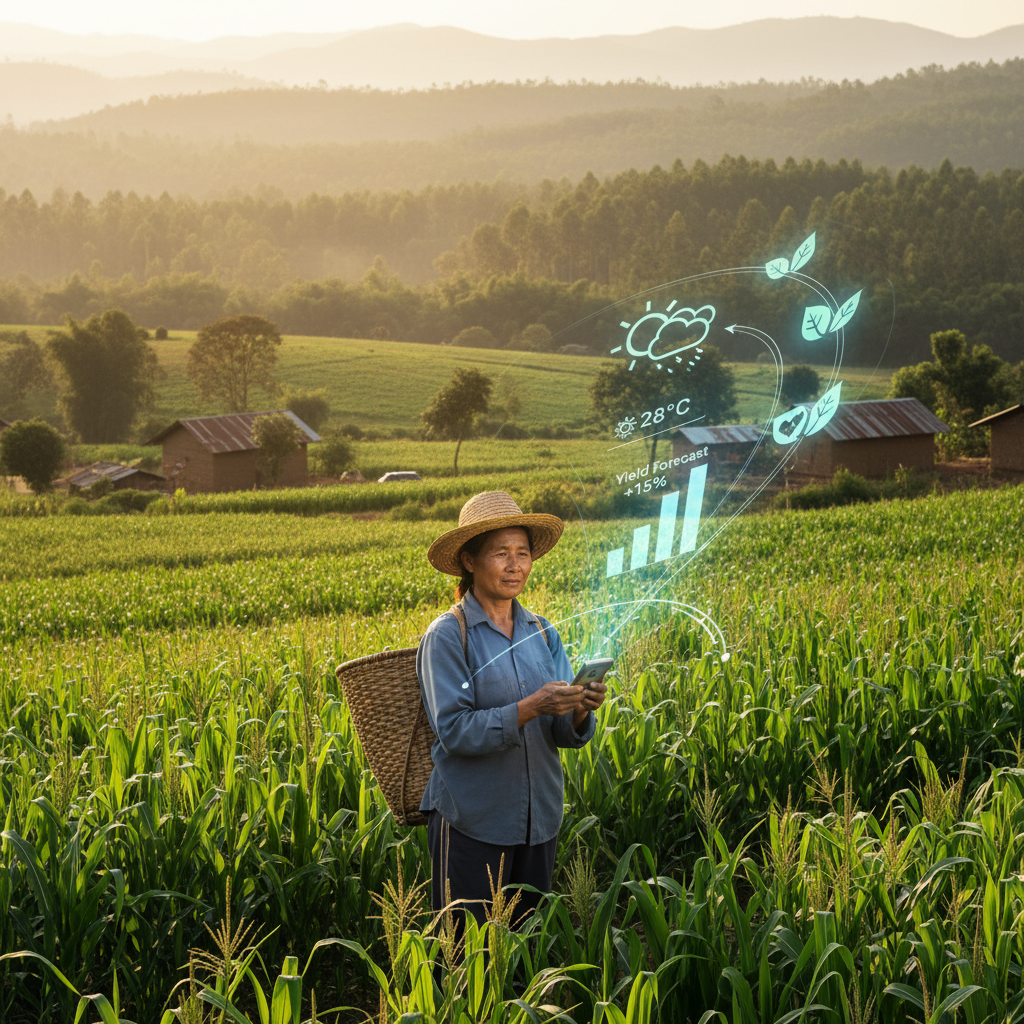
As extreme weather events and shifting climate patterns continue to destabilize global food supply chains in 2026, the agricultural sector is urgently seeking scalable solutions. While massive industrial mega-farms have long utilized advanced robotics, drone surveillance, and predictive analytics to mitigate climate risks, the world’s most vulnerable agricultural workers have largely been left out of the artificial intelligence revolution. That paradigm shifted dramatically this week.
In a landmark announcement made over the past few days, the tech world’s focus briefly pivoted from enterprise software and autonomous agents to global food security. A newly unveiled initiative aims to bridge the digital divide by putting powerful, predictive AI directly into the hands of those who need it most, requiring nothing more than a basic mobile connection.
Breaking Down the $60 Million Initiative
The OpenAI Foundation has officially launched a highly anticipated $60 million initiative dedicated to building resilient, AI-driven ecosystems tailored specifically for smallholder farmers across the Global South. This philanthropic push marks one of the most significant single investments in applying generative AI to grassroots agriculture to date.
According to the project's launch materials, the capital will be distributed across a coalition of local NGOs, international agricultural research centers, and telecom providers over the next three years. The primary objective is to deploy sophisticated AI-powered weather and crop disease forecasts. Unlike previous technological interventions that required expensive hardware or high-speed broadband, this initiative leverages advanced large language models (LLMs) to synthesize complex meteorological and agronomic data into simple, actionable text and voice messages delivered in regional dialects.
- Hyper-Local Weather Forecasting: Utilizing satellite data and micro-climate modeling to alert farmers to impending droughts, unseasonal frosts, or flash floods with unprecedented accuracy.
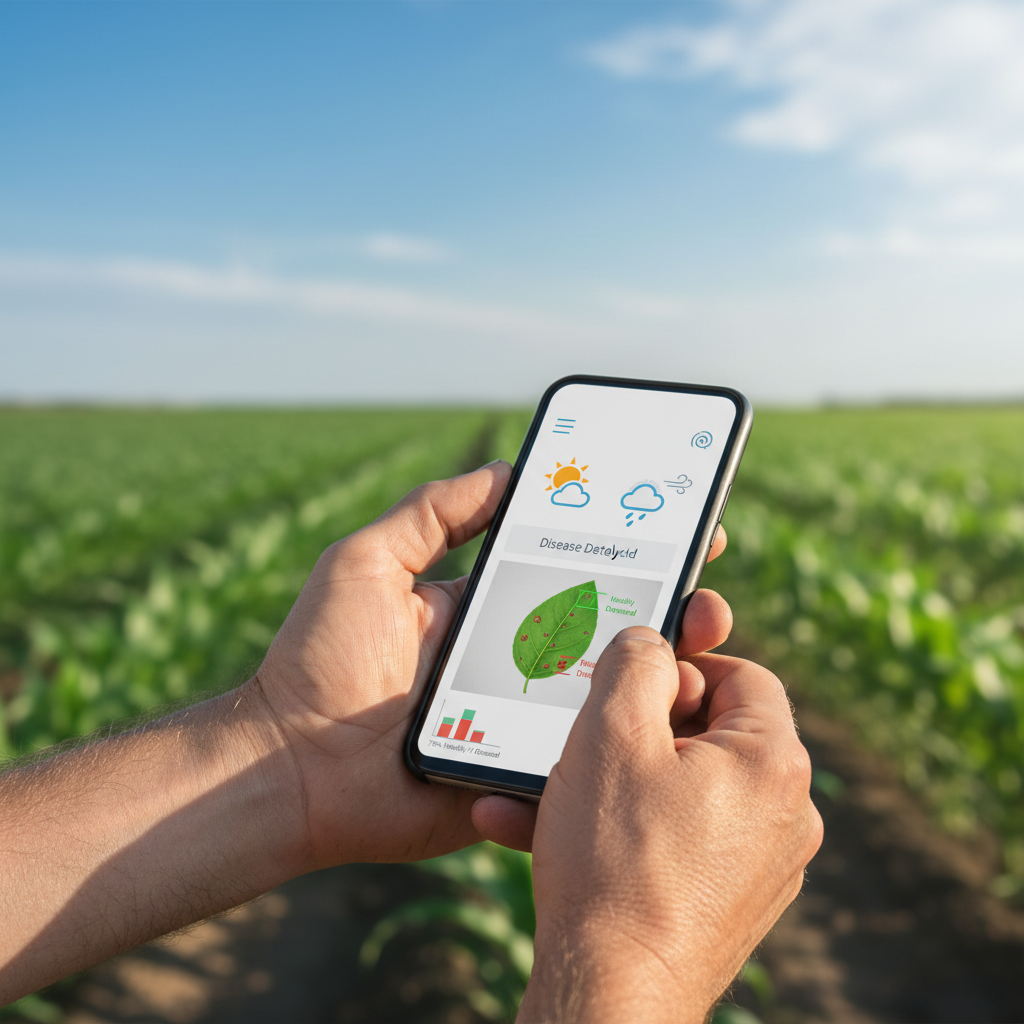
- Crop Disease Identification: Allowing farmers to describe symptoms or send low-resolution SMS photos to an automated diagnostic system that can instantly identify blights and recommend interventions.
- Resource Optimization: Advising on the precise timing for planting, irrigating, and fertilizing based on real-time soil data estimates.
Bridging the Digital Divide in Agriculture
For years, the promise of "smart farming" was largely confined to operations capable of investing millions in proprietary sensors and self-driving tractors. The reality for a smallholder farmer in sub-Saharan Africa or Southeast Asia—who typically cultivates less than two hectares of land—is vastly different. In these regions, a single unexpected dry spell or an outbreak of stem rust can wipe out an entire year’s livelihood.
The genius of this new approach lies in its delivery mechanism. By wrapping complex data analytics within natural language interfaces, the technology adapts to the user rather than forcing the user to adapt to the technology. A farmer can simply send a voice note via WhatsApp or a local SMS service asking, "My maize leaves are turning yellow with brown spots, what should I do?"
The backend AI processes this query, cross-references it with localized epidemiological data, current weather patterns, and approved agricultural practices, and instantly replies with a diagnosis and treatment plan. This low-friction, high-impact model is already drawing parallels to successful sustainable farming networks deployed in European commercial greenhouses earlier this year, albeit adapted for drastically different resource constraints.
Addressing the Risks of Hallucination in the Field
Despite the immense optimism surrounding the announcement, the integration of generative AI into high-stakes environments like agriculture is not without significant risk. When a chatbot makes a mistake while writing code or drafting an email, the consequences are usually minor. If an agricultural advisory bot hallucinates an incorrect chemical mixing ratio for a pesticide, or advises a farmer to plant a month too early, the result could be total crop failure and financial ruin for a family.
Agronomists and tech ethicists are already raising critical questions about the liability and safety of these automated systems. Ensuring that the underlying models are firmly grounded in established agricultural science rather than scraping unverified advice from the broader internet is a monumental technical challenge.
"We are entering a new frontier of AI application where the margin for error is measured in food security and human livelihoods. The models powering these advisories must be subjected to rigorous, continuous field-testing against peer-reviewed agronomy."
This critical need for oversight echoes broader international concerns regarding autonomous decision-making. Just as global policymakers are pushing for urgent safety guardrails in enterprise and military AI, the agricultural sector will require strict certification standards for AI advisories. The OpenAI Foundation has stated that a significant portion of the $60 million funding will be allocated specifically for "red-teaming" these agricultural models with local farming cooperatives before wide-scale deployment, ensuring the advice generated is both accurate and culturally appropriate.
The Broader Implications for Global Climate Resilience
This week's announcement is more than just a technological showcase; it is a vital step toward climate adaptation. As global temperatures continue to rise, historical farming knowledge passed down through generations is becoming increasingly obsolete. Planting seasons are shifting unpredictably, and pests are migrating to new latitudes.
Smallholder farmers currently produce roughly one-third of the world’s food, yet they remain the most vulnerable to climate-induced shocks. By democratizing access to real-time, predictive intelligence, the tech industry is providing a vital lifeline. If successful, this initiative could serve as a blueprint for how artificial intelligence can be ethically and effectively deployed to protect the world's most critical supply chains.
The next 12 to 18 months will be the true test of this $60 million bet. As pilot programs roll out across key agricultural belts, the global tech community will be watching closely to see if AI can finally deliver on its promise to not just boost corporate productivity, but to genuinely sustain human life in the face of a changing climate.
Frequently asked questions
What is the OpenAI Foundation's new agricultural initiative?
The OpenAI Foundation recently announced a $60 million initiative aimed at providing AI-powered weather and crop disease forecasts to smallholder farmers in the Global South.
How will farmers access this AI technology?
Unlike traditional tech that requires high-end smartphones or broadband, this initiative is designed to work via basic mobile connections, using SMS or WhatsApp voice and text messages in local dialects.
Why is AI important for smallholder farmers?
Climate change has made traditional farming knowledge less reliable. AI can process vast amounts of local weather, soil, and satellite data to provide real-time, actionable advice to help prevent crop failure.
What are the risks of using AI in agriculture?
The biggest risk is AI 'hallucination,' where the system might give incorrect advice on pesticide use or planting times, which could lead to devastating crop losses. The initiative includes funding for rigorous testing to prevent this.
Join 45,000+ AI builders.
Three tools, two insights, one strategy — every Sunday. The signal cuts through the noise.
Free forever · unsubscribe anytime · no account required
Related reads

FDA Fast-Tracks AI That Drafts Radiology Reports in Major 2026 Milestone
A new FDA breakthrough designation for AI-generated radiology reports signals a massive shift in how hospitals will handle medical imaging in 2026.

Kijiji-1 Launch: The Open-Source LLM Reshaping Africa’s AI Landscape
A groundbreaking open-weight AI model natively supporting 60 African languages just launched, promising to eliminate the high compute costs hindering local startups.

Anthropic Unveils Claude Autonomous Workspace: The Next Era of Enterprise AI
Anthropic's new enterprise agent framework shifts AI from a passive chatbot to an active, autonomous workflow manager, redefining corporate ROI.