

Nvidia’s IBC2026 Showcases Set a New Benchmark for Entertainment AI
At IBC2026, Nvidia unveiled over 30 partner showcases, establishing new industry standards for agentic creativity and real-time sports intelligence.
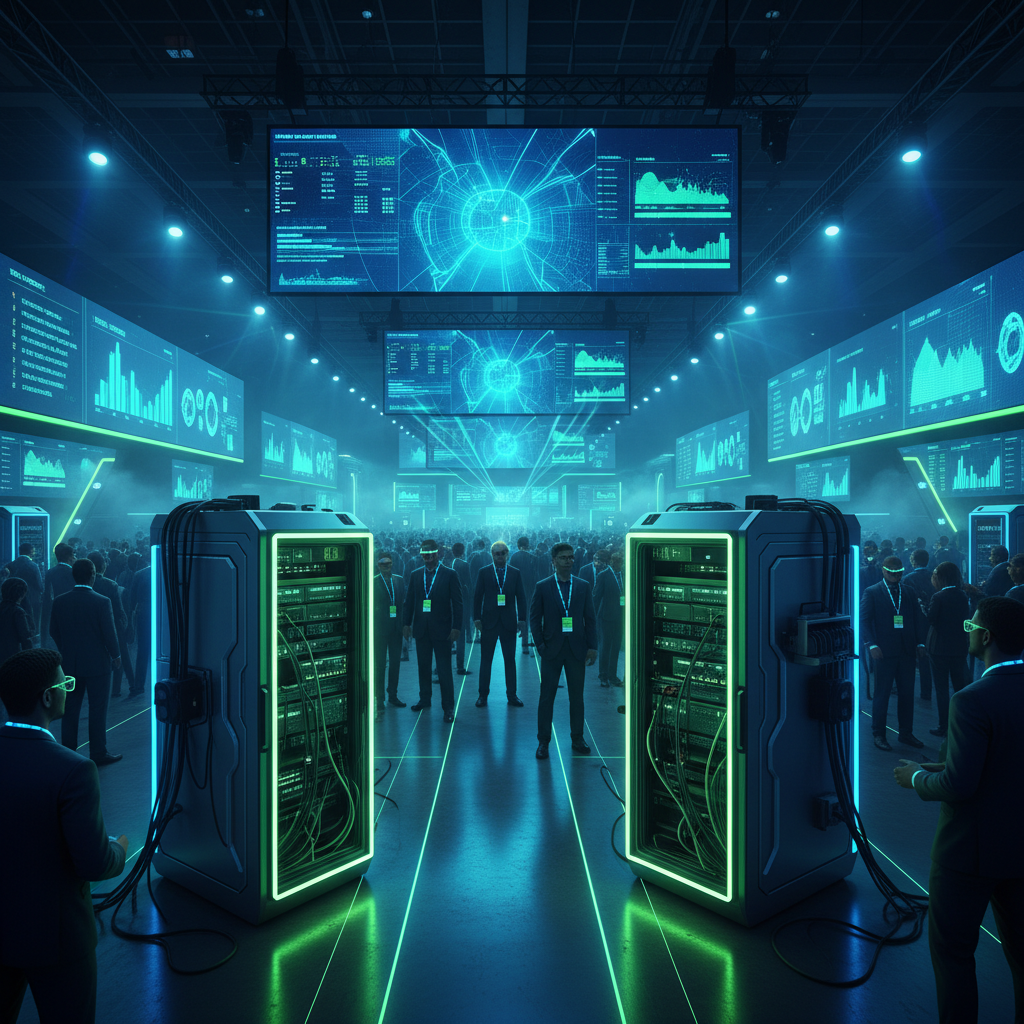
This week, the International Broadcasting Convention (IBC2026) has become the undisputed epicenter of a technological earthquake in the entertainment sector. In the past few days, the focus has shifted entirely from theoretical artificial intelligence models to practical, hyper-optimized production benchmarks. Just 24 hours ago, Nvidia took center stage in Amsterdam, proving that the era of experimental, unintegrated generative AI is officially over. The tech giant announced it is powering more than 30 distinct partner showcases, fundamentally proving that AI is rapidly reshaping the media and entertainment industry at an unprecedented scale.
Unlike previous trade shows that largely focused on raw compute power or standalone text-to-video novelties, Nvidia’s IBC2026 footprint is heavily anchored in two distinct, high-performance categories: agentic workflows and real-time sports intelligence. By establishing strict performance benchmarks for these tools, Nvidia and its partners are drawing a clear blueprint for how video games, live sports broadcasting, and film production will operate heading into 2027.
The Rise of Agentic Creativity in Production Pipelines
To understand the sheer scale of the IBC announcements, one must look at how the definition of "creative AI" has evolved over the last year. Historically, AI in entertainment was treated as a blunt instrument for isolated tasks—upscaling textures, isolating vocals, or generating concept art via simple prompts. Today, the industry benchmark has shifted entirely toward agentic creativity, where AI systems act as collaborative, semi-autonomous partners rather than passive software tools.
Across Nvidia’s numerous partner showcases, attendees witnessed AI agents executing complex, multi-step production tasks seamlessly. For instance, game developers can now utilize an autonomous lighting agent that dynamically adjusting shadows, reflections, and ambient occlusion across massive open-world environments based on the emotional tone of a scene's script. Instead of an artist manually tweaking light sources for hundreds of hours, the agent interprets the narrative context, tests multiple lighting configurations in real-time, and presents the art director with optimal choices.
- Automated Video Editing: AI agents that can scrub through terabytes of raw film footage, identifying the best takes based on facial micro-expressions and actor blocking.
- Dynamic NPC Generation: Video game characters powered by local language models that not only generate contextual dialogue but also trigger customized physical animations based on the player's tone of voice.
- VFX Compositing: Autonomous tools that handle rotoscoping, color matching, and artifact removal without requiring frame-by-frame human intervention.
These are no longer tech demos; they are fully realized integrations running natively on advanced GPU hardware, proving that autonomous pipelines can maintain the rigorous quality control demanded by major studios.
Setting the Standard for Real-Time Sports Intelligence
While film and game development offer the luxury of offline rendering, live sports broadcasting is the ultimate stress test for AI latency and reliability. At IBC2026, the "sports intelligence" showcases powered by Nvidia set a stunning new benchmark for real-time data processing.
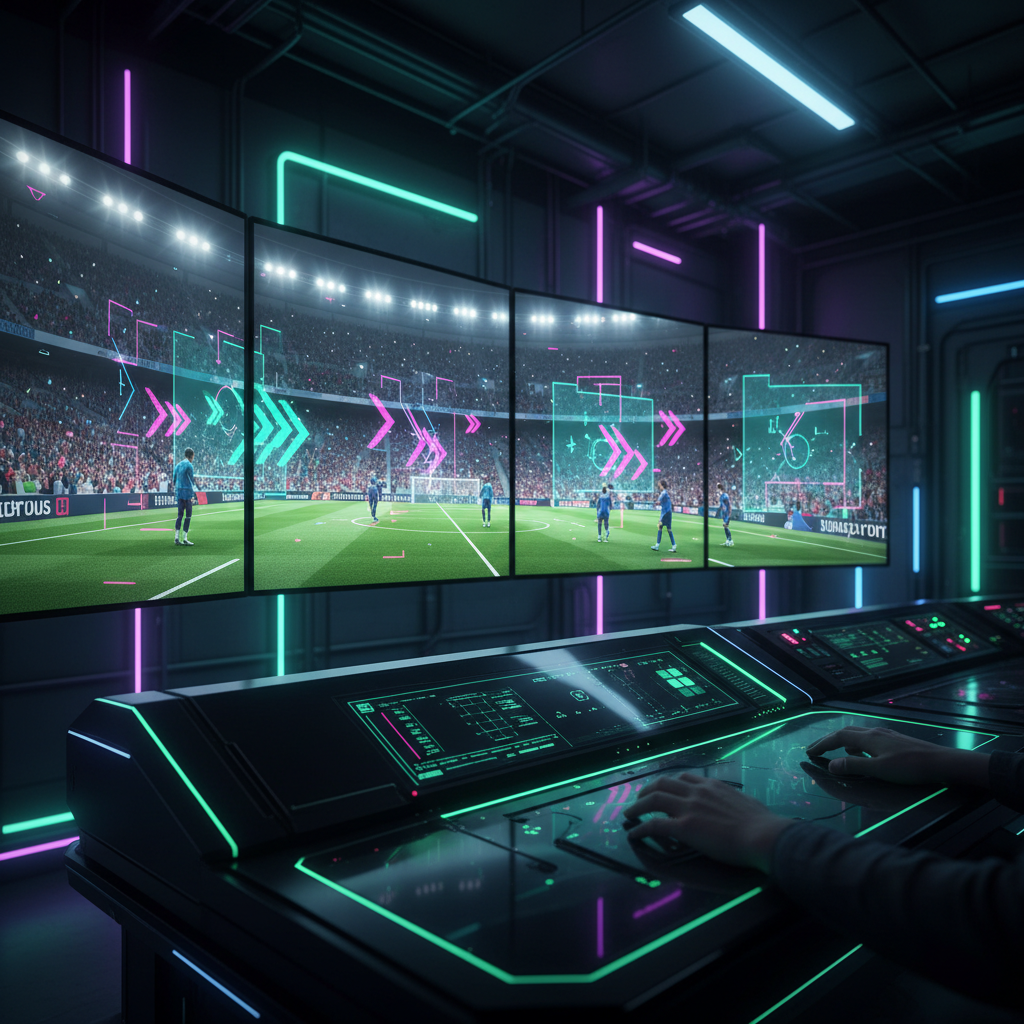
Modern sports broadcasting is drowning in data—from volumetric capture cameras to biometric sensors on the athletes themselves. Nvidia’s partner solutions demonstrated how AI can ingest this massive stream of unstructured data, process it with sub-millisecond latency, and instantly generate broadcast-ready outputs. One standout showcase featured an AI "director" capable of automatically predicting where a play was heading on a football field, preemptively switching to the optimal camera angle before a human operator could even react.
"The latency benchmarks we are seeing at IBC this year are staggering. AI is no longer just adding graphics to a replay; it is fundamentally dictating how the live game is captured, analyzed, and delivered to the viewer in the span of milliseconds."
Furthermore, these sports intelligence models can instantaneously generate predictive analytics, overlaying probability graphics on the live feed to show viewers the exact trajectory of a pass or the acceleration rate of a sprinter. This level of live augmentation requires immense edge-compute capabilities, highlighting why Nvidia's specialized hardware remains the backbone of the broadcasting industry.
The Hardware Consolidation and Market Reality
Nvidia’s strategy at IBC2026 extends far beyond mere hardware provision. By powering such a diverse array of foundational AI tools, the company is signaling a desire to serve as the unified connective tissue for all creative software. This ecosystem dominance aligns perfectly with recent industry murmurs suggesting Nvidia is preparing to acquire Hugging Face, a colossal move that would effectively merge the world's most popular open-source model repository directly with the primary silicon used to train and deploy them.
However, an undercurrent of tension remains within the consumer base. While broadcasting networks and game studios are eager to buy into AI to curb ballooning production costs and accelerate development cycles, player and viewer sentiment remains heavily mixed. Many consumers express fatigue over "AI-generated" content, associating the term with low-effort, derivative media.
Nvidia’s messaging at IBC carefully navigates this minefield. The 30+ showcases deliberately emphasize "intelligence" and "workflow optimization" rather than autonomous generation. By framing AI as a tool for sports analytics, real-time physics rendering, and tedious editing tasks, the industry is pivoting toward an "invisible AI" model. The goal is to make the technology completely imperceptible to the end user, delivering higher-fidelity games and richer sports broadcasts without triggering the backlash associated with synthetic media.
Looking Ahead to the 2027 Production Cycle
As IBC2026 draws to a close, the primary takeaway is that the benchmarks for media production have been irrevocably altered. The showcases powered by Nvidia over the past few days prove that the technology is ready for enterprise-scale deployment.
For creative professionals, the mandate is clear: adapt to agentic workflows or risk being outpaced by studios that do. As these integrated tools move out of the convention center and into the server rooms of major broadcasters and game developers, the next year will be defined not by who has the most powerful AI, but by who can deploy it most seamlessly into the creative process.
Frequently asked questions
What is agentic creativity in media?
Agentic creativity refers to AI systems that act as semi-autonomous partners in the production process. Instead of just responding to single prompts, these AI agents can execute complex, multi-step workflows like dynamic lighting adjustments, video editing, or NPC scripting with minimal human supervision.
How is AI being used in live sports broadcasting?
AI is setting new benchmarks in sports broadcasting through 'sports intelligence.' This includes ultra-low latency processing of live data to predict plays, automatically switch camera angles, and overlay real-time predictive analytics on the live broadcast feed.
What was Nvidia's role at IBC2026?
At IBC2026, Nvidia powered over 30 partner showcases, demonstrating how its hardware and AI models are integrated into the media and entertainment industry to streamline workflows, enhance game development, and revolutionize sports analytics.
Why are game studios adopting AI despite consumer hesitation?
Studios are adopting AI to handle ballooning production costs and reduce development times by automating tedious tasks like rotoscoping, bug testing, and basic compositing. They focus on 'invisible AI'—using AI for backend workflows rather than generating the final creative output—to avoid consumer backlash.
Join 45,000+ AI builders.
Three tools, two insights, one strategy — every Sunday. The signal cuts through the noise.
Free forever · unsubscribe anytime · no account required
Related reads

Nvidia's $13B Hugging Face Bid Could Redefine Open-Source AI
Explosive reports this week suggest Nvidia is looking to acquire Hugging Face for $13 billion, a deal that would merge hardware dominance with open-source software.
Nvidia Unveils DSX MaxLPS at Hot Chips 2026 to Solve the AI Power Crisis
Unveiled this week at Hot Chips 2026, Nvidia's new DSX MaxLPS architecture tackles the AI power crisis by maximizing compute within fixed data center budgets.
Google Alters Android App Rules Amid AI-Driven Memory Crunch
As the AI data center boom devours the global supply of memory chips, Google is stepping in to change Android app requirements, forcing developers to adapt.