

Lionsgate Teams Up With Runway: Inside Hollywood's Big AI Move
Lionsgate and Runway have partnered to train a proprietary AI video model. Here is why this deal marks a turning point for artificial intelligence in Hollywood.
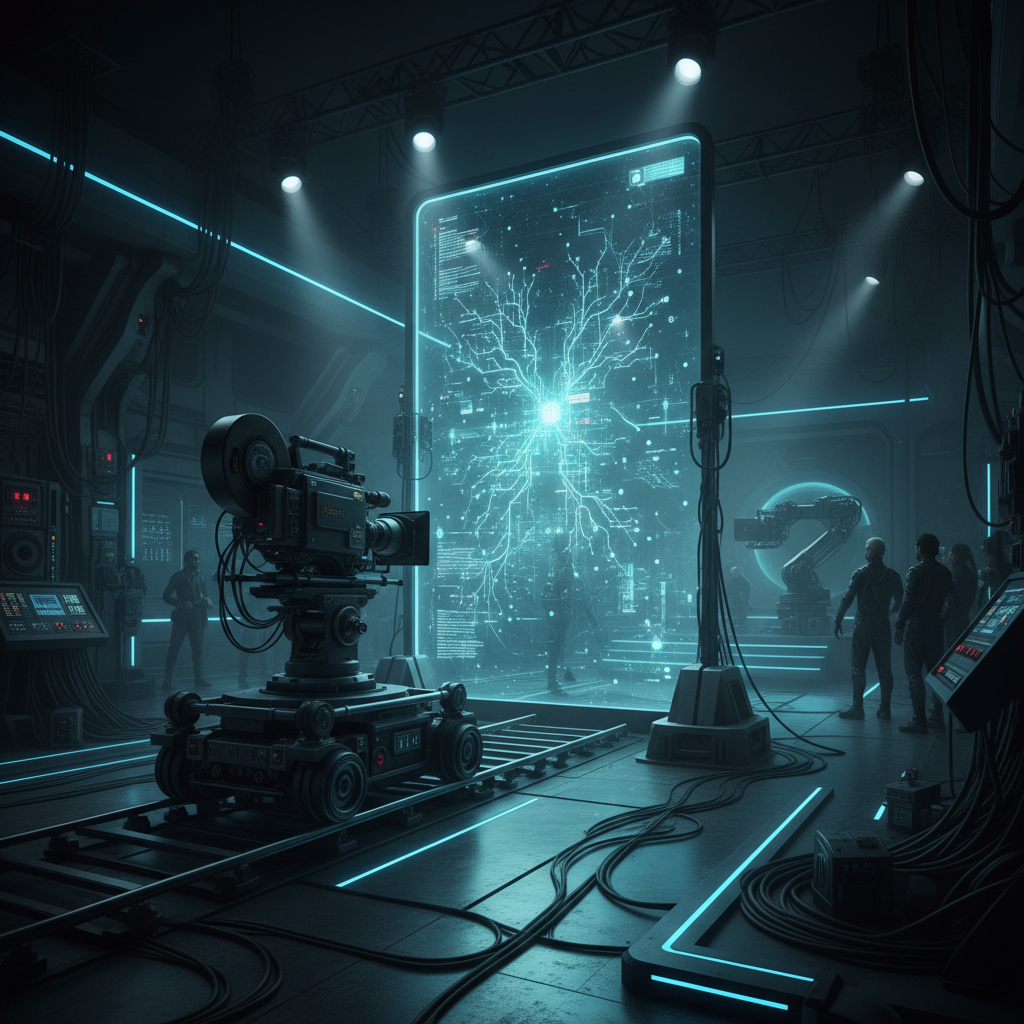
In 2023, the prospect of artificial intelligence infiltrating Hollywood triggered historic double-strikes by writers and actors, grinding the entertainment industry to a halt. Just one year later, a major studio has crossed the rubicon. Lionsgate, the studio behind blockbuster franchises like John Wick and The Hunger Games, has officially partnered with generative AI startup Runway. The landmark deal represents the first time a major Hollywood studio has publicly opened its coveted intellectual property catalog to train an artificial intelligence model, signaling a definitive end to the era of purely theoretical AI discussions in the film industry.
This partnership is an watershed moment for both the broader media ecosystem and the burgeoning generative video market. Rather than relying on public models trained on scraped internet data—a practice currently drawing massive legal scrutiny—Lionsgate is embracing a bespoke, enterprise-level solution. By licensing its own distinct library, the studio is actively shaping the future of AI-assisted production, placing enterprise-grade artificial intelligence squarely at the center of modern filmmaking.
The Anatomy of a Custom Hollywood AI Model
The core of the Lionsgate and Runway agreement is fundamentally different from a consumer grabbing a subscription to Midjourney or OpenAI's Sora. Under this agreement, Runway will build and train a custom foundational model exclusively for Lionsgate. By training the AI on the studio’s catalog of over 20,000 film and television titles, the resulting system will possess a deep, localized understanding of the studio's specific cinematic language, lighting techniques, and visual identity.
Instead of generating generic, stock-footage styles, the model will be fine-tuned to understand the kinetic, neon-drenched action sequences of John Wick or the atmospheric tension of an indie thriller. This bespoke training pipeline is designed to integrate directly into existing production workflows. Industry experts predict the tool will be utilized for several highly specific creative tasks, including:
- Storyboarding and Conceptualization: Directors and cinematographers can generate accurate, mood-specific concept art that aligns perfectly with a franchise's established visual tone, rather than relying on disparate reference images.
- Pre-Visualization (Pre-viz): Filmmakers can map out complicated action sequences or camera movements using AI-generated animatics long before a physical set is ever built.
- VFX Prototyping: Visual effects teams can generate rapid iterations of background plates, environmental extensions, or creature designs to act as starting templates for final renders.
By restricting the training corpus to owned data, Lionsgate aims to create a highly predictable, stylistically consistent engine that enhances the efficiency of its creative executives and filmmakers.

A Turning Point in the Rights and Royalties Debate
Perhaps the most significant aspect of the Lionsgate and Runway partnership is how it navigates the contentious issue of copyright. Up until now, the narrative surrounding AI in media has been dominated by non-consensual data scraping. This tension is currently peaking in other media sectors; for example, the ongoing music copyright battles have seen major record labels sue prominent generative music startups for allegedly exploiting copyrighted songs without permission or compensation.
The Runway-Lionsgate deal introduces a lucrative alternative: the licensed, proprietary model. In this framework, the AI company signs a direct partnership with the copyright holder. The studio provides clean, fully-owned data, and in return, benefits from a specialized tool that competitors cannot access. For Runway, this validates their enterprise business strategy, proving that major corporations are willing to strike closed-door data deals to build safe, copyright-cleared AI tools.
"We do not view AI as a replacement for artists, but rather as an augmentation. By training models on our own proprietary catalog, we can create tools that genuinely serve our filmmakers while protecting our underlying IP."
If this B2B licensing approach becomes the industry standard, it could create a bifurcated market. On one side, public models will face intense scrutiny and potential degradation of quality due to copyright lawsuits and data poisoning. On the other side, highly-curated private models, forged through multi-million dollar studio partnerships, will become the gold standard for commercial content generation.
The Economics and the Venture Capital Blueprint
Hollywood is currently navigating an era of unprecedented financial contraction. With the golden age of "Peak TV" streaming budgets officially over, studios are mandated by Wall Street to aggressively reduce production costs. Lionsgate Vice Chairman Michael Burns noted that the studio expects the Runway partnership to save "millions and millions of dollars" in the near future. The financial incentive to adopt generative AI in pre-production and post-production is simply too large for studio executives to ignore.
From the startup perspective, this deal is a monumental win for Runway and its investors. While consumer applications capture the public imagination, the AI venture capital market heavily prioritizes startups capable of securing sticky, high-value enterprise contracts. Runway has established itself not just as a consumer app, but as enterprise infrastructure for Hollywood—an enviable position that will likely justify subsequent, higher-valuation funding rounds in the quarters to come.
What This Means for Filmmakers and Guilds
While studio executives and tech founders are celebrating, the response among working crew members and creatives remains incredibly complex. Under the terms of the 2023 strikes, unions like SAG-AFTRA and the WGA secured specific guardrails regarding how AI can be used to replicate a writer's work or an actor's likeness. However, many visual effects artists, storyboard illustrators, and lower-level production workers do not have the same hardline contractual protections.
The integration of Runway at Lionsgate is being positioned strictly as an assistive tool—a way to rapidly prototype ideas rather than a way to generate final, theatrical-quality shots. But as generative video capabilities scale from rough, three-second clips to hyper-realistic, minute-long sequences, the definition of "assistive" will inevitably blur. The fear among below-the-line workers is that entire departments dedicated to pre-visualization and background design will be severely streamlined, requiring fewer entry-level artists.
Ultimately, the Lionsgate and Runway partnership shatters the illusion that mainstream Hollywood can entirely resist the AI wave. The starting gun has been fired, and other major studios—from Universal to Disney—are undoubtedly exploring similar partnerships behind the scenes to avoid being left at a competitive disadvantage. The era of generative artificial intelligence in mainstream filmmaking has officially arrived; the industry's next challenge is learning how to direct it.
Frequently asked questions
What is the partnership between Lionsgate and Runway?
Lionsgate has partnered with generative AI startup Runway to create a custom AI video model trained exclusively on Lionsgate's proprietary library of over 20,000 films and television shows.
How will Lionsgate use the Runway AI model?
The studio plans to use the custom model to assist filmmakers largely in pre-production and post-production phases, including storyboarding, pre-visualization, and early cinematic prototyping.
Why is this deal significant for Hollywood?
It is exactly the first time a major Hollywood studio has publicly opened its intellectual property catalog to train an enterprise AI model, shifting the industry from fearing AI to actively integrating it into existing workflows.
Does this AI model steal copyrighted work?
No. Unlike some public models trained on unselected internet-scraped data, the proprietary model resulting from this partnership is trained solely on data that Lionsgate legally owns, sidestepping major copyright infringement issues.
Join 45,000+ AI builders.
Three tools, two insights, one strategy — every Sunday. The signal cuts through the noise.
Free forever · unsubscribe anytime · no account required
Related reads

Nvidia Targets Perplexity in $30 Billion AI Search Megaround
Nvidia is reportedly weighing a massive new investment into AI search startup Perplexity, potentially valuing the Google challenger at over $30 billion.

Stripe's $8 Billion OpenRouter Bid Sparks AI Infrastructure Debate
Stripe is reportedly in talks to acquire AI model aggregator OpenRouter for $8 billion, sparking a fierce debate over the centralization of the AI API layer.

The "Vibe Coding" Backlash: Why AI Game Agents Are Sparking Creator Outrage
Venture capitalists are pouring millions into social "vibe coding" agents this week, but creators on platforms like Roblox are fighting back against an incoming flood of AI-generated games.