

Hands-On: How Google Antigravity Just Upended the Free AI Coding Market
Google's aggressive expansion of its free AI coding and video tools this week is forcing a major market shift. Here is our hands-on review of the new baseline.

This week, the generative AI market experienced a seismic shift—not in the enterprise sector, but squarely at the bottom of the funnel. For the past two years, developers and creators have grudgingly accepted that the most capable artificial intelligence tools required a hefty monthly subscription. But in the past few days, a wave of aggressively expanded free tiers has completely rewritten the playbook for independent developers, budget-conscious startups, and hobbyists.
The catalyst for this shakeup is Google's quiet, yet massive expansion of its free AI offerings, most notably the newly minted Google Antigravity coding model and the Google Flow video generation engine. We spent the last 72 hours running these newly democratized models through a gauntlet of real-world benchmarks, pitting them directly against entrenched favorites like Cursor, GitHub Copilot, and Claude.
The Free-Tier Arms Race
To understand the magnitude of this market move, one only has to look at the latest industry audits published this week. The major AI labs have realized that locking their best models behind a paywall allows agile, specialized startups to siphon away crucial developer mindshare. By subsidizing compute costs for everyday users, big tech is effectively running a loss-leader strategy to capture the next generation of builders.
This aggressive subsidization is evident across all major verticals. For writing and general problem-solving, the big three—ChatGPT, Claude, and Gemini—now all boast highly capable free tiers that give everyday users access to flagship reasoning capabilities, albeit with stringent rate limits. However, it is in the highly complex, compute-intensive domains of software engineering and video generation where the battle lines have drastically shifted.
Hands-On: Google Antigravity vs. Cursor
For the past year, Cursor has been the undisputed king of AI-assisted software engineering. Its deep codebase indexing and intuitive inline edits made it the default choice for power users. However, the free tier of Cursor runs out of premium model requests rapidly, forcing free users onto significantly less capable fallback models.
Enter Google Antigravity. Released into broad public availability just days ago, Antigravity integrates directly into your local IDE while offloading the heavy lifting to Google's specialized TPU clusters. We tasked both Antigravity and Cursor with a moderately complex project: migrating a legacy Python web scraper into a modern, asynchronous architecture using FastAPI, complete with error handling and rate-limiting logic.
Cursor, using its limited free-tier quota, performed admirably but required constant human intervention to fix hallucinated package imports. Once the premium request limit was hit, its fallback model struggled to maintain the context of the overall architecture. By contrast, Google Antigravity powered through the entire migration without hitting a paywall. Antigravity fundamentally changes the baseline; it offers a massive, persistent context window entirely for free. While it still occasionally bumps up against the same reasoning limits that plague all current language models when dealing with highly abstracted logic, its zero-shot generation on boilerplate and structural refactoring is unparalleled in the unpaid tier.
"Google Antigravity is not just a coding assistant; it is a declaration of war on the subscription model for developer tools. The sheer volume of high-quality inference they are giving away is staggering."
GitHub Copilot, meanwhile, feels increasingly legacy in this specific matchup. While it remains ubiquitous in enterprise environments, its free tier offering for students and open-source contributors lacks the agentic, multi-file refactoring capabilities that Antigravity and Cursor bring to the table.
The Hidden Cost of Subsidized Compute
How exactly is Google affording this? The answer lies in the unprecedented scaling of physical infrastructure over the past eighteen months. As companies aggressively vie for dominance, they are pouring billions into proprietary silicon and energy infrastructure.
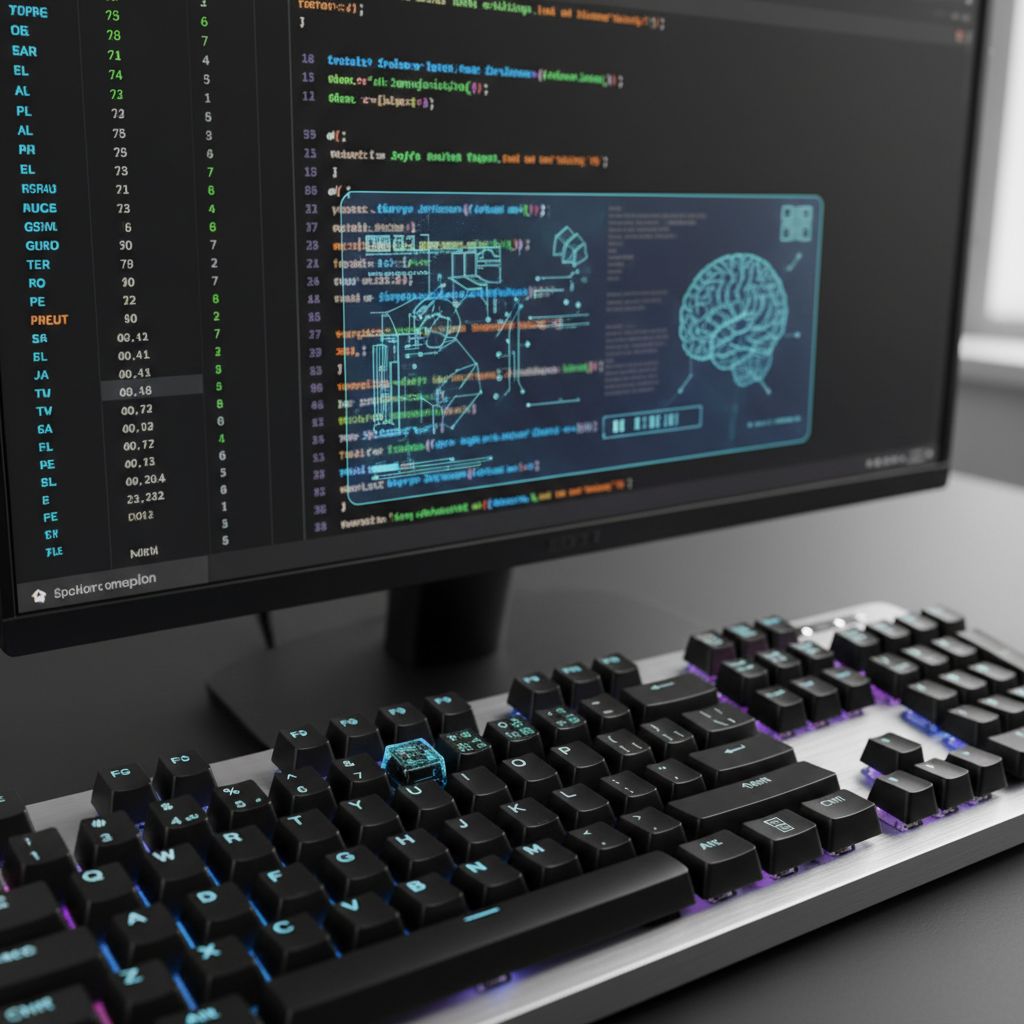
This compute surplus allows giants to flood the market with free inference, creating an insurmountable moat for smaller startups. When a competitor announces plans to drastically multiply their data center capacity, the ripple effect is immediate: inference costs plummet, and those savings—or strategic losses—are passed directly to the end user in the form of robust free tools.
Beyond Code: The Video Generation Stranglehold
The free-tier revolution extends beyond text and code. Generative video, historically the most expensive medium to synthesize, is finally becoming accessible. Based on our testing this week, Google Flow and ByteDance's Seedance are currently sitting at the absolute top of the free video generation hierarchy.
- Google Flow: Best for cinematic, highly art-directed B-roll. We prompted Flow for a "macro shot of a mechanical watch movement bathed in neon blue light," and the physics simulation of the interlocking gears was flawless. However, Flow enforces the strictest usage limits, capping users at three generations per day.
- ByteDance Seedance: Best for hyper-realistic human motion and social media-formatted content. Seedance offers a slightly more generous daily allowance but occasionally struggles with complex scene transitions compared to Flow.
Both tools eclipse the legacy free tiers of early players like Runway Gen-2 and Pika Labs. The catch, of course, is that while text and code AI can be somewhat boundless on a free tier, video generation remains highly constrained by server loads. The "free" video landscape is essentially a daily trial, designed to tease capabilities rather than power a full production pipeline.
The Verdict: What Should You Use Today?
If you are auditing your tool stack in August 2026, the landscape is clearer than it has been in months. You no longer need to cobble together trial accounts to get professional-grade results.
For software development, Google Antigravity is currently unmatched in the free tier, offering the highest volume of premium inference without a credit card. For power users willing to pay, Cursor remains the superior architectural tool, but Antigravity has effectively raised the floor.
For everyday writing, analysis, and productivity, rotating between the free tiers of ChatGPT, Claude, and Gemini provides more than enough bandwidth for the average professional. And for video creators, keeping tabs on your daily allotments of Google Flow and ByteDance Seedance is the most cost-effective way to integrate cutting-edge visuals into your workflow.
The era of hoarding API credits is ending. The new era is about knowing exactly which free tool to deploy for the task at hand.
Frequently asked questions
What is Google Antigravity?
Google Antigravity is a newly released, highly capable AI coding model that integrates directly into local IDEs. It is currently recognized for offering one of the most generous and powerful free tiers for software engineers.
How does Cursor compare to Google Antigravity in 2026?
While Cursor remains a top choice for paying power users due to its deep codebase indexing, Google Antigravity currently provides far more premium model inference on its free tier, allowing users to complete large refactoring tasks without hitting paywalls.
What are the best free AI video generators right now?
As of mid-2026, Google Flow and ByteDance's Seedance are widely considered the top free AI video generators, though both have strict daily generation limits due to high compute costs.
Are ChatGPT and Claude still free to use?
Yes, both ChatGPT and Claude continue to offer very capable free tiers that give everyday users access to flagship reasoning capabilities, though they are subject to rate limits during peak hours.
Join 45,000+ AI builders.
Three tools, two insights, one strategy — every Sunday. The signal cuts through the noise.
Free forever · unsubscribe anytime · no account required
Related reads

Cursor vs. GitHub Copilot: The AI Coding Debate Tearing Teams Apart
Cursor’s “agentic” approach is blowing traditional AI autocomplete out of the water, but its deep codebase indexing is sparking a fierce debate over privacy.

Releases · anthropics/claude-code - GitHub
A concise analysis of Releases · anthropics/claude-code - GitHub.