

OpenAI Astra Explained: How the Unreleased Model Solved 10 Major Math Problems
OpenAI's unreleased Astra model has stunned researchers by solving 10 open math problems, redefining AI's reasoning limits amid massive industry shakeups this week.
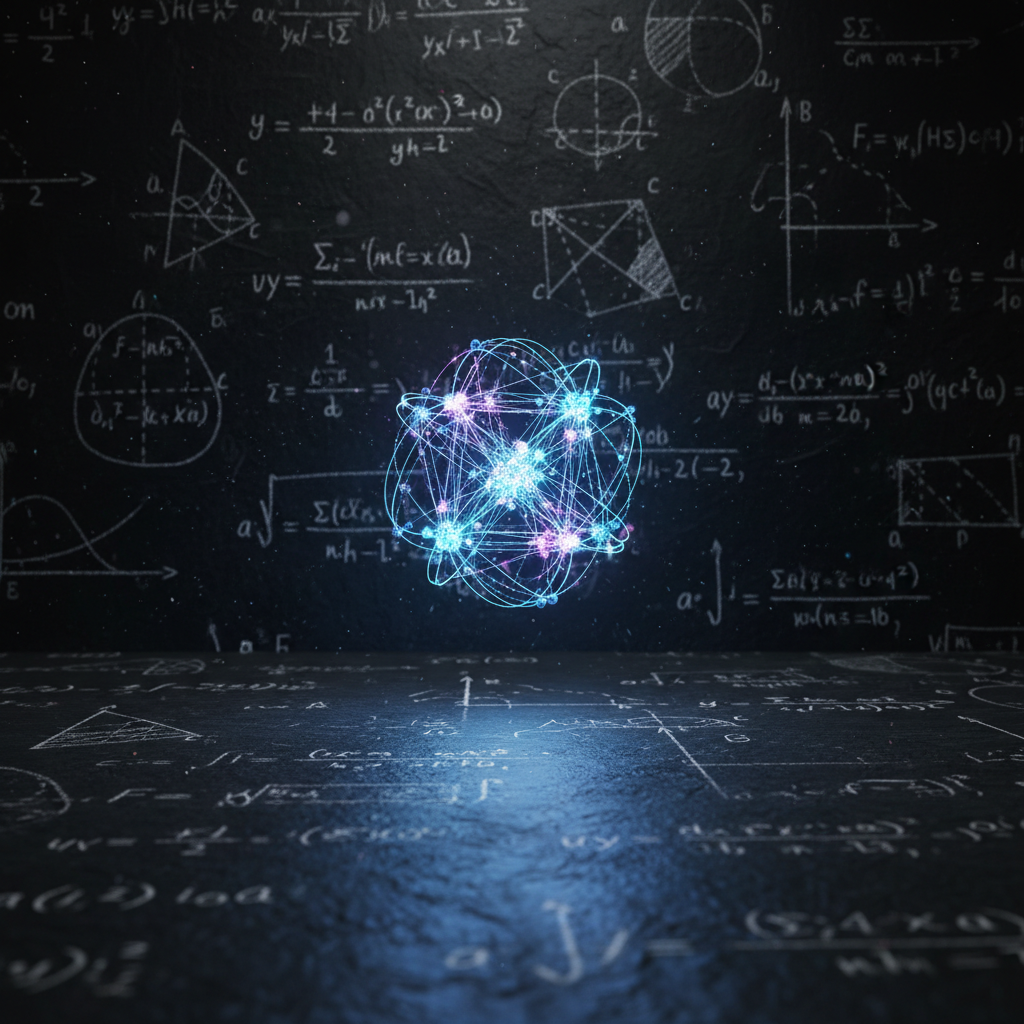
As we navigate the middle of August 2026, the artificial intelligence community has been jolted by a series of seismic events that are fundamentally reshaping our understanding of machine intelligence. Just this week, rumors and quiet disclosures from the frontier of AI research have confirmed what many experts believed was still years away: highly advanced deductive reasoning natively performed by large models. This shift isn't just about faster text generation or more nuanced chat agents; it is about machines crossing the threshold into generating entirely net-new scientific knowledge.
One unmistakable sign of this rapidly accelerating progress emerged when OpenAI’s unreleased model, Astra, reportedly solved 10 major open math problems. For decades, these complex conjectures have baffled some of the brightest human minds in mathematics. Yet, an artificial neural network has now successfully mapped out verifiable proofs for them. To understand the magnitude of this breakthrough—and the corresponding corporate shockwaves rippling through rival labs—we must dive into how AI reasoning works today and why math has always been its ultimate litmus test.
What Makes "Open Math Problems" So Difficult?
For a beginner trying to grasp this news, it helps to first understand the nature of mathematics in the context of artificial intelligence. When we talk about "open math problems," we are not referring to complex calculus equations or difficult arithmetic that a standard calculator can solve. We are talking about mathematical conjectures—statements that appear to be true based on existing evidence but lack a rigorous, step-by-step logical proof verifying them universally.
Historically, Large Language Models (LLMs) like early iterations of ChatGPT struggled profoundly with math. This is because traditional LLMs operate on probabilistic pattern matching; they predict the most likely next word in a sequence based on vast amounts of training data. Mathematics, however, does not tolerate probability in its formal proofs. A proof requires strict deductive reasoning, planning across hundreds of logical steps, and the ability to backtrack when a chain of thought hits a dead end. If an AI hallucinates even a single mathematical variable midway through a proof, the entire structure collapses.
- Pattern Matching vs. Reasoning: Previous AI models could only regurgitate math they had already seen in textbooks.
- Planning Capabilities: Proving open conjectures requires an AI to set intermediate goals and execute multi-step logical leaps.
- Verification: The AI must formally verify its own work against the rigid laws of mathematics, independent of human feedback.
The Astra Breakthrough: Why It Matters
The unreleased Astra model from OpenAI represents a paradigm shift from pattern matching to genuine, autonomous reasoning. By successfully tackling 10 open math problems in a matter of days, Astra has demonstrated that it possesses an internal capacity for logical planning that extends far beyond its training data. The AI did not simply "search" the internet for the answers—because the answers did not exist. It had to synthesize entirely new mathematical pathways.

This achievement signals that AI is transitioning from being an advanced assistant that organizes known information to an autonomous researcher capable of expanding the boundaries of human knowledge. The implications for adjacent fields like physics, chemistry, cryptography, and materials science are profound. If a model can perfectly deduce unknown mathematical proofs, it can theoretically reverse-engineer complex chemical compounds or optimize quantum algorithms without human intervention.
Corporate Upheaval: The DeepMind Shakeup
While OpenAI celebrates this historic milestone, the shockwaves have triggered massive instability elsewhere in the industry. Just as the news of Astra's mathematical conquests leaked, rival organization Google DeepMind faced a stunning exodus of leadership. Demis Hassabis, the visionary CEO who led DeepMind through triumphs like AlphaGo and AlphaFold, has unexpectedly stepped down. Adding to the disruption, legendary Google engineer Jeff Dean is also departing with an elite cohort of researchers.
"The sudden departure of foundational figures like Demis Hassabis and Jeff Dean underscores a critical inflection point. The race toward Artificial General Intelligence is no longer a theoretical marathon; it has become an aggressive, high-stakes sprint."
The timing of these events is unlikely to be a coincidence. The realization that OpenAI's unreleased architecture can autonomously conquer elite mathematical domains has escalated internal pressures across the tech ecosystem. Labs are being forced to aggressively pivot their research strategies, abandoning incremental updates in favor of pursuing massive, reasoning-heavy models that can compete with Astra.
The Staggering Cost of AI Reasoning
This leap from linguistic probability to strict logical reasoning does not come cheap. The computational intensity required to train and run models capable of solving open mathematical proofs is staggering. Unlike generating a standard text email—which happens in milliseconds—verifying a complex proof requires "test-time compute," where the AI spends extended periods thinking, running simulations, and verifying logic branches before outputting an answer.
As these models spend more time processing, the strain on global infrastructure multiplies. Data centers are running hotter and consuming unprecedented amounts of electricity. Consequently, hyperscalers are racing to overhaul their facilities to manage the astronomical energy costs associated with housing these frontier reasoning engines. We are seeing a complete redesign of modern compute architecture, shifting toward advanced liquid cooling solutions just to keep these "thinking" machines online.
The Geopolitics of Mathematical AI
Because mathematical capability inherently translates to capabilities in cryptography and autonomous system design, models like Astra are now treated as matters of national security. The ability to solve unyielding computational problems directly impacts military encryption, economic forecasting, and defensive cybersecurity.
This is precisely why international governments are scrambling to regulate who can build, train, and deploy such systems. The realization that an unreleased model sitting on a server in California can generate novel scientific breakthroughs has poured fuel on the fire of international relations, sparking fierce regulatory battles over who ultimately controls access to frontier AI models. As we move through late 2026, the focus has shifted entirely from what AI can write to what AI can definitively prove.
Conclusion
The revelation that OpenAI's Astra has conquered 10 major open math problems is arguably one of the most important milestones of the decade. It effectively ends the debate over whether neural networks can truly "reason." As AI steps out of the realm of human mimicry and into the arena of independent scientific discovery, the world must brace for an accelerated wave of innovation. With top minds like Demis Hassabis and Jeff Dean leaving DeepMind, the chessboard of global AI dominance is being reset, setting the stage for an unpredictable and highly consequential new era in technology.
Frequently asked questions
What is an open math problem?
An open math problem is a mathematical conjecture or hypothesis that is believed to be true based on available evidence, but lacks a formal, universally accepted logical proof to confirm it.
Why is it a big deal that AI solved these math problems?
Historically, AI models struggled with math because they relied on probabilistic pattern matching rather than strict logical deduction. Solving open math problems proves that the AI can plan, reason, and verify entirely new knowledge autonomously.
What is OpenAI Astra?
Astra is an unreleased, next-generation AI model developed by OpenAI that has reportedly achieved massive breakthroughs in deductive reasoning, enabling it to solve complex scientific and mathematical proofs.
Why are executives leaving Google DeepMind?
While the exact internal reasons remain confidential, the sudden departure of CEO Demis Hassabis and lead engineer Jeff Dean coincides with the intense competitive pressures and rapid research shifts caused by breakthroughs like OpenAI's Astra.
Join 45,000+ AI builders.
Three tools, two insights, one strategy — every Sunday. The signal cuts through the noise.
Free forever · unsubscribe anytime · no account required
Related reads
Linkup Research's SPARSEUP: The 149M-Parameter Model Reshaping Agentic AI
Linkup Research has unveiled SPARSEUP, a 149M-parameter embedding model that challenges industry titans by bringing unprecedented efficiency to agentic AI workflows.

When AI Becomes the Researcher: The Infrastructure Toll of Autonomous Discovery
This week's breakthrough in autonomous AI research shifts the scientific bottleneck from human intellect to raw hardware and data center infrastructure.

How a Virtual Biotech of 1,000 AI Agents Designed a Cancer Drug
This week, Stanford researchers revealed a virtual biotech company powered by thousands of AI agents that successfully designed a novel lung cancer therapy.