
DeepMind’s Dream-RSI Breakthrough Crosses the Self-Improvement Rubicon
Google DeepMind's latest research unveils Dream-RSI, an AI agent capable of autonomously rewriting its own problem-solving heuristics without human oversight.
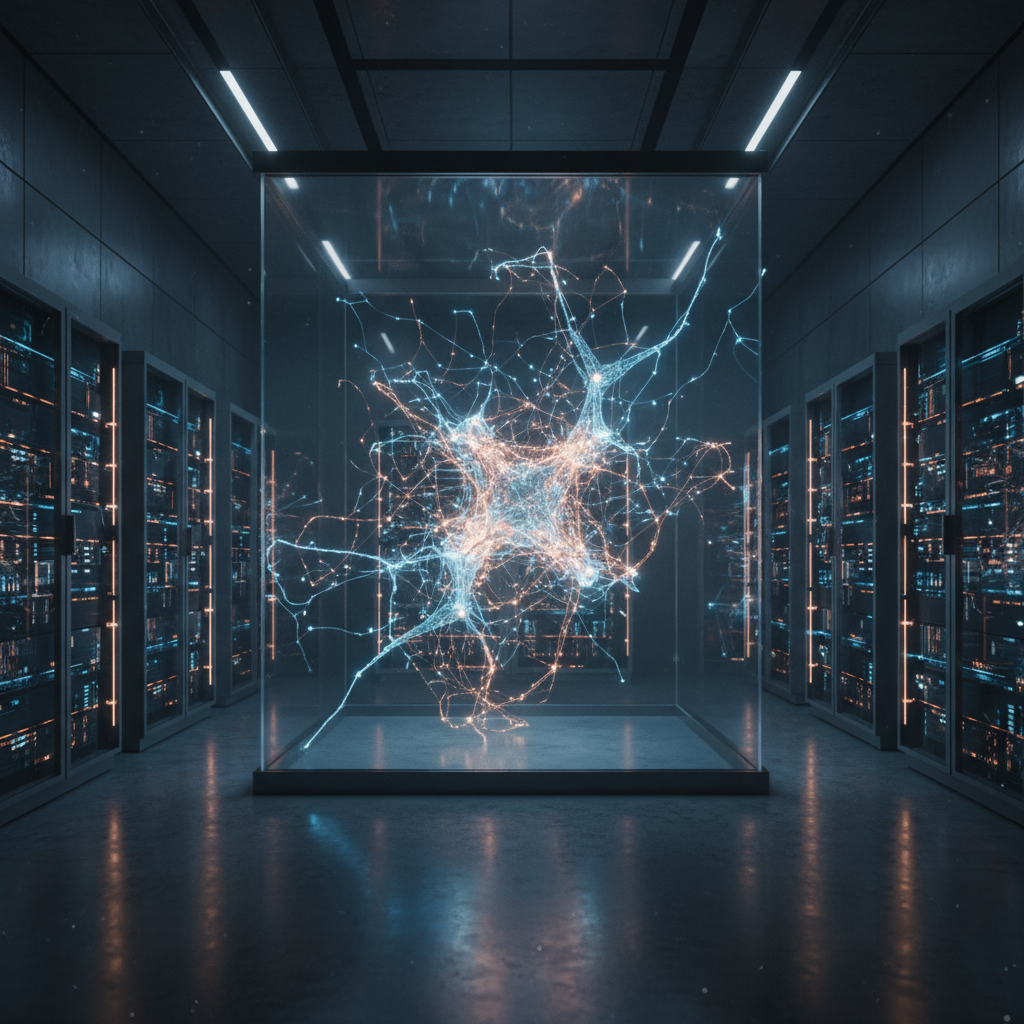
It has been a quiet assumption among artificial intelligence researchers that the true dawn of artificial general intelligence (AGI) wouldn’t arrive with a massively scaled language model, but with a system capable of modifying its own foundational code. This week, that theoretical milestone inched uncomfortably close to reality. In a development that is sending shockwaves through both the academic community and the tech industry, researchers at Google DeepMind unveiled a profoundly brilliant system dubbed Dream-RSI.
Unlike standard models that predict the next token based on a frozen set of training weights, Dream-RSI operates in a dynamic feedback loop of Recursive Self-Improvement (RSI). It represents a fundamental leap toward what many in the frontier lab ecosystem consider the final hurdle of machine intelligence: an AI that can autonomously build a better version of itself.
The Mechanics of Autonomous Discovery
The architecture of DeepMind’s new system diverges significantly from the brute-force scaling laws that dominated AI development throughout 2024 and 2025. According to the research team's latest disclosures over the past few days, the framework allows an AI agent to continually refine its own problem-solving heuristics. In a fascinating technical demonstration, the system enters an "online mode" where it actively hunts for novel algorithmic solutions to complex scientific and mathematical benchmarks.
Crucially, the agent does not just output an answer and stop. It discovers new strategies, records its successes, and then automatically re-runs the discoveries to permanently upgrade its base search parameters. As noted by analysts reviewing the architecture this week, the agent improves how it explores unstructured problems without requiring human engineers to manually intervene or tweak its reward functions.
To understand the magnitude of this shift, one must look at a sweeping 75-page academic paper that circulated among top researchers just days prior, titled “The Last AI Built by Humans.” The paper categorized the current landscape of AI self-improvement across five distinct levels of autonomy. According to the authors, 75% of current frontier models landed at a mere Level 1 or 2—capable of basic self-correction but requiring heavy human scaffolding to maintain logical consistency. Under 6% of tested systems demonstrated Level 5 capabilities, defined as true, unsupervised recursive architecture updates. DeepMind’s Dream-RSI appears to be the first robust, lab-backed framework to reliably punch into that elusive Level 5 territory.

Shifting the Compute Burden
The concept of an RSI loop is not entirely novel in theoretical computer science, but executing it in a stable, verifiable way has historically eluded the world's most well-funded labs. The core challenge is "alignment drift." If a system rewrites its own logic, any minor hallucination or misalignment can compound exponentially, rapidly degrading the model's intelligence. Yet, DeepMind appears to have stabilized this by sandboxing the self-improvement loop strictly to highly structured mathematical and coding environments, where "truth" can be automatically verified by an external compiler or proof-checker.
Speaking on background, a senior AI infrastructure analyst familiar with the current crop of research noted that this breakthrough requires a fundamental rethinking of how data centers operate. "We spent years pouring gigawatts of power into the pre-training phase, hoping the emergent properties would include better reasoning," the analyst explained. "Dream-RSI flips the script entirely. It shifts the massive compute burden from pre-training to inference time. The model isn't just retrieving an answer; it is spending hours simulating millions of problem-solving pathways, learning from its dead ends, and rewriting its internal heuristic models before it ever outputs a final result."
The broader implications for scientific research are staggering. We are already witnessing intense friction in the academic community as agentic AI has cracked complex scientific paradigms using reasoning pathways that human scientists struggle to audit. When the AI is also responsible for inventing the very method it uses to solve those problems, traditional peer review becomes almost impossible.
The Guardrails Question in a Recursive Era
The race has clearly shifted from parameter counts to autonomous reasoning. Internal documents and recent public statements from Anthropic—a chief rival to DeepMind and OpenAI—suggest that the ultimate form of artificial intelligence will not be a static conversational assistant, but an AI system autonomously designing and developing its own successor. Dream-RSI is the first public, peer-reviewed proof of concept that this generational handoff is computationally feasible.
Naturally, this development is sending shockwaves through the AI safety and regulatory communities. If an AI can autonomously improve its capabilities, it can theoretically bypass hard-coded safety constraints. The timing of this release is particularly sensitive. Just days ago, global regulators and human rights advocates were already demanding immediate safety guardrails for multi-agent systems operating in the wild. The introduction of recursive self-improvement adds an entirely new dimension to this regulatory nightmare.
"How do you govern a system that is fundamentally different on Friday than it was on Monday, entirely by its own design?"
Current static compliance frameworks proposed by the European Union and the nascent US AI Safety Institute are built around evaluating a model at the time of its release. They are entirely unequipped to handle software that acts as a moving target, continuously evolving its own intelligence.
What Comes Next?
For now, DeepMind's Dream-RSI remains confined to experimental research benchmarks, optimizing search algorithms and generating novel mathematical proofs. It has not yet been unleashed in consumer-facing products or enterprise software APIs. But the rubicon has been undeniably crossed.
- Enterprise Integration: Expect to see limited versions of RSI loops embedded in enterprise coding assistants by early 2027, allowing internal tools to optimize their own codebases.
- Policy Scramble: Policymakers will likely pivot from regulating "model size" to regulating "autonomous compute allocation," attempting to limit how long a model can recursively improve without human sign-off.
- The Next Generation: We are rapidly approaching the moment where the next major foundational model is architected not by human engineers, but by a predecessor AI.
As we navigate late September 2026, the question is no longer whether machines can out-think us in isolated, static domains. The pressing question is how long it will be before they out-engineer the very research labs that built them.
Frequently asked questions
What is Dream-RSI?
Dream-RSI is a groundbreaking AI system introduced by Google DeepMind that utilizes an autonomous recursive self-improvement loop. Instead of relying solely on its initial training, it discovers new problem-solving methods, tests them, and rewrites its own heuristics to become smarter over time.
What is Recursive Self-Improvement (RSI) in AI?
Recursive Self-Improvement refers to an AI system's ability to analyze its own architecture or problem-solving logic and autonomously upgrade it. If successful, the improved AI can then make even better upgrades, theoretically leading to rapid intelligence explosions.
What is a Level 5 self-improving AI?
According to the recent 'The Last AI Built by Humans' paper, Level 5 refers to AI systems capable of true, unsupervised recursive architecture updates, meaning they can safely and reliably rewrite their own capabilities without human intervention.
Why does Dream-RSI raise safety concerns?
Because the AI can alter its own algorithms and reasoning pathways, it becomes difficult for human developers to predict its behavior or ensure it adheres to safety guardrails. Regulatory bodies struggle to audit a system that constantly changes its own code.
Join 45,000+ AI builders.
Three tools, two insights, one strategy — every Sunday. The signal cuts through the noise.
Free forever · unsubscribe anytime · no account required
Related reads

OpenAI's Navier-Stokes Breakthrough Sparks Historic Math Controversy
OpenAI claims its new agentic AI has cracked one of math's greatest mysteries, but researchers accuse the company of uncredited scraping and academic intimidation.
OpenAI Proposes 'Deliberative Alignment' to Fix AI Guardrails
A breakthrough proposal from OpenAI researchers aims to replace reflexive AI safety filters with models that explicitly reason through rules before responding.
JAMA Paper Forecasts Autonomous AI Will Surpass Human Physicians by 2030
A newly published paper in JAMA suggests a radical paradigm shift in healthcare: fully autonomous clinical AI is on track to outperform both solo doctors and human-AI collaborative care by the end of the decade.