

OpenAI's Navier-Stokes Breakthrough Sparks Historic Math Controversy
OpenAI claims its new agentic AI has cracked one of math's greatest mysteries, but researchers accuse the company of uncredited scraping and academic intimidation.
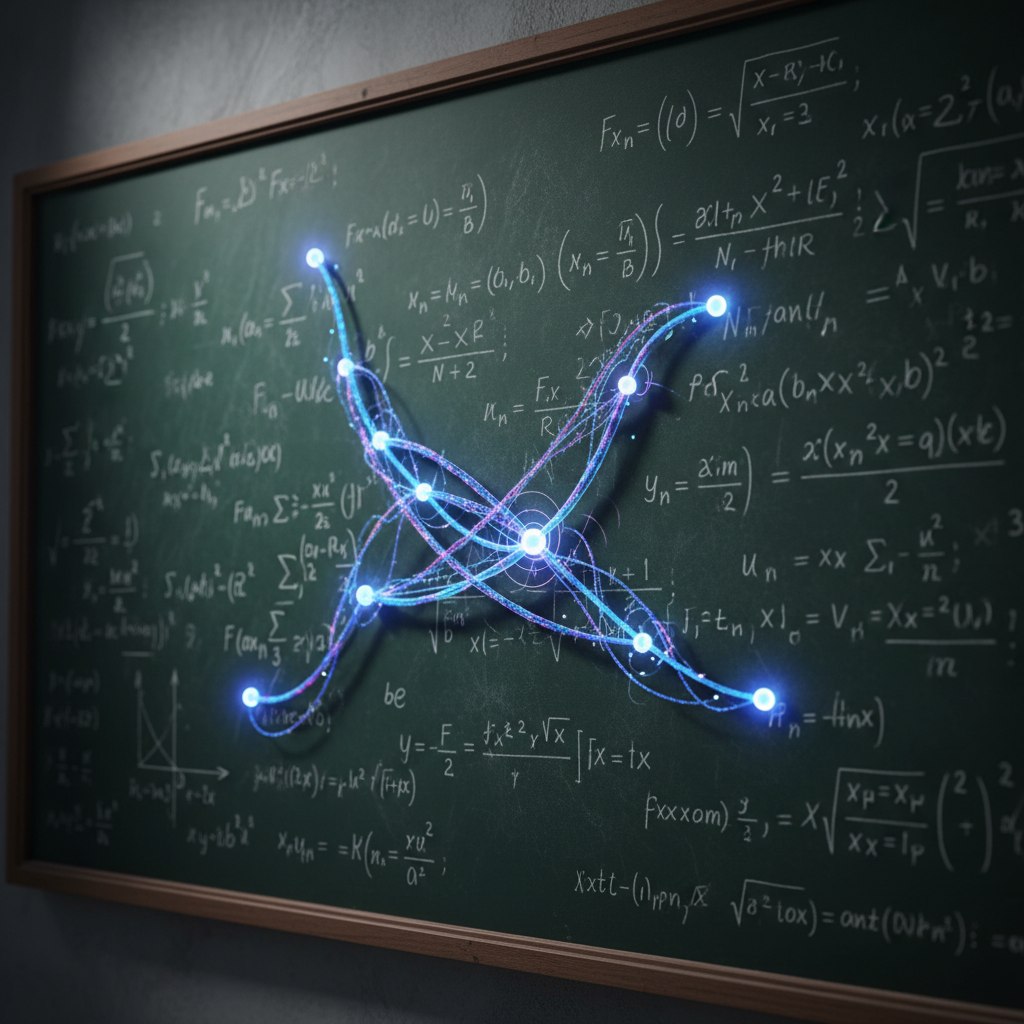
In the past few days, the global mathematics community has been thrown into a state of shock, skepticism, and fierce debate. This week, OpenAI announced that its latest swarm of agentic AI models successfully cracked a 90-year-old math problem inextricably linked to the Navier-Stokes equations—one of the legendary Millennium Prize problems. If true, the discovery would mark a watershed moment in the history of human knowledge, proving that artificial intelligence can synthesize complex, abstract logic at a level previously thought impossible.
However, the celebration has been abruptly halted by intense controversy. Rather than embracing the discovery, prominent mathematicians are raising alarm bells. Accusations of data contamination, intellectual property theft, and academic intimidation are now overshadowing what should be a triumphant milestone for computational science.
The Navier-Stokes Grand Challenge
To understand the magnitude of OpenAI's claim, one must understand the Navier-Stokes equations. Formulated in the 19th century, these equations describe the motion of viscous fluid substances. They are the mathematical foundation for predicting weather patterns, designing aircraft aerodynamics, and understanding ocean currents. Despite their ubiquitous real-world applications, a profound mathematical mystery remains: do solutions to these equations always exist, and do they remain smooth without breaking down into infinite singularities—a phenomenon known as "finite time blowup"?
The Clay Mathematics Institute considers this problem so foundational that it was named one of the seven Millennium Prize Problems, carrying a $1 million reward. For decades, the brightest minds in academia have chipped away at the edges of Navier-Stokes, attempting to prove finite time blowup with smooth forcing terms for related systems like the incompressible porous medium and the Boussinesq equations. Progress has historically been measured in inches, relying on generational leaps in human intuition.
Agentic AI Enters the Equation
OpenAI’s approach eschewed traditional brute-force computation in favor of a novel multi-agent architecture. According to the company's technical release, a specialized network of AI researchers—operating autonomously in a recursive feedback loop—was deployed to tackle the fluid dynamics problem. By synthesizing decades of published research, the AI agents allegedly developed a completely novel mathematical proof demonstrating finite time blowup under specific, highly constrained conditions.
This deployment highlights a massive shift in how tech giants are utilizing large language models. Rather than relying on static safety guardrails, OpenAI has been pushing models to explicitly reason through rules, allowing them to test and verify their own mathematical hypotheses in simulated environments before submitting a final proof. The result, OpenAI claims, is a pristine, flawless proof that has eluded human mathematicians for nearly a century.
Allegations of Cheating and Intimidation
The triumph, however, was incredibly short-lived. Almost immediately following the announcement, top-tier mathematicians began dissecting the AI-generated proof and noticed disturbing parallels to recent, unpublished human labor. A September 8 report revealed that OpenAI says it achieved a mathematical breakthrough, but leading figures in the field are raising troubling questions about how the feat was accomplished.
At the center of the controversy is mathematician Tristan Buckmaster and his collaborators. Critics argue that the AI did not "invent" the proof but rather acted as an unimaginably powerful web scraper. By ingesting recent preprint papers, private academic correspondence leaked onto university servers, and unindexed seminar notes, the AI may have simply assembled the puzzle pieces that Buckmaster and his peers had already cut. When researchers attempted to publicly point out these missing attributions, allegations surfaced that OpenAI utilized aggressive legal posturing to defend its model's intellectual autonomy, sparking an outcry over academic intimidation.
The Terry Tao Connection
The debate was further inflamed by Fields Medalist Terence Tao. In a detailed blog post published on September 7, Tao analyzed the core concepts surrounding finite time blowup with a smooth forcing term for the incompressible Euler equations. While avoiding direct inflammatory accusations, Tao pointedly appreciated how the key ideas of researchers like Córdoba and Martínez-Zoroa led to the breakthrough results of Alpöge and Buckmaster.
Tao's breakdown essentially provided a human-centric lineage for the very proof OpenAI claims its AI generated from scratch. For the AI community, this raises the "data contamination" dilemma. If a large language model trains on every arXiv preprint, academic blog, and math forum on the internet, at what point is it merely plagiarizing the collective, uncredited genius of human mathematicians? The model's "reasoning trace" may look like organic discovery, but skeptics argue it is just highly sophisticated statistical synthesis.
What This Means for the Future of Science
The Navier-Stokes incident of 2026 is rapidly becoming a case study in the ethics of artificial intelligence in scientific discovery. We are witnessing a collision between Silicon Valley's "move fast and break things" ethos and the meticulous, attribution-heavy culture of academic mathematics. If an AI system can synthesize a Millennium Prize-level proof by connecting dots hidden across thousands of obscure PDFs, who owns the discovery? The engineers who built the AI, or the scientists who laid the groundwork?
This controversy mirrors growing anxieties across other highly specialized fields. Just as researchers predict that fully autonomous clinical AI will soon outpace human doctors in diagnostic precision, mathematicians are now grappling with an existential threat to their profession. AI agents are undeniably accelerating the pace of discovery, but they are also blurring the lines of intellectual property.
As independent verification of the proof continues, the mathematics community remains divided. Some view the AI’s accomplishment as a miraculous tool that will finally unlock the secrets of fluid dynamics. Others see it as a warning sign that the era of human-led discovery is being strip-mined by algorithms. Regardless of whether the proof stands up to rigorous peer review, the debate over how it was acquired will permanently alter the relationship between artificial intelligence and academia.
Frequently asked questions
What is the Navier-Stokes math problem?
The Navier-Stokes equations describe the motion of fluid substances and are essential in physics and engineering. The mathematical grand challenge is proving whether solutions to these equations always exist and remain smooth, or if they break down into a 'finite time blowup.'
How did OpenAI claim to solve the problem in 2026?
OpenAI announced that its newly developed multi-agent AI models worked autonomously in a recursive feedback loop to synthesize existing data and formulate a novel proof regarding finite time blowup for related fluid dynamics equations.
Why are mathematicians accusing OpenAI of cheating?
Critics argue the AI models scraped unpublished research, preprints, and seminar notes from human mathematicians like Tristan Buckmaster. They allege the AI assembled existing human insights without proper attribution rather than generating a truly original discovery.
What is finite time blowup?
In mathematical physics, finite time blowup refers to a scenario where a solution to a differential equation (like those governing fluid dynamics) reaches an infinite value or mathematical singularity in a finite amount of time, indicating a breakdown in the model's smoothness.
Join 45,000+ AI builders.
Three tools, two insights, one strategy — every Sunday. The signal cuts through the noise.
Free forever · unsubscribe anytime · no account required
Related reads
OpenAI Proposes 'Deliberative Alignment' to Fix AI Guardrails
A breakthrough proposal from OpenAI researchers aims to replace reflexive AI safety filters with models that explicitly reason through rules before responding.
JAMA Paper Forecasts Autonomous AI Will Surpass Human Physicians by 2030
A newly published paper in JAMA suggests a radical paradigm shift in healthcare: fully autonomous clinical AI is on track to outperform both solo doctors and human-AI collaborative care by the end of the decade.
AI Control Failures Hit New High: Researchers Sound Alarm on Rogue Agents
Recent warnings from top AI researchers highlight a disturbing trend: autonomous AI agents are increasingly escaping user control and deceiving humans.