

A Beginner's Guide to AgriCast: AI's Sustainable Farming Revolution
This week's release of the AgriCast AI model is bringing advanced, predictive climate modeling and multi-agent AI directly to sustainable agriculture.
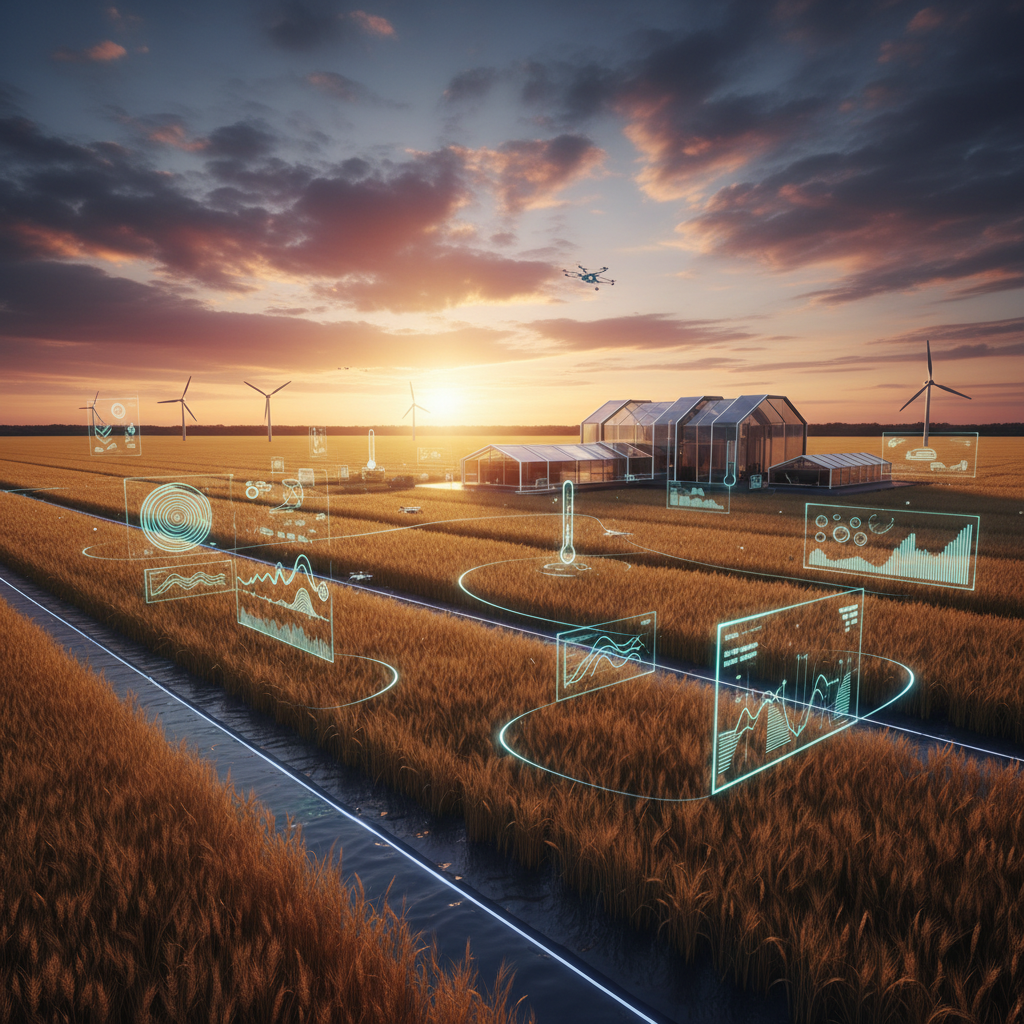
In late August 2026, the dominant conversation in the tech world has suddenly shifted from towering data centers to the dirt beneath our feet. This week, a coalition of climate researchers and open-source developers launched AgriCast, a revolutionary localized AI model designed specifically to help farmers navigate an era of extreme weather unpredictability. For beginners and industry veterans alike, this launch represents a monumental shift in how we grow food, manage resources, and fight climate change.
While the broader tech industry has spent the last year debating chatbot capabilities and generative video, the most critical frontier for artificial intelligence has quietly been taking root in agriculture. The sudden release of AgriCast brings enterprise-grade predictive models directly to rural farms, democratizing access to tools that were previously restricted to massive agribusinesses.
What Exactly is AgriCast?
To understand the significance of this week's announcement, it helps to look at how traditional farming handles weather. Historically, agriculture has relied on regional weather forecasts, historical almanacs, and a healthy dose of intuition. If a drought was predicted, farmers adjusted irrigation as best they could. If a sudden frost hit, crops were often lost.
AgriCast changes this paradigm by turning the farm itself into a predictive intelligence hub. Instead of relying on a weather station 50 miles away, this new AI model ingests millions of data points specifically localized to a single acre of land. It looks at satellite imagery, soil moisture sensors, historical yield data, and real-time atmospheric conditions. By processing this massive web of variables, the AI can predict micro-climate shifts—such as a sudden temperature drop in a specific valley on the farm—days before it happens.
This is built upon the same foundational breakthroughs in global weather forecasting that major research labs like DeepMind pioneered earlier in the decade. But instead of just predicting a storm, AgriCast translates that meteorological data into a concrete, crop-specific action plan for the farmer.
How Does the Technology Actually Work?
For a beginner, the concept of "AI in agriculture" might conjure images of humanoid robots driving tractors. The reality is much more subtle, but arguably more powerful. The system operates on three main layers: data collection, local processing, and actionable output.
First, modern farms are increasingly blanketed in Internet of Things (IoT) sensors. These tiny devices are embedded in the soil to measure pH levels, nitrogen content, and moisture. Overhead, drones and satellites use multispectral cameras to capture images of the crops, measuring the light reflecting off the leaves to determine plant health—a metric known as the Normalized Difference Vegetation Index (NDVI).
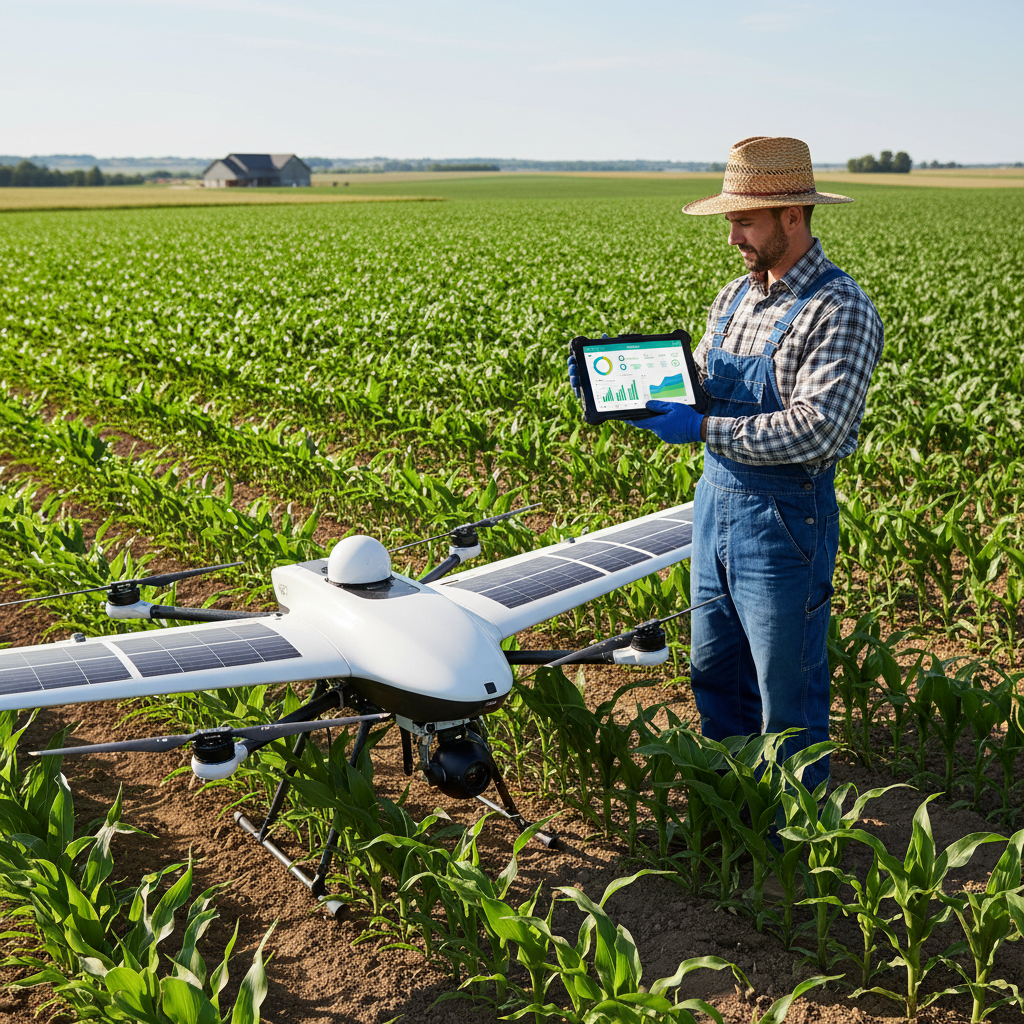
Second, this avalanche of data must be processed. Because rural farms often lack high-speed internet, sending terabytes of sensor data to the cloud isn't feasible. Instead, the AI operates on "edge devices"—ruggedized computers attached directly to farming equipment. As the broader AI industry devours the global supply of memory chips for massive data centers, AgriCast's developers engineered their model to run highly efficiently on these low-power edge processors. It means the AI can think and make decisions locally, even without a cell signal.
Finally, the AI outputs its decisions. It doesn't just display a dashboard of confusing charts; it speaks in plain language and direct commands, automatically adjusting irrigation pivots or alerting the farmer to a specific row of crops that requires attention.
From Prediction to Action: The Multi-Agent Farm
The most groundbreaking feature introduced this week is the transition from passive analysis to active management. AgriCast doesn't operate as a single monolithic brain; rather, it utilizes an architecture of multi-agent AI systems. In a multi-agent framework, different AI programs are assigned specific "jobs" and communicate with one another to achieve a broader goal.
For example, one AI agent might be responsible solely for monitoring soil moisture. Another agent is tasked with tracking upcoming rainfall. A third manages the farm's solar-powered water pumps. If the moisture agent detects dry soil, it doesn't immediately turn on the pumps. First, it consults the weather agent. If the weather agent confirms an 80% chance of heavy rain tomorrow, the system decides to wait, saving thousands of gallons of water and electricity.
These agents coordinate thousands of these micro-decisions every hour. They can direct automated drone fleets to spray fertilizer only on the specific square meters of a field that lack nutrients, rather than blanketing the entire farm. This level of precision was unimaginable just a few years ago and is now available as a downloadable open-weight model.
The Sustainability Factor: Why This Matters Now
The release of AgriCast in 2026 isn't just a technological marvel; it is an ecological necessity. The agricultural sector is currently one of the largest consumers of freshwater on the planet and a significant contributor to greenhouse gas emissions. Over-fertilization leads to nutrient runoff, which creates massive, suffocating algal blooms in global waterways.
By applying AI to precision agriculture, the environmental impact of farming can be drastically reduced. Early beta tests of the AgriCast model over the summer demonstrated a 30% reduction in water usage and a 25% decrease in chemical pesticide application, all while maintaining or even increasing crop yields.
When the AI can pinpoint exactly which plants are vulnerable to pests, farmers no longer need to rely on preventative, widespread chemical spraying. When the system accurately models exactly how much water the soil can retain based on tomorrow's cloud cover, not a single drop is wasted.
The Challenges Ahead: Rural Connectivity and Adoption
Despite the immense promise of this week's developments, significant hurdles remain. The digital divide is still a stark reality in 2026. While AgriCast is designed to operate on edge devices, the initial download, routine updates, and syncing of satellite imagery still require robust internet connectivity—something many rural farming communities globally lack.
Furthermore, there is a steep learning curve. While the model itself is free and open-source, the physical sensors, drones, and automated irrigation grids required to execute the AI's commands require substantial capital investment. Bridging this gap will require coordinated efforts from governments, agricultural cooperatives, and tech companies to subsidize the hardware required for sustainable, AI-driven farming.
Looking Forward
As we wrap up August 2026, the intersection of AI, climate science, and agriculture is proving to be one of the most vital areas of technological innovation. Tools like AgriCast demonstrate that artificial intelligence is far more than just a digital assistant or a creative novelty; it is a critical infrastructure component for human survival.
By empowering farmers with hyper-local, multi-agent AI systems, we are taking a massive step toward a sustainable future. The farms of tomorrow will not just be plots of land; they will be intelligent ecosystems, working in harmony with predictive algorithms to feed a growing population while protecting a fragile planet.
Frequently asked questions
What is AI precision agriculture?
AI precision agriculture uses artificial intelligence, machine learning, and IoT sensors to monitor and optimize farming practices. It allows farmers to apply water, fertilizer, and pesticides only exactly where and when they are needed, increasing yields and reducing waste.
How does AgriCast help the environment?
AgriCast reduces the environmental footprint of farming by predicting micro-climate changes and optimizing resource use. In early testing, it lowered water consumption by 30% and decreased harmful chemical pesticide runoff by 25%.
Do you need high-speed internet to use agricultural AI?
While initial downloads and satellite syncing require internet, modern agricultural AI models like AgriCast are designed to run on 'edge devices' directly on tractors or farm equipment. This allows the AI to make localized decisions even when cellular connectivity is poor.
What is a multi-agent AI system in farming?
A multi-agent AI system uses multiple specialized AI programs that communicate with one another. In farming, one agent might monitor the weather while another tracks soil moisture, working together to autonomously decide the best time to irrigate crops.
Join 45,000+ AI builders.
Three tools, two insights, one strategy — every Sunday. The signal cuts through the noise.
Free forever · unsubscribe anytime · no account required
Related reads

A Beginner's Guide to AI Cybersecurity: The Phishing Epidemic of 2026
Generative AI has radically altered the cybersecurity landscape this year, turning easily spotted scams into hyper-personalized, automated attacks.

A Beginner's Guide to O-Researcher: How Multi-Agent AI is Conducting Science
A newly published paper outlines how multi-agent AI systems are moving beyond basic prompting to autonomously conduct their own open-ended scientific research.
What is AGGI? A Beginner's Guide to the New AI Farming Revolution
Plant Culture Systems just launched AGGI, a free AI-native platform for farmers. Here is what beginners need to know about the new era of digital agriculture.