

Anthropic Says 80% of Its Production Code Is Now AI-Generated: What This Means for Software Engineering
Anthropic has revealed that up to 80% of its new production code is now authored by AI systems, signaling a major shift in how modern software is built. This development raises important questions about developer roles, code quality, automation, and the future of AI-assisted programming. In this article, we explore what this milestone means for the software industry and how it compares to broader trends in AI-driven development.
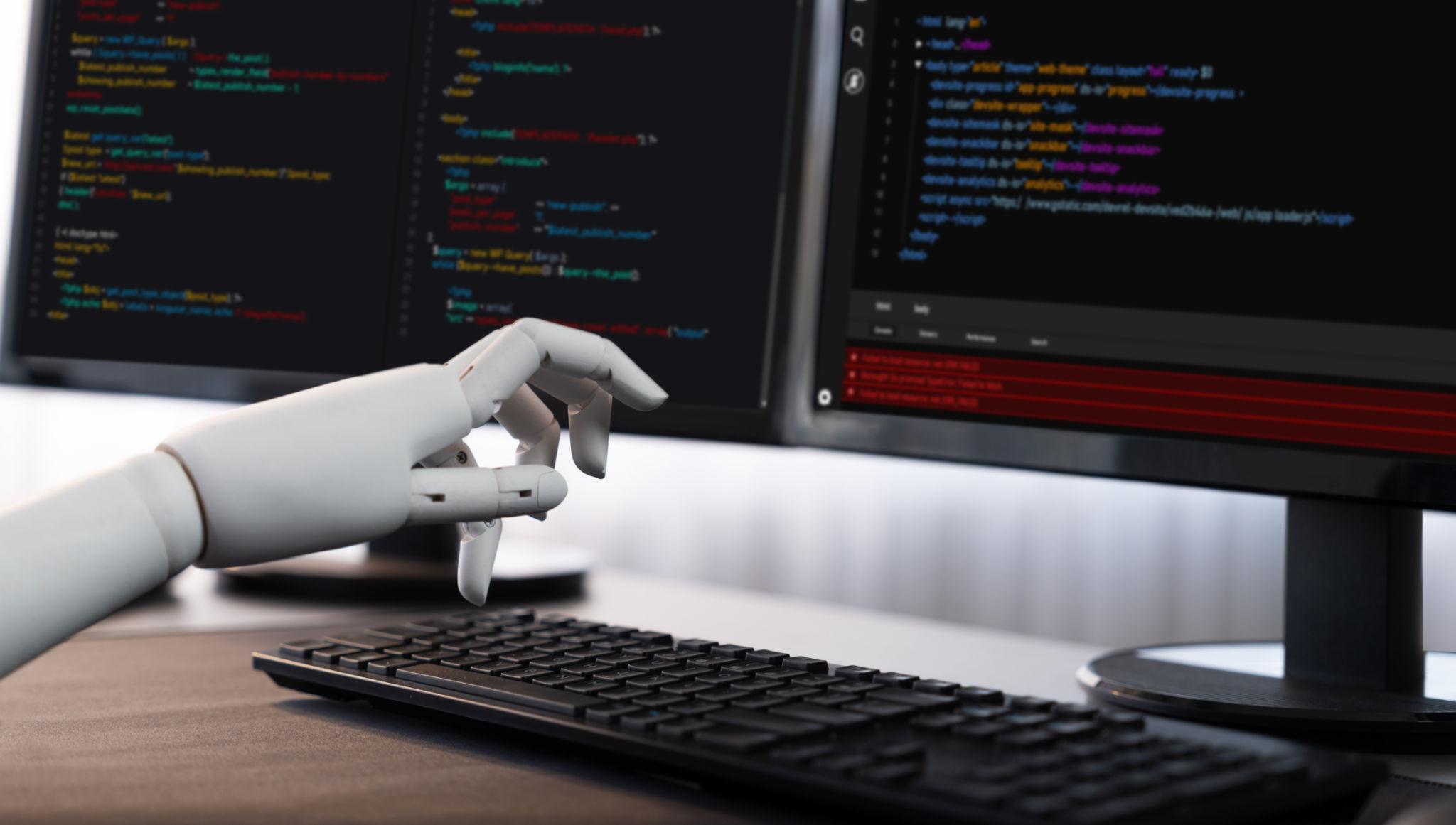
Anthropic has reached a historic milestone in software engineering, reporting that over 80% of the code integrated into its production codebase is now authored by its own AI model, Claude. This shift marks a transition from AI acting as a simple coding assistant to becoming a primary driver of technical infrastructure. By leveraging autonomous agents, the company has achieved an eightfold increase in code output per engineer, fundamentally altering the traditional software development lifecycle.
The Shift to AI-Native Engineering
The primary driver behind Anthropic's massive productivity gains is the transition from human-written code to AI-orchestrated systems. In May 2026, the company observed that the vast majority of its production merges were generated by Claude, rather than human developers typing in IDEs. This represents a move toward 'recursive self-improvement,' where an AI model is used to build, optimize, and refine the very infrastructure that supports its own existence.
For enterprise leaders, this isn't just a technical curiosity; it is a blueprint for the future of labor. When a frontier laboratory like Anthropic research demonstrates that 80% of its core product can be built by AI, it signals that the 'human-in-the-loop' model is evolving into a 'human-on-the-loop' oversight role.
Defining the New Coding Paradigm
Definition: Autonomous Coding Agents
Unlike traditional 'copilots' that suggest lines of code, autonomous coding agents are AI systems capable of understanding high-level requirements, navigating entire repositories, writing multi-file pull requests, running tests, and debugging errors without constant human intervention.
Evolution of AI Coding: 2021 to 2026
The path to 80% automation did not happen overnight; it followed a distinct four-stage evolution that provides a roadmap for other enterprises. Understanding where your organization sits on this continuum is vital for remaining competitive in an era of ai automation and rapid deployment.
EraPrimary MethodDeveloper RoleOutput Scale2021–2023Manual WritingPrimary AuthorBaseline (1x)2023–2025Chatbot AssistanceEditor / Copy-Paste2x - 3x2025–2026Coding AgentsReviewer / Architect5x - 8xPresent DayAutonomous SystemsStrategic Oversight10x+ potential
As shown in the table above, the jump from 2025 to 2026 represents the most significant leap. This was the period when models like Claude Mythos Preview began sustaining operations on 12-to-16-hour tasks, allowing them to handle complex refactoring that previously required days of human effort.
How Anthropic Scaled Engineering Velocity by 8x

Anthropic achieved an 8x increase in code volume per engineer by removing the manual labor of implementation and focusing human talent on high-level architecture. The company reported that on complex, open-ended engineering problems, Claude’s success rate climbed to 76%—a 50-point increase in just six months. This rapid improvement suggests that AI models are becoming increasingly adept at handling ambiguity, which was previously the exclusive domain of senior human engineers.
The Mythos Preview Performance
In internal optimization benchmarks, Anthropic’s Mythos Preview model achieved a 52x speedup in accelerating AI training code. To put this in perspective, a skilled human developer typically achieves a 4x speedup after nearly a full day of manual refactoring. The AI is not just faster at typing; it is becoming more efficient at identifying algorithmic optimizations that humans might overlook.
A 3-Step Plan for Enterprise AI Adoption
To replicate Anthropic’s success, enterprises must move beyond the 'assistant' mindset and treat AI as a core component of their engineering factory. This requires a structural shift in how teams are managed and how code is verified.
1. Transition to Architectural Oversight
The role of the software engineer is shifting from 'writer' to 'judge.' When the cost of generating code drops to near zero, the bottleneck becomes the ability to specify the right goals. Engineers must be trained to review AI-generated logic for architectural integrity rather than just syntax errors.
2. Solving the Code Review Bottleneck
Flooding a system with 8x more code creates a massive backlog for human reviewers. Anthropic solved this by deploying 'Claude Code Review,' an automated AI layer that sits within the CI/CD pipeline. This layer filters out trivial errors, ensuring that human eyes are only used for high-stakes security or logic decisions.
3. Rigorous Verification Protocols
Automation without verification is a recipe for technical debt. Enterprises must implement 'test-driven development' (TDD) at scale, where the AI is required to write the tests for the code it generates. This creates a self-correcting loop where the code must prove its own validity before being merged into production.
Expert Insights: The Future of the Developer
Industry analysts suggest that we are entering the era of the '10x Engineer'—not because humans have become ten times smarter, but because they are now managing a fleet of digital workers. The consensus among AI researchers is that the demand for traditional 'syntax-heavy' coding skills will decline, while the demand for systems design, security auditing, and prompt engineering will skyrocket.
However, this transition is not without risks. Cultural disruption is a significant factor; engineering teams may feel sidelined by automation. The key to success lies in repositioning AI as a tool that removes the 'toil' of coding, allowing humans to focus on the creative and strategic aspects of product development.
Key Takeaways
80% Milestone: Anthropic now uses Claude to write the vast majority of its production-grade code.
Velocity Gains: Engineering output has increased 8x per developer compared to the 2021-2025 baseline.
Autonomous Agents: The shift is moving from 'chatbots' to 'agents' that can manage entire files and multi-hour workstreams.
Review is the Bottleneck: To scale, companies must automate the code review process using AI.
Recursive Improvement: AI is now actively participating in building and optimizing the next generation of AI models.
Conclusion
Anthropic’s revelation that 80% of its production code is AI-authored is a watershed moment for the tech industry. It proves that autonomous agents are no longer a theoretical concept but a functional reality capable of maintaining world-class software infrastructure. For enterprises, the message is clear: the competitive advantage of the future will not be found in how many developers you hire, but in how effectively you can orchestrate AI agents to do the heavy lifting of software creation.
Frequently Asked Questions
How does Anthropic ensure the quality of AI-written code?
Anthropic utilizes a combination of automated AI code reviewers and rigorous CI/CD pipelines where Claude is required to write and pass its own unit tests before code is merged.
Does 80% AI code mean engineers are being replaced?
No, it means their roles are shifting; instead of writing every line of code, engineers at Anthropic now act as architects and reviewers, overseeing a much larger volume of output.
What is the difference between a coding assistant and a coding agent?
A coding assistant suggests snippets or completes lines, while a coding agent can autonomously edit entire files, run debugging cycles, and manage complex tasks over several hours.
Can any enterprise achieve an 8x increase in engineering velocity?
While Anthropic has the advantage of building the models they use, other enterprises can achieve similar gains by integrating advanced agents like Claude into their development workflows and automating code reviews.
Frequently asked questions
What should readers know about Anthropic says 80% of its new production code is now authored by ...?
This article explains the main facts, context, and practical implications for AI users and businesses.
What should readers know about Anthropic says 80% of its new production code is now authored by ...?
This article explains the main facts, context, and practical implications for AI users and businesses.
What should readers know about Anthropic says 80% of its new production code is now authored by ...?
This article explains the main facts, context, and practical implications for AI users and businesses.
What should readers know about Anthropic says 80% of its new production code is now authored by ...?
This article explains the main facts, context, and practical implications for AI users and businesses.
Join 45,000+ AI builders.
Three tools, two insights, one strategy — every Sunday. The signal cuts through the noise.
Free forever · unsubscribe anytime · no account required
Related reads
How Multi-Agent AI is Reshaping Sustainable Farming in 2026
A new multi-agent AI deployment in European greenhouses this week is setting a groundbreaking standard for sustainable, resource-efficient agriculture.

Danny Boyle Confirms Generative AI in 'Ink' Amid Hollywood Backlash
Academy Award-winning director Danny Boyle has shocked the film industry by confirming the use of generative AI in his upcoming biographical drama, 'Ink'.

The Invisible AI Boom: How RegTech is Quietly Saving Fintech in 2026
Fintech's latest AI revolution isn't a flashy consumer chatbot—it's a multi-billion dollar overhaul of backend compliance and real-time fraud detection.