

China's Microdrama Boom: How AI is Reshaping Film in 2026
Seemingly overnight, new generative video tools have taken over China's booming microdrama sector, transforming everything from post-production to script evaluation.

In the past few days, a massive shift has materialized in one of the world's most voracious entertainment sectors. While Hollywood continues to wrestle with the ethical implications of artificial intelligence, the Asian market has aggressively pivoted toward adoption. Seemingly overnight, new AI-video generation tools have completely saturated the microdrama market, establishing a new baseline for how digital content is conceived, shot, and edited in late August 2026.
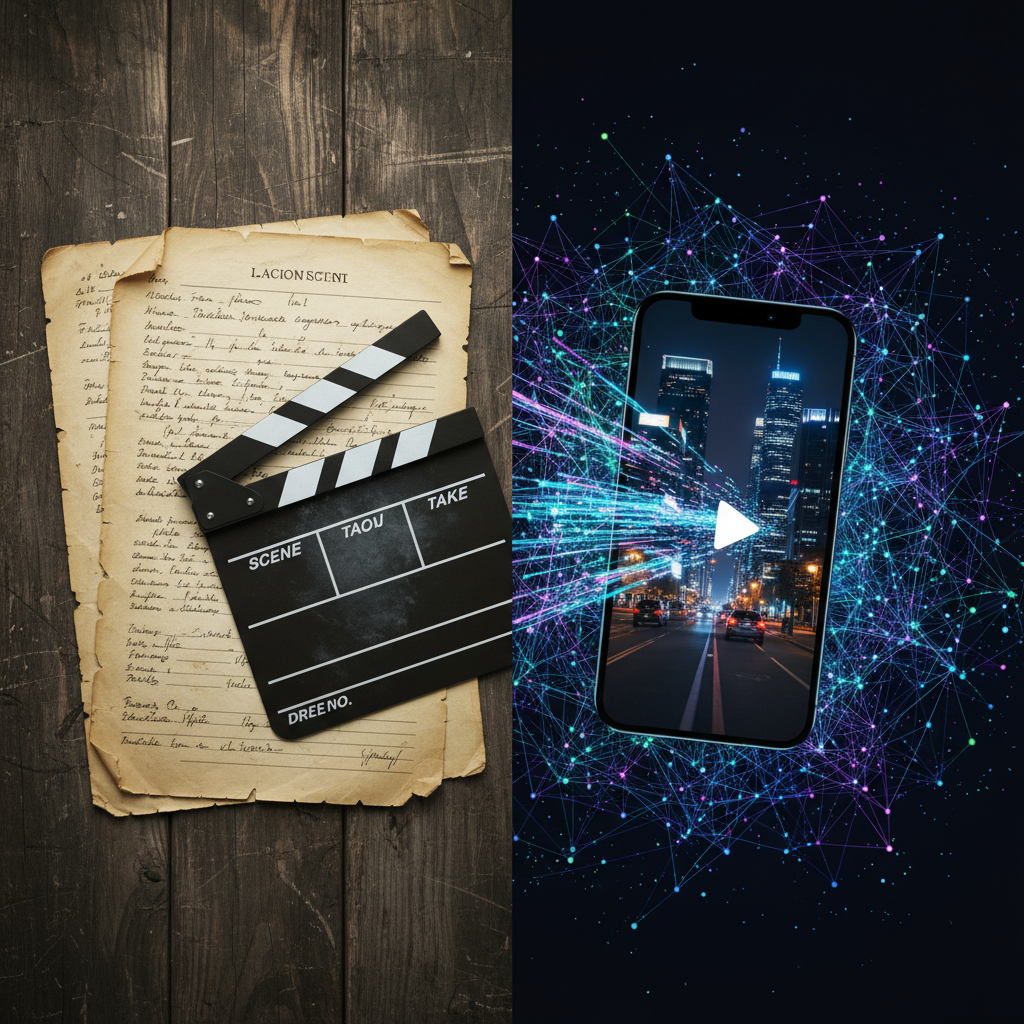
The integration of advanced generative tools is no longer a fringe experiment; it has become a fundamental production standard. According to recent coverage this week, AI is rapidly reshaping China's film industry, taking over everything from the generation of epic battle scenes to post-production and script evaluation. By radically boosting efficiency and expanding visual capabilities, these tools are redefining the economics of mobile-first entertainment.
The Anatomy of a Microdrama
To understand the sheer scale of this AI integration, one must first understand the microdrama format. These are ultra-short, vertically shot soap operas designed exclusively for mobile consumption. A single episode typically lasts between one and two minutes, with a complete series spanning up to 100 episodes. The narratives are famously fast-paced, leaning heavily into melodrama, billionaire romances, time-travel revenge plots, and martial arts epics.
Because viewer retention is measured in seconds, microdramas require a "hook" or cliffhanger in nearly every minute of footage. Historically, producing these series was a grueling physical endeavor. Crews in Hengdian World Studios—often dubbed "China's Hollywood"—would churn out entire 100-episode seasons in under a week, working 18-hour days. Now, generative AI has entirely disrupted that grueling physical pipeline, shifting the heavy lifting from human crews to massive GPU clusters.
From Script Evaluation to Epic Battles
The latest wave of domestic AI video models deployed this week has introduced capabilities that directly address the bottlenecks of microdrama production. The transformation occurs across three distinct pillars of the creative process:
- Predictive Script Evaluation: Before a single frame is shot, large language models are used to evaluate scripts. These specialized AI tools parse dialogue and stage directions, scoring the script's pacing and emotional volatility. If the AI determines that a script lacks a sufficient emotional hook within the first 15 seconds, it automatically suggests structural rewrites to maximize viewer retention.
- Generative Pre-Visualization and B-Roll: Directors are now using text-to-video tools to instantly generate storyboards and environmental establishing shots. Instead of sending a B-unit crew to capture aerial drone footage of a sweeping metropolis or a historical palace, production assistants simply prompt the AI. The resulting hyper-realistic clips are instantly dropped into the editor's timeline.
- Generating Epic Battle Scenes: The most resource-intensive aspect of historical microdramas has always been extras and visual effects. Now, utilizing sophisticated temporal consistency features in models like Kling and Vidu, studios are generating massive, epic battle scenes entirely via prompt. What would have previously required hundreds of background actors, intricate choreography, and expensive wirework is now rendered overnight at a fraction of the cost.
The Economic Reality and Creator Backlash
The financial incentives driving this overnight adoption are staggering. The budget for a standard microdrama traditionally hovered around $40,000 to $60,000. By supplementing physical shoots with AI-generated environments, digital extras, and automated post-production, studios are slashing those budgets by more than half while simultaneously increasing the visual scope of their stories.
However, this ruthless efficiency has sparked intense anxiety among traditional craftspeople. Set decorators, background actors, and junior VFX artists are finding their skill sets rapidly devalued. Unlike the highly unionized landscape of Western film industries, the microdrama sector operates with minimal friction, allowing studios to replace human labor with algorithmic output with little to no regulatory pushback. The sentiment among many displaced workers mirrors the global unease felt across the broader creative economy.
Global Parallels: Music and Western Media
This aggressive automation of video production in Asia presents a striking contrast to how other creative sectors are handling the AI revolution. While Western industries are currently embroiled in existential and legal battles—most notably the fierce copyright disputes surrounding AI music platforms—the Chinese film market has taken a highly pragmatic, profit-driven approach. The focus is entirely on output volume and viewer engagement metrics.
The success of AI in microdramas is also serving as a compelling proof-of-concept for larger streaming platforms globally. If AI-generated visual effects and pacing models can successfully retain the attention of millions of daily active users on mobile devices, it is only a matter of time before these same regional tools begin bleeding into premium television and feature films worldwide.
Sovereignty and the New Digital Borders
Another crucial element of this week's developments is the reliance on localized technology. Due to complex geopolitical export controls and the intense competition for compute power, China's entertainment sector is running entirely on homegrown foundational models. This regionalization of creative tools highlights a broader geopolitical trend.
Much like Europe's recent legislative push for digital independence in AI, China is ensuring its cultural export engine remains entirely self-sufficient. Domestic AI firms have explicitly fine-tuned their video models on localized cultural aesthetics, historical costumes, and specific martial arts movements, creating a specialized toolset that Western models currently struggle to replicate with the same degree of cultural accuracy.
Looking Ahead
As we move through late 2026, the microdrama boom serves as the perfect crucible for generative AI in media. It is an industry where speed, cost, and immediate audience feedback trump traditional cinematic artistry. The tools that are currently generating ten-second battle scenes for a mobile soap opera today are aggressively learning and scaling. By standardizing these AI workflows, China's film industry is not just cutting costs; they are actively training the next generation of algorithmic filmmakers.
Frequently asked questions
What is a microdrama?
A microdrama is an ultra-short, vertically shot video series designed specifically for mobile devices. Episodes typically last 1-2 minutes, and a single storyline can span up to 100 episodes, focusing on fast-paced, highly emotional plots.
How is generative AI being used in the film industry?
AI is being used to evaluate scripts for emotional pacing, generate hyper-realistic B-roll and establishing shots, automate complex post-production editing, and even generate massive VFX sequences like epic battle scenes without the need for physical extras.
Are AI tools replacing human actors in microdramas?
While principal human actors are still central to delivering the emotional core of these dramas, AI tools are rapidly replacing background extras, stunt doubles in wide shots, and traditional VFX artists, leading to significant workforce shifts.
Why are domestic AI tools dominating the Chinese market?
Due to geopolitical export restrictions and a desire for cultural accuracy, Chinese studios rely on domestic models like Kling and Vidu, which have been specifically trained on local historical aesthetics, martial arts choreography, and regional narrative tropes.
Join 45,000+ AI builders.
Three tools, two insights, one strategy — every Sunday. The signal cuts through the noise.
Free forever · unsubscribe anytime · no account required
Related reads

How AI is Helping Patients Solve Rare Medical Mysteries
Patients and doctors are increasingly turning to advanced AI models to diagnose rare diseases, transforming how the medical community solves complex health cases.
Bot-to-Bot Retail: How AI Agents Are Taking Over E-Commerce
A new industry report released this week reveals that autonomous AI agents are rapidly transforming digital payments and e-commerce operations.

Inside Iceland's Public Sector AI Education Rollout
This week's dispatches from Iceland reveal how a grassroots, volunteer-driven government AI pilot is quietly transforming the nation's public education system.