

Inside Anthropic's Mission to Map the AI Brain
Anthropic's researchers aren't just building AI; they're acting as digital neuroscientists to finally decode the "black box" of large language models.
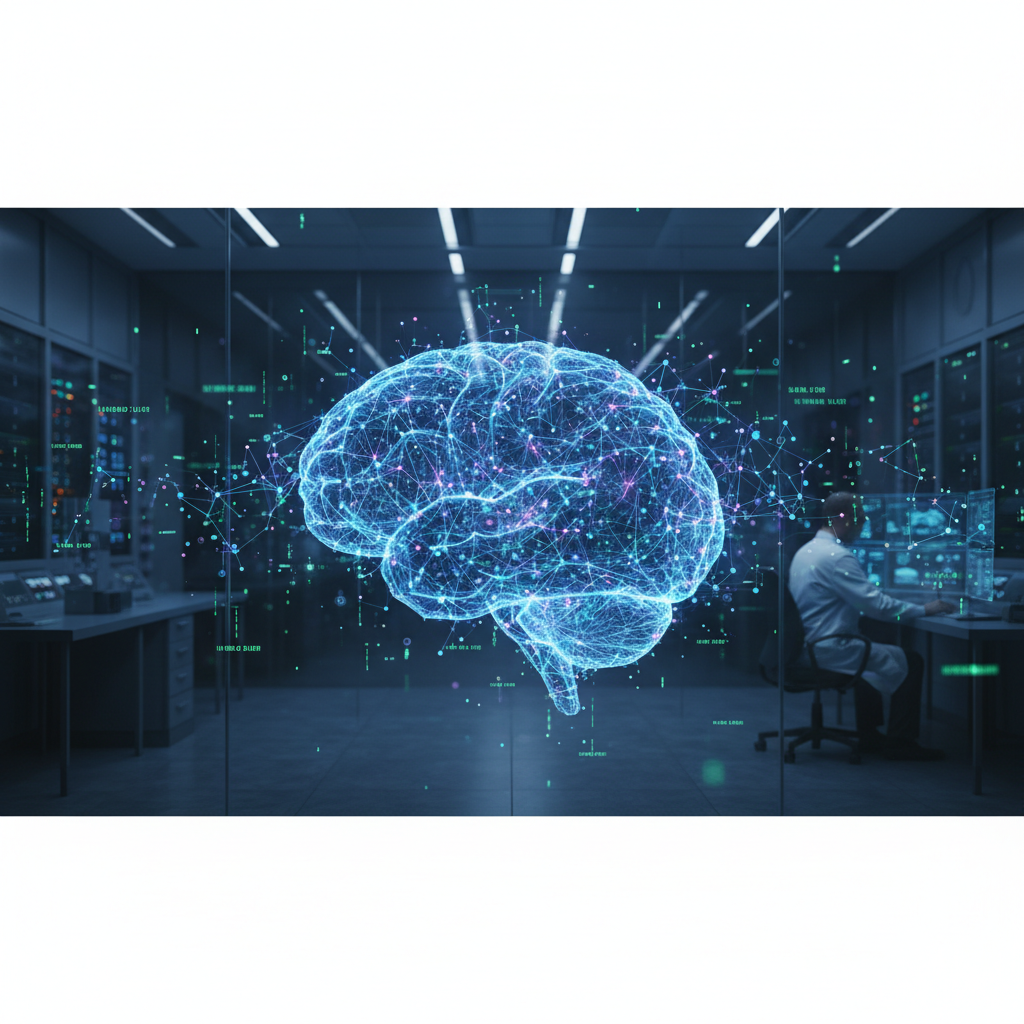
For all the breathtaking capabilities of modern artificial intelligence, a quietly terrifying reality has haunted the field since the deep learning revolution began: we do not truly know how these models work. Like an alien technology that crashed to Earth, large language models yield impressive results, but their internal mechanisms remain fiercely opaque. For years, the AI industry has treated these systems as 'black boxes.' Engineers pour massive amounts of data and compute in, and remarkably coherent text comes out.
But inside the San Francisco headquarters of Anthropic, a specialized team of researchers is attempting to crack the box wide open. Through a burgeoning subfield known as mechanistic interpretability, these scientists are moving beyond simply measuring what an AI model says, and are instead mapping the literal "thoughts" racing through its artificial neural pathways.
The Digital Neuroscientists
To understand the unprecedented nature of this work, one must first recognize the sheer scale of modern AI. Trillions of parameters act as artificial synapses, firing in complex, multidimensional patterns that human minds cannot easily visualize. In the high-stakes race toward artificial general intelligence, most companies have prioritized scaling compute and chasing raw intelligence over understanding the minutiae of model behavior.
Anthropic's approach represents a radical departure. The philosophy is simple yet monumental: before we hand the keys of critical infrastructure over to autonomous systems, we must have a chemical-level understanding of how those systems process information. We need an atlas of the artificial brain.
"We are treating artificial neural networks the way early biologists treated the human brain," explains a sentiment shared widely by the mechanistic interpretability team. "You cannot simply look at a brain scan and instantly understand language or memory. You have to isolate neurons, track their firing conditions, and map the clusters. We are doing exactly that, but with math instead of gray matter."
The Golden Gate Breakthrough
The monumental breakthrough in this mission arrived when the Anthropic research team successfully completed the monumental task of extracting interpretable features from their production-grade model, Claude 3 Sonnet. Until recently, researchers couldn't isolate specific concepts in large models because of "superposition"—a phenomenon where a single artificial neuron does not just represent one concept, but fractions of many different concepts simultaneously.
To solve this, the team deployed a technique utilizing "sparse autoencoders." This methodology effectively untangled the heavily compressed data inside Claude's neural network, mapping it out into millions of distinct, understandable concepts. They found the "features" representing everything from abstract mathematical concepts to specific geographic locations.
To prove their map actually corresponded to the AI's internal reasoning, the team conducted a fascinating, slightly surreal experiment. They isolated the specific feature within Claude that corresponded to the Golden Gate Bridge. In normal conversation, this "neuron" would only fire when San Francisco architecture was mentioned. But the researchers artificially dialed up the activation of this specific feature, forcing it into a persistent "on" state.

The result was the now-famous "Golden Gate Claude." No matter what prompt the modified model was given, it obsessively steered the conversation back to the iconic suspension bridge. Ask it about quantum physics, and it would relate string theory to the bridge's cables. Ask it for a recipe, and it would suggest a foggy San Francisco stew enjoyed while gazing out at the Golden Gate.
"It is a striking demonstration of control," one interpretability researcher noted following the release of the paper. "By identifying the exact location of a concept, we didn't train the model to be obsessed with the bridge. We simply flipped a switch inside its existing architecture. We proved that understanding the model’s internal state grants us precise, surgical control over its behavior."
Rewriting the Rules of AI Safety
While making an AI hopelessly fixated on a California landmark is humorous, the underlying implications of the sparse autoencoder breakthrough are monumental for global AI safety. If researchers can locate the concept of a famous bridge, they can also locate the concepts of deception, sycophancy, bias, and malicious code generation.
The threat landscape surrounding generative AI models is rapidly evolving. Cybersecurity professionals are seeing constant attempts to manipulate models through prompt injections and natural language cyberattacks. Defending against these threats has historically relied on external guardrails—essentially 'babysitting' software that checks the AI's output before the user sees it. But external guardrails can be bypassed.
Mechanistic interpretability offers a far more robust solution: internal behavioral modification. If scientists can map the precise neural pathways that activate when a model decides to be deceitful, or when it processes a malicious jailbreak attempt, they can theoretically install "circuit breakers" deep within the model's architecture. Instead of slapping a filter onto the final output, they can structurally inhibit the model's ability to even conceptualize the harmful action.
- Eradicating Bias: By pinpointing where harmful stereotypes live in the dimensional space of the model, engineers can selectively amputate those features without degrading the model's overall intelligence.
- Preventing Deception: Researchers have already identified distinct features that fire when a model knows it is providing a false answer versus a truthful one, paving the way for inherently honest systems.
- Stopping Hallucinations: Mapping fact-retrieval circuits could allow systems to accurately self-report their own uncertainty, virtually eliminating confident hallucinations.
The Monumental Task Ahead
Despite this massive leap forward, the interpretability team at Anthropic is quick to emphasize that this is merely the prologue. Mapping Claude 3 Sonnet is akin to mapping a small island; the broader continent of the most cutting-edge models remains vast and uncharted.
The computational cost of running these sparse autoencoders is staggering. To fully map a model the size of Claude 3 Opus or the upcoming generation of frontier models would require compute resources rivaling the original training run of the model itself. The industry is currently facing a delicate economic question: are companies willing to spend millions of dollars in compute not to make a model smarter, but simply to understand how it is already operating?
For Anthropic, the answer is an unequivocal yes. Their research signals a necessary phase shift in artificial intelligence development. As AI systems are integrated into medical diagnoses, autonomous defense systems, and global financial networks, the black-box era must end. Through the meticulous, rigorous work of mechanistic interpretability, we are finally moving beyond the alchemy of data-scaling, entering the true science of artificial cognition.
Frequently asked questions
What is mechanistic interpretability in AI?
Mechanistic interpretability is a subfield of AI research focused on understanding the internal structures and decision-making processes of neural networks. Instead of treating AI as a 'black box,' researchers attempt to map how specific artificial neurons correspond to human-understandable concepts.
What was the 'Golden Gate Claude' experiment?
Anthropic researchers used an algorithm to find the specific cluster of artificial neurons in Claude 3 that represented the Golden Gate Bridge. By artificially turning this feature 'on,' the AI became obsessed with the bridge, mentioning it in response to almost any prompt, proving researchers can manipulate AI behavior at a structural level.
How does mapping an AI's brain improve safety?
By identifying where dangerous or undesirable concepts (like deception, bias, or malicious code generation) live inside an AI model's architecture, scientists can monitor or disable those specific pathways, making the AI inherently safer rather than relying on external content filters.
What are sparse autoencoders?
Sparse autoencoders are machine learning algorithms used to untangle the compressed data inside a large language model. They help break down complex, over-lapping neural activity into distinct, single concepts that humans can easily interpret.
Join 45,000+ AI builders.
Three tools, two insights, one strategy — every Sunday. The signal cuts through the noise.
Free forever · unsubscribe anytime · no account required
Related reads

Meta Launches Muse Glimmer: The Next Era of Open-Weight AI
Meta has disrupted the AI ecosystem this week with the launch of Muse Glimmer, a powerful open-weight model optimized entirely for consumer hardware.

Intelligent Navigator: New AI Triage Tool Hits 97.7% Accuracy in Patient Portals
A newly deployed AI tool called Intelligent Navigator is quietly revolutionizing frontline healthcare, identifying urgent patient messages with 97.7% accuracy.
Dreaming: OpenAI Gives ChatGPT Better Memory for More Personalized Conversations
OpenAI has unveiled Dreaming, a new memory system designed to make ChatGPT more personalized, helpful, and context-aware. Learn how the upgrade works and what it means for users.