

Africa's AI Boom: The 2,400 Startups Reshaping Local Tech in 2026
A new framework released this week highlights the massive scale of Africa's AI ecosystem, which has quietly surpassed 2,400 active startups in 2026.

In the first week of September 2026, the narrative surrounding global artificial intelligence is officially shifting southward. For the past three years, the AI discourse has been dominated by Silicon Valley boardroom drama and European regulatory hurdles. However, an explosive new report published in late August reveals that the African continent has quietly built one of the most vibrant, specialized AI ecosystems on the planet. Instead of engaging in a costly compute war to build generic, one-size-fits-all conversational chatbots, African tech hubs are rapidly deploying hyper-localized AI tools designed to solve systemic regional challenges in finance, agriculture, and healthcare.
This week, the tech community is buzzing over a comprehensive new developer framework introduced by ecosystem leaders that fundamentally redefines what it takes to launch successful machine learning products on the continent. Addressing infrastructure bottlenecks, bandwidth limitations, and linguistic diversity, the new guidelines highlight a striking milestone: Africa is now home to an unprecedented wave of localized innovation.
The 2,400-Startup Milestone
The sheer scale of this technological awakening is staggering. Just six days ago, an in-depth ecosystem analysis highlighted exactly what founders need to build AI solutions tailored for the continent's unique infrastructural landscape. Spearheaded by insights from Saheed Azeez and other prominent tech founders, the data reveals that there are now over 2,400 AI-focused firms actively operating across Africa.
The geographical distribution of these startups underscores the continent's major tech powerhouses. South Africa currently leads the charge with 726 AI firms, largely driven by its mature enterprise cloud infrastructure and robust financial sector. Nigeria follows closely with 456 startups, a number heavily buoyed by its internationally recognized fintech unicorn ecosystem. Kenya, long celebrated as the "Silicon Savannah," ranks third with 204 dedicated AI firms, heavily focused on agritech, mobile-first payment integrations, and renewable energy management. Other nations, including Egypt and Rwanda, are also rapidly scaling their domestic capabilities, fueled by government-backed digitalization initiatives.
Designing for the African User
What sets the African AI boom apart from its Western counterpart is the intentionality of the product design. Western AI products frequently assume the end-user has access to unlimited high-speed broadband, the latest smartphone hardware, and a primary fluency in English. In contrast, this week's newly published frameworks emphasize "frugal innovation"—deploying cutting-edge machine learning through low-bandwidth channels.
Many of the most successful AI applications launching in Nigeria and Kenya this year do not rely on heavy web-based graphical interfaces. Instead, they operate through USSD codes, WhatsApp chatbots, and voice-activated systems. By integrating advanced natural language processing into legacy mobile networks, these startups are delivering sophisticated AI services to rural populations using 2G and 3G feature phones.
Conquering the Language Barrier
One of the most persistent hurdles in global AI adoption has been linguistic bias. The vast majority of foundational models are trained on English-heavy datasets, severely limiting their utility in a continent that boasts over 2,000 distinct languages. However, the ecosystem has reached a critical turning point in the latter half of 2026.
Rather than waiting for Western tech giants to localize their models, African developers are taking matters into their own hands. The recent deployment of a highly anticipated open-weight AI model that natively supports 60 African languages—including Swahili, Yoruba, Amharic, and Zulu—has democratized access to natural language processing. This breakthrough allows local startups to build automated health triage systems and customer service bots that speak the mother tongues of their users, bridging the digital divide for millions of previously unconnected citizens.
Agritech and Fintech Lead the Charge
The practical application of these technologies is most evident in the agricultural and financial sectors, where AI is moving from a theoretical novelty to a critical economic engine. In fintech, Nigerian and South African startups are leveraging alternative data—such as mobile airtime purchasing patterns and utility bill payments—to train proprietary AI credit scoring models. This allows micro-lenders to issue instant, uncollateralized loans to unbanked individuals who lack a formal credit history.
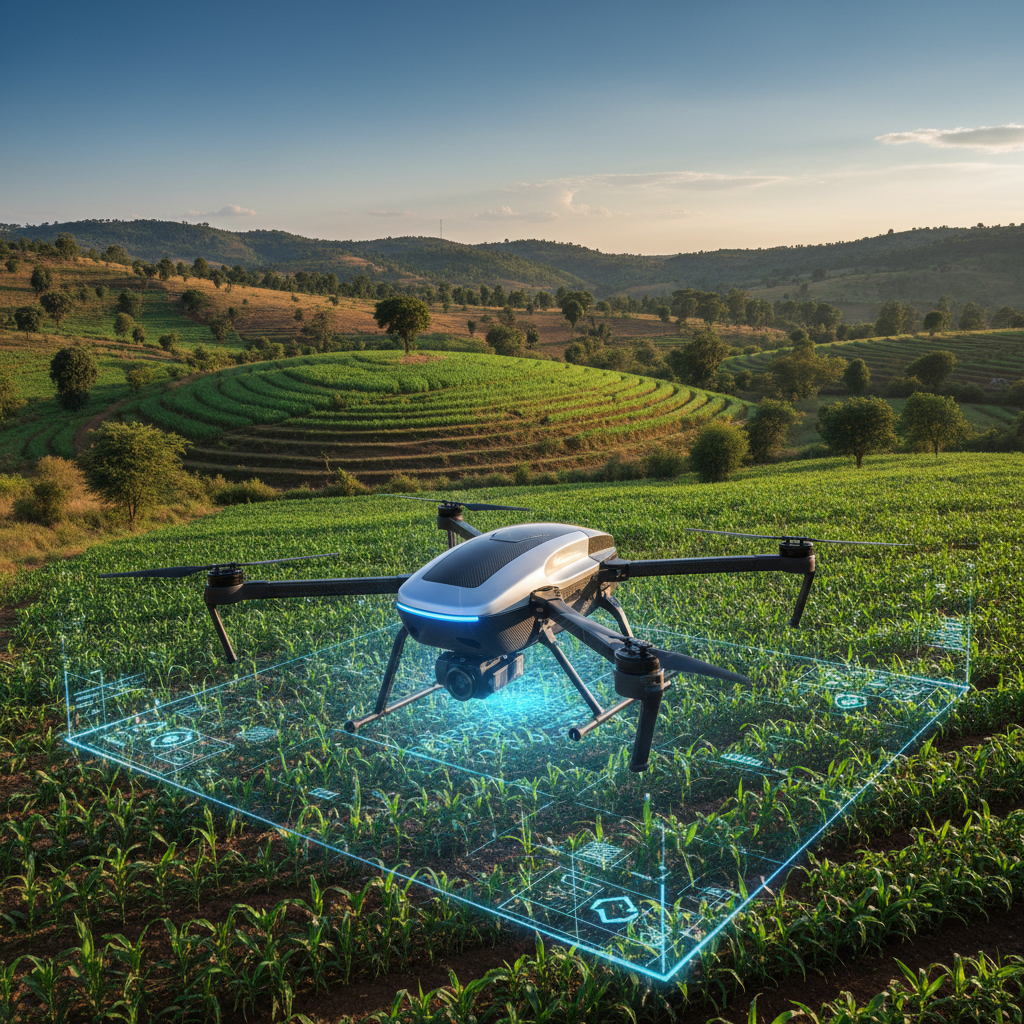
Meanwhile, in the agricultural sector, Kenyan and Rwandan startups are deploying computer vision and machine learning to combat climate volatility. Smallholder farmers are now utilizing SMS-based AI tools to diagnose crop diseases simply by uploading compressed photos from their feature phones. Furthermore, the integration of predictive climate modeling into local agritech platforms is allowing farmers to receive highly specific, localized planting schedules, significantly boosting crop yields and ensuring food security in the face of shifting weather patterns.
The Road to Sovereign Compute
Despite the meteoric rise of these 2,400 startups, significant challenges remain—chief among them being the high cost of cloud computing. The reliance on data centers located in Europe and North America introduces latency issues and drives up operational costs for African founders.
However, the narrative is changing. High-level discussions at recent tech summits in Lagos and Nairobi this week have pivoted toward the necessity of sovereign digital infrastructure. Ambitious blueprints are now circulating for the development of regional AI compute hubs by 2035, aiming to keep African data on African soil. As these infrastructure projects break ground, they will dramatically lower the barrier to entry for the next generation of founders.
As we look at the tech landscape in September 2026, it is abundantly clear that Africa is no longer just a consumer of global AI products. Thanks to a burgeoning ecosystem of highly specialized startups and visionary founders, the continent is actively writing its own playbook, proving that the most impactful artificial intelligence is the kind built specifically for the people using it.
Frequently asked questions
How many AI startups are currently operating in Africa?
As of late 2026, there are over 2,400 AI-focused firms across the continent. South Africa leads with 726 startups, followed by Nigeria with 456, and Kenya with 204.
What sectors are driving African AI adoption?
The most significant growth is occurring in fintech, agritech, and health tech. Startups are using AI for alternative credit scoring, predictive climate modeling for crop yields, and remote diagnostic tools.
How are African AI developers overcoming the language barrier?
Rather than relying solely on English-first models, developers are leveraging new open-weight AI models trained specifically on African languages, natively supporting dozens of regional dialects for better local accessibility.
What is 'frugal innovation' in the context of African AI?
Frugal innovation refers to designing high-tech solutions that work within local constraints, such as deploying advanced AI and machine learning tools via USSD codes and SMS, rather than requiring high-speed internet and expensive smartphones.
Join 45,000+ AI builders.
Three tools, two insights, one strategy — every Sunday. The signal cuts through the noise.
Free forever · unsubscribe anytime · no account required
Related reads

Nvidia Targets Perplexity in $30 Billion AI Search Megaround
Nvidia is reportedly weighing a massive new investment into AI search startup Perplexity, potentially valuing the Google challenger at over $30 billion.

Stripe's $8 Billion OpenRouter Bid Sparks AI Infrastructure Debate
Stripe is reportedly in talks to acquire AI model aggregator OpenRouter for $8 billion, sparking a fierce debate over the centralization of the AI API layer.

The "Vibe Coding" Backlash: Why AI Game Agents Are Sparking Creator Outrage
Venture capitalists are pouring millions into social "vibe coding" agents this week, but creators on platforms like Roblox are fighting back against an incoming flood of AI-generated games.