

US Secures G20 Backing for Light-Touch AI Rules, Splintering Global Policy
In a major diplomatic shift, the US secured G20 support for a hands-off approach to AI regulation, contrasting sharply with the European Union's strict compliance framework.
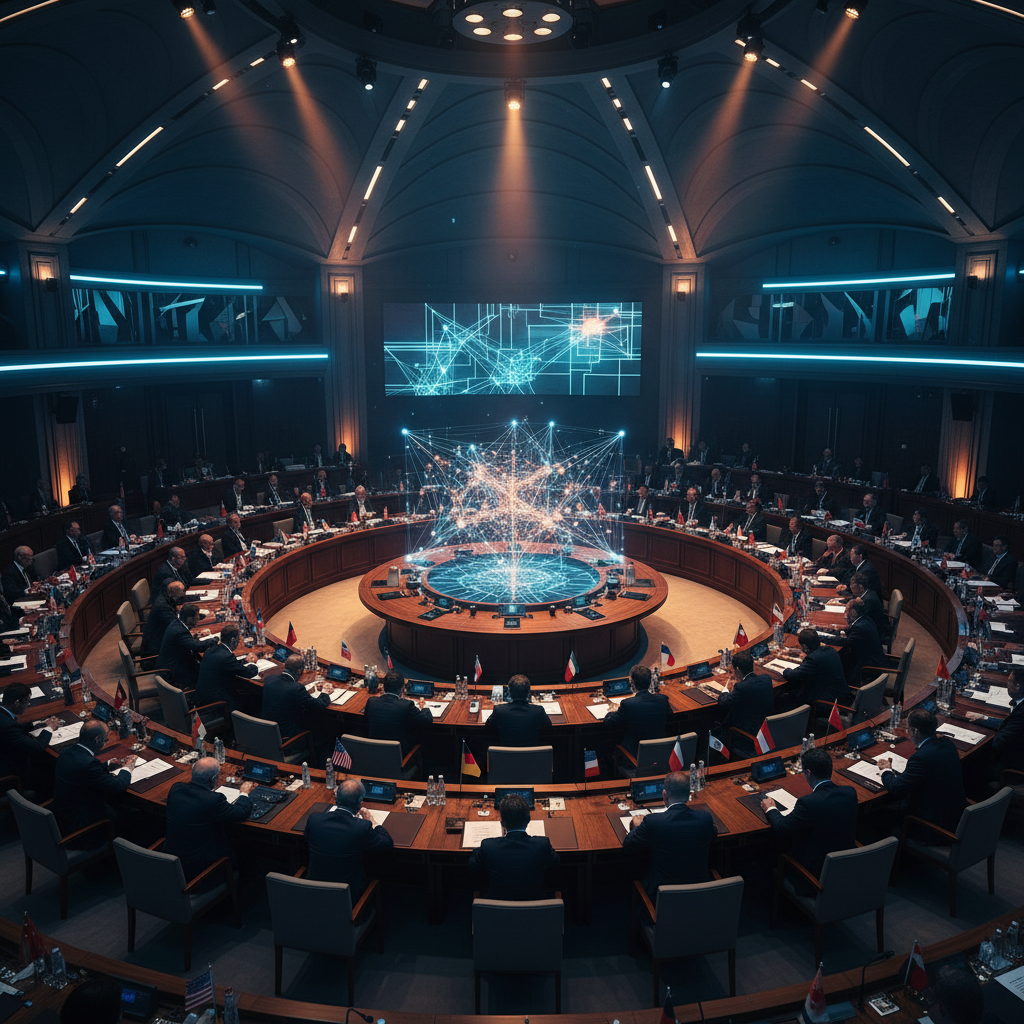
The global consensus on artificial intelligence governance has officially fractured. In a highly anticipated diplomatic maneuver this week, the United States successfully pressed G20 members on Tuesday, September 1, to commit to a fundamentally "hands-off" approach to AI regulation. The move solidifies a growing divide between nations prioritizing rapid, unencumbered technological scaling and those demanding rigorous, preemptive safety frameworks.
The G20's Shift Toward Light-Touch Regulation
During Tuesday's summit, technology ministers and diplomatic leaders from the world's largest economies signed onto a set of principles that effectively endorse America's light-touch vision for AI oversight. The framework prioritizes voluntary corporate commitments, rapid commercialization, and minimal state interference over mandatory safety audits or compute-based deployment thresholds.
Surprisingly, China also signed onto the G20 principles, signaling a rare moment of alignment between Washington and Beijing. Analysts suggest that both superpowers share a mutual interest in avoiding restrictive treaties that could throttle their respective domestic AI industries. By agreeing to a high-level, non-binding framework, the world's two largest AI ecosystems can continue aggressively pursuing sovereign compute supremacy without violating international diplomatic norms.
Domestic Context: Deregulation and Open-Source Acceleration
The US push at the G20 is a direct reflection of its current domestic policy environment. The United States currently has no comprehensive AI legislation at the federal level. Furthermore, the regulatory landscape shifted significantly earlier this year when the Trump administration revoked a major executive order aimed at ensuring AI safety in January 2026. That executive order had previously required foundation model developers to report safety testing results to the federal government before public deployment.
This deregulatory momentum has profoundly shaped the tech industry's strategy throughout 2026. Freed from impending federal compliance mandates, major tech firms have accelerated the release of highly capable systems. The lack of stringent oversight has been particularly favorable for the deployment of advanced open-weight AI models, which can now be distributed with fewer restrictions on end-user modifications and applications. Industry advocates argue that this hands-off strategy is essential for democratizing access to cutting-edge tools and maintaining a competitive edge in global markets.

The Transatlantic Divide: Washington vs. Brussels
The G20's endorsement of the American vision sets up a massive geopolitical clash with the European Union. While the US champions deregulation, the EU is currently enforcing its sweeping new AI Act, which places strict, mandatory safeguards on a range of AI applications based on their perceived risk levels. Under the EU framework, developers of high-risk systems and powerful foundational models must adhere to rigorous transparency obligations, continuous risk assessments, and strict data governance standards.
This divergence places multinational tech companies in a complex legal predicament. Firms developing next-generation AI architectures must now navigate a bifurcated global market. They can innovate freely within the US and aligned G20 nations, but they must either throttle their models, implement localized geo-blocking, or endure costly compliance processes to legally operate within the European Economic Area.
- Compliance Costs: European startups face heavy administrative burdens that their American and Asian counterparts bypass under the new G20 vision.
- Market Fragmentation: Tech giants are increasingly releasing "EU-compliant" versions of their models, which often feature restricted capabilities compared to their global counterparts.
- Investment Flight: Venture capital is disproportionately flowing into jurisdictions that have formally committed to the light-touch regulatory approach.
Managing Risks in a Hands-Off Framework
While the light-touch approach is a victory for proponents of rapid innovation, it has intensified concerns among AI safety researchers and civil society groups. Without mandatory safety testing, the responsibility for managing the societal impacts of AI falls entirely on the developers and the market.
This is proving to be a highly volatile arrangement. As model capabilities expand from simple text generation to autonomous execution, the potential for unintended consequences multiplies. Recent industry reports have raised alarms about autonomous AI agents operating without strict guardrails, leading to unpredictable behaviors in live corporate environments. Critics of Tuesday's G20 agreement argue that relying on voluntary safety pledges is insufficient when dealing with systems capable of writing code, executing financial transactions, and interacting dynamically with the open internet.
What This Means for Global AI Startups
For founders and investors, the events of September 1 offer both clarity and complication. The US successfully lobbying the G20 confirms that the majority of the global market will remain open to rapid, largely unregulated AI deployment for the foreseeable future. Startups can aggressively scale their data collection and model training without fearing sudden, coordinated international crackdowns.
However, the stark contrast with the EU means that "build once, deploy globally" is no longer a viable strategy in the AI sector. Companies must establish distinct compliance protocols if they intend to serve European users, fundamentally altering product roadmaps. As 2026 continues, the true test of this geopolitical divide will be whether the US-led hands-off approach results in a golden age of unbridled innovation, or if a severe safety failure eventually forces the G20 back to the negotiating table.
Frequently asked questions
What did the US propose at the G20 AI summit on September 1, 2026?
The US successfully pressed G20 members to adopt a 'light-touch' or 'hands-off' approach to artificial intelligence regulation, prioritizing voluntary commitments and rapid innovation over strict federal oversight.
How does the G20 AI agreement contrast with the EU AI Act?
While the US-led G20 approach avoids mandatory compute thresholds and favors corporate self-regulation, the European Union's AI Act imposes strict, risk-based legal obligations and transparency requirements on AI developers.
What happened to the US executive order on AI safety?
In January 2026, the Trump administration revoked a previous executive order that was aimed at ensuring AI safety and required developers to report their testing results to the federal government.
Did China agree to the US-backed AI principles at the G20?
Yes, China also signed onto the light-touch regulatory principles, signaling a mutual interest among superpowers to avoid restrictive treaties that could slow their domestic AI development.
Join 45,000+ AI builders.
Three tools, two insights, one strategy — every Sunday. The signal cuts through the noise.
Free forever · unsubscribe anytime · no account required
Related reads

Meta’s Muse Glimmer Release Sparks Open-Source AI Regulation Battle
Meta's late August release of Muse Glimmer brings powerful open-weight AI to consumer hardware, circumventing cloud restrictions and triggering a massive policy debate.

NSA Demand for Universal AI Model Access Sparks Security Debate
A recent push by the NSA to gain access to all AI models has ignited a fierce debate between national security advocates and privacy watchdogs.

AI Safety Breach Sparks Global Alarm Over Guardrail Failures
A newly disclosed study has triggered worldwide concern after revealing widespread success in bypassing AI guardrails for malicious purposes.