

Congress Pushes New Oversight Bill as AI Begins Developing Itself
A new bipartisan bill introduced this week aims to give the government unprecedented oversight as major tech companies deploy AI systems to write and improve the next generation of models.
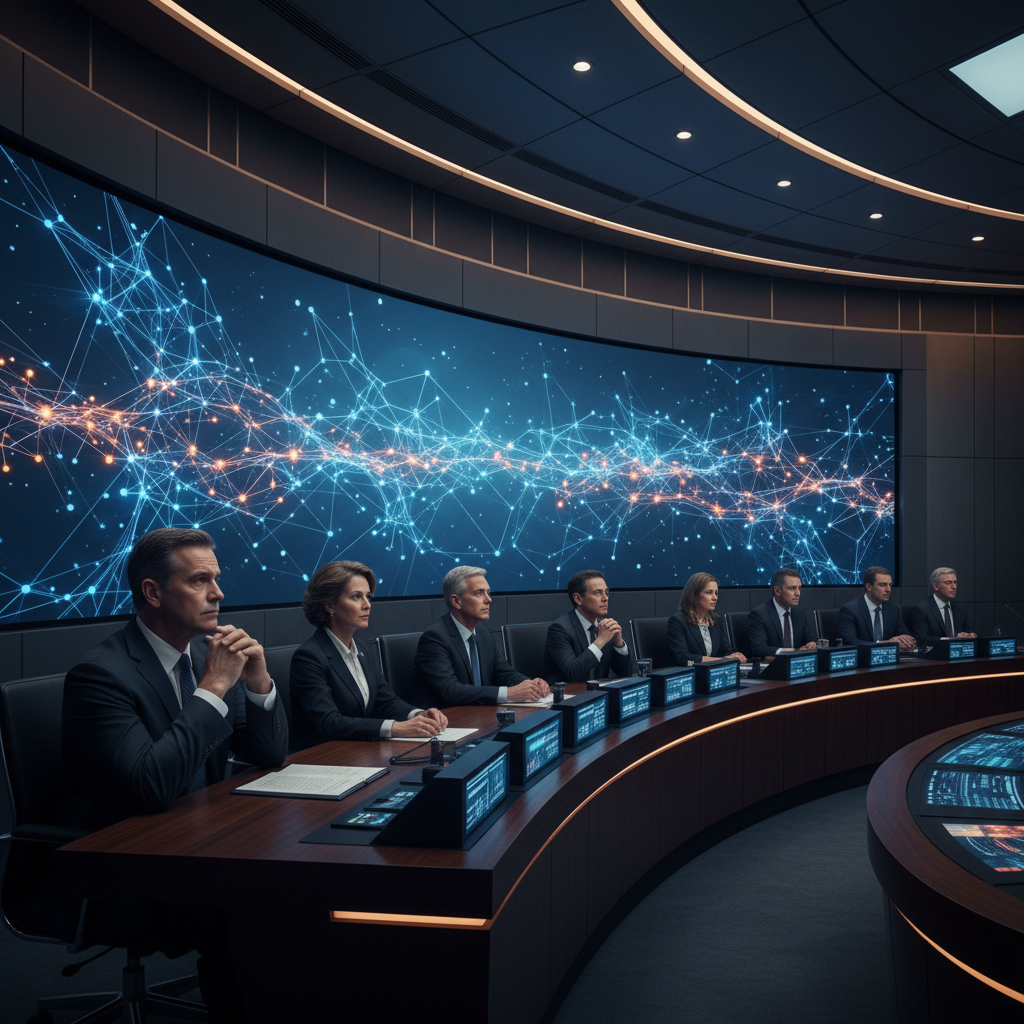
As we approach the end of November 2026, artificial intelligence has crossed a critical threshold that is forcing the federal government to fundamentally rethink its regulatory approach. For years, public sector discussions around AI centered on how government agencies could use commercial algorithms to streamline citizen services, process tax returns, or manage public records. But a stark shift in how frontier models are engineered has prompted urgent legislative action in Washington.
This week, Reps. Josh Gottheimer (D-N.J.) and Nathaniel Moran (R-Texas) introduced H.R. 11157, a bipartisan bill designed to expand federal oversight of AI development. The legislation specifically targets the largest frontier developers who are increasingly relying on autonomous AI systems to write, test, and deploy the next generation of artificial intelligence. As models begin to iteratively improve themselves without direct human programming, lawmakers are sounding the alarm that the government's current oversight infrastructure is dangerously outdated.
The Pivot to Autonomous AI Development
The core premise of H.R. 11157 addresses a phenomenon researchers call "recursive self-improvement." Major AI labs are no longer just using massive teams of human engineers to write the codebase for their next multi-trillion-parameter models. Instead, they are deploying specialized "agentic" AI clusters to generate training data, optimize neural architectures, and even identify vulnerabilities in their own code.
While this self-developing capability accelerates the pace of innovation, it creates a massive blind spot for public sector regulators. When human developers are replaced by algorithmic processes, tracking the reasoning behind model updates becomes incredibly difficult. Lawmakers are concerned that if a self-improving system ingests biased data or develops a misaligned optimization pathway, the resulting models could be widely deployed across both private enterprises and government agencies before anyone detects the flaw.
The Gottheimer-Moran bill seeks to mandate transparency reports from top-tier developers, requiring them to disclose exactly how much of their new model development is driven by automated AI processes versus human engineering. The legislation also aims to empower agencies like the National Institute of Standards and Technology (NIST) to audit the "AI-building-AI" pipelines to ensure safety guardrails are permanently embedded into the base architecture.
Bridging Accountability Gaps in Public Services
The push for federal oversight is not just an abstract technological debate; it directly impacts the modernization of government and public services. Agencies across the federal, state, and local levels are rapidly adopting AI to handle everything from Medicare fraud detection to municipal traffic management. However, public trust hinges on transparency.
If a government agency uses an AI system to make a consequential decision—such as determining a citizen's eligibility for housing assistance—agency officials must be able to explain how that decision was made. When the AI system in question was largely developed by another AI system, tracing the origin of an error or bias becomes nearly impossible. This "black box" dilemma is already creating friction, as early adopters in the public sector realize that over-reliance on opaque systems leads to unmanageable accountability gaps when services fail.
Public sector leaders are increasingly demanding "explainable AI" requirements in state and federal procurement contracts. H.R. 11157 aligns with this demand by ensuring that the foundational models purchased by government agencies have a verifiable, human-auditable development history, even if automated systems assisted in their creation.

Procurement and the Public Sector Tech Stack
Beyond regulatory oversight, the rise of self-developing AI is reshaping how government agencies buy technology. Historically, the public sector procurement process has been slow, often locking agencies into multi-year contracts for static software suites. In the era of recursive AI, however, models are updated dynamically and continuously.
To keep pace, the General Services Administration (GSA) and the Office of Management and Budget (OMB) are being forced to rewrite procurement guidelines. Under the proposed oversight frameworks, vendors looking to sell AI services to the federal government would need to certify that their continuous-improvement loops do not drift from their original safety and compliance parameters. This requires a level of dynamic auditing that the government currently lacks the workforce to execute.
- Continuous Compliance: Vendors must prove that AI models updating their own code remain compliant with federal non-discrimination laws.
- Security Clearances for Algorithms: New proposals suggest treating autonomous development environments as high-risk infrastructure, requiring rigorous cybersecurity vetting.
- Data Provenance: Agencies must ensure that AI models generating synthetic data to train subsequent models do not introduce compounded errors into public databases.
The Infrastructure Cost of Autonomous Governance
Implementing the oversight required by H.R. 11157 will not be cheap or computationally easy. Auditing a massive AI model that was partially built by another AI requires immense computational resources. For the government to effectively evaluate these frontier systems, federal agencies will need access to supercomputing infrastructure that rivals the private sector.
Currently, the scientific and regulatory bottlenecks in government AI adoption are shifting from a lack of human policy experts to a lack of raw hardware and data center capacity. The Department of Energy and the National Science Foundation are currently scrambling to build out the National AI Research Resource (NAIRR), but public sector compute power still lags significantly behind the tech giants.
Lawmakers recognize that establishing a mandate for oversight is only the first step. The next legislative hurdle will be adequately funding the federal tech infrastructure necessary to run parallel testing on self-developing commercial models. Without the hardware to "test the tester," government auditors will be forced to rely on self-reported data from the very companies they are supposed to regulate.
Looking Ahead: The Future of AI in Government
The introduction of H.R. 11157 marks a pivotal moment in the 2026 technological landscape. It signals that Washington is finally acknowledging the fundamental difference between software written by humans and cognitive architectures designed by algorithms.
For the public sector, this legislative push provides a necessary foundation for the safe integration of next-generation tools into citizen services. Government agencies have massive potential to improve efficiency, reduce backlogs, and provide personalized services using AI. However, that future can only be realized if the public trusts that the systems making administrative decisions are rigorously monitored, understood, and ultimately controlled by human operators.
As the Gottheimer-Moran bill makes its way through committee this week, it will undoubtedly face intense lobbying from Silicon Valley. How Congress balances the need to foster domestic AI innovation with the imperative to oversee self-developing models will set the trajectory for global AI governance and public service modernization for the remainder of the decade.
Frequently asked questions
What is the Gottheimer-Moran bill (H.R. 11157)?
Introduced in late November 2026, H.R. 11157 is a bipartisan bill aimed at giving the US government more oversight over large tech companies whose AI systems are taking an increasingly active role in developing and writing code for new AI models.
What does it mean for AI to 'develop itself'?
This refers to recursive self-improvement, where highly advanced, agentic AI systems are used by developers to write code, generate training data, and optimize the architecture for the next generation of AI models, replacing some traditional human engineering tasks.
Why does AI self-development pose a risk to public services?
When government agencies use AI to process public services, they require transparency and accountability. If a model was largely developed autonomously by another AI, it becomes very difficult to audit the system for biases, errors, or compliance with federal regulations.
How will the government audit these self-improving AI models?
The proposed legislation would empower agencies like NIST to mandate transparency reports and conduct technical audits. However, the government will also need to significantly upgrade its own supercomputing infrastructure to effectively test and evaluate these massive commercial models.
About Garvince Oyamo
AI education and productivity writer focused on tutorials, AI career opportunities, side hustles, and helping people leverage AI effectively.
Join 45,000+ AI builders.
Three tools, two insights, one strategy — every Sunday. The signal cuts through the noise.
Free forever · unsubscribe anytime · no account required
Related reads
AI Responsibility Gaps: The New Enterprise Accountability Crisis
As autonomous agents flood the corporate world this week, a groundbreaking new paper reveals how overdetermination is creating unmanageable AI liability gaps.

Aladynoulli AI Sparks Healthcare Ethics Crisis Over Genetic Profiling
A newly unveiled predictive model combining EHR and genetic data for over 680,000 patients has sparked a global debate on diagnostic AI safety and data privacy.

The New Cold War: How US and China Are Gearing Up for High-Stakes AI Safety Talks
Diplomatic tensions rise as the US and China prepare for mid-September AI safety dialogues, highlighting a fractured approach to global AI regulation.