

How China's New AI Travel Advisory Reshapes Global Tech Operations
A new travel advisory for top Chinese AI researchers signals a deepening geopolitical divide ahead of mid-September safety talks, forcing enterprises to rethink cross-border R&D.
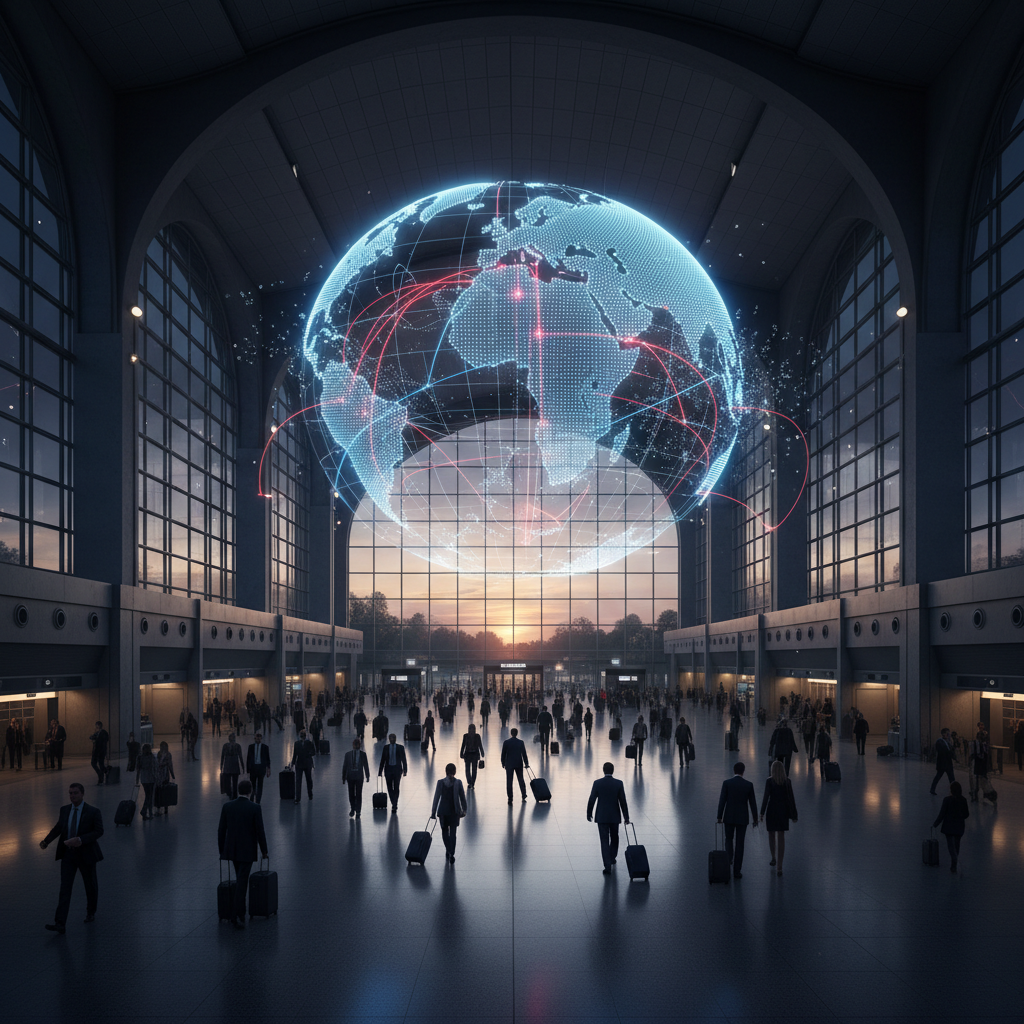
In the past few days, a quiet but seismic development has sent shockwaves through the global artificial intelligence supply chain. Ahead of highly anticipated bilateral meetings scheduled for mid-September 2026, China has reportedly issued a firm advisory instructing its top AI executives, data scientists, and lead researchers to avoid traveling to the United States. This unprecedented move marks a significant escalation in the ongoing tech sovereignty battle, fundamentally altering how multinational corporations manage their talent and research pipelines.
While trade embargoes and semiconductor export controls have dominated headlines for years, this week’s advisory directly targets human capital. For tech leaders and policy analysts operating in this hyper-competitive environment, understanding the mechanics of this directive—and how to pivot operational strategies—is no longer optional. It is a critical survival skill in the modern AI economy.
The Anatomy of the Advisory
The directive, issued through informal but authoritative channels over the past week, was reportedly triggered by mounting anxieties over border scrutiny. Officials cited potential security risks, including the fear that prominent Chinese nationals in the AI sector could face prolonged questioning, device seizures, or legal complications upon entry into the U.S. This defensive posture effectively grounds some of the world's leading minds in machine learning, neural network architecture, and agentic systems.
The timing is particularly striking. The travel caution arrives just days before the U.S. and China are set to engage in their most comprehensive AI safety dialogues to date. These mid-September talks were initially viewed by optimistic international observers as a chance to establish a baseline consensus on existential risks and algorithmic transparency. Instead, the physical absence of key technical personnel threatens to reduce these dialogues to purely political exercises, devoid of the granular engineering expertise required to draft actionable policies.
The Stakes for Mid-September Safety Talks
The core objective of the upcoming diplomatic summit is to establish a unified framework for preventing autonomous AI failures. However, the diplomatic reality is increasingly fractured. The U.S. continues to push for light-touch regulations at forums like the G20, aiming to foster innovation, while simultaneously restricting access to advanced compute hardware. Conversely, China has maintained stringent internal regulations on generative AI since 2022 while rapidly expanding its domestic capabilities.
Bridging this global tech divide requires more than state-level diplomacy; it requires peer-to-peer collaboration among the scientists actually building these foundational models. Without informal, off-the-record exchanges at conferences, academic symposiums, and corporate summits in Silicon Valley or Boston, the likelihood of a catastrophic misalignment in global safety standards increases dramatically.

The Ripple Effect on Global AI Infrastructure
The immediate consequence of grounding elite AI talent is a hard splintering of the open-source community and cross-border enterprise R&D. Historically, artificial intelligence has advanced through an open, porous exchange of academic papers, GitHub repositories, and international symposiums. The new travel restrictions create a "splinternet" of talent, where localized hubs develop in isolation.
International regulatory bodies are already sounding the alarm over this fragmented landscape. Recently, global human rights officials and tech watchdogs have demanded immediate safety guardrails for the deployment of fully autonomous systems. Yet, implementing universally recognized guardrails is virtually impossible if the architects of these systems cannot sit in the same room to debug alignment protocols, share safety benchmarks, or agree on evaluation metrics.
"The physical segregation of top-tier engineering talent is the most formidable barrier to global AI safety we have encountered this decade. You cannot regulate a borderless technology with bordered minds."
Strategic Playbook: Adapting to Talent Immobility
For multinational tech firms, venture capital portfolios, and academic institutions, the 2026 travel advisory requires immediate operational recalibration. Organizations that rely on cross-border collaboration must implement new strategies to maintain innovation without violating the compliance boundaries of either nation.
- Establishing Neutral R&D Hubs: Companies are rapidly shifting collaborative research projects to geographically and politically neutral territories. Cities in Europe, the Middle East, and Southeast Asia (such as Singapore and Geneva) are seeing a massive influx of corporate investment as they position themselves as safe-haven meeting grounds for U.S. and Chinese researchers.
- Accelerating Federated Learning: To circumvent data localization laws and the inability of engineers to physically travel with sensitive hardware, firms are doubling down on federated learning. This approach allows decentralized models to be trained across multiple geographic nodes without transferring the underlying proprietary data across contested borders.
- Virtualizing the Symposium Experience: While virtual meetings are not new, the reliance on secure, real-time translated, and cryptographically verified digital environments is becoming the gold standard for international technical collaboration. Secure digital enclaves are replacing the traditional corporate offsite.
- Rethinking IP Security: With increased border scrutiny cited as the primary reason for the advisory, companies must strictly manage what devices and data researchers carry when they do travel to third-party countries. "Burner" devices and cloud-only access protocols are now mandatory for high-level personnel.
Looking Ahead
As we move closer to the mid-September AI safety talks, the world is watching to see how both superpowers navigate this unprecedented human capital blockade. The travel advisory is not merely a bureaucratic hurdle; it is a profound statement about the securitization of intellect in the age of artificial intelligence.
For the broader industry, the mandate is clear: the era of frictionless global AI development is over. In its place, a complex, high-stakes geopolitical puzzle has emerged. Enterprises that wish to remain at the cutting edge must now be as agile in their diplomatic and geographic strategies as they are in their algorithmic innovations.
Frequently asked questions
Why did China advise its AI executives not to travel to the U.S. in September 2026?
The advisory was reportedly issued due to concerns over potential security risks, including the fear that prominent researchers might face unexpected questioning, device seizures, or prolonged scrutiny by U.S. border officials.
How will the travel advisory impact the mid-September AI safety talks?
While state-level diplomatic talks will proceed, the absence of key technical personnel and lead engineers hinders the informal, peer-to-peer technical collaboration necessary to establish practical, granular safety protocols.
What is federated learning and why is it relevant to this geopolitical shift?
Federated learning is a decentralized machine learning technique that trains algorithms across multiple servers holding local data samples without exchanging the data. It allows multinational teams to collaborate on AI models without moving sensitive proprietary data across borders.
How are multinational tech companies adapting to the travel restrictions?
Companies are adapting by establishing neutral R&D hubs in third-party countries (like Singapore or Geneva), utilizing federated learning, and enforcing strict device security protocols, such as using 'burner' hardware for international travel.
Join 45,000+ AI builders.
Three tools, two insights, one strategy — every Sunday. The signal cuts through the noise.
Free forever · unsubscribe anytime · no account required
Related reads

Retailers Rewrite Policies to Block AI Shopping Bots at Checkout
E-commerce giants are drawing a hard line on customer data this week, rewriting terms of service to block autonomous AI bots from completing online checkouts.

UN Demands Urgent Guardrails for Autonomous AI Systems in Severe Warning
United Nations Human Rights Chief Volker Türk has issued a stark, urgent warning to tech companies, demanding immediate safety guardrails for autonomous AI systems.

The Medical Liability Crisis of 2030: Regulating Autonomous Healthcare AI
With new research predicting fully autonomous AI will outperform doctors by 2030, policymakers are rushing to rewrite medical liability laws before the technology takes over.